XpatAthens

XpatAthens

We sat down with husband and wife Marc and Isabella, the owners and managing partners of Ten Twenty Club in Voula. This power duo is no stranger to creating high-vibe spaces; Isabella is also the visionary behind La Linda, the South American bakery that has become as famous for its meticulous croissant lamination and wellness-boosting smoothies as it has for its aesthetic charm.

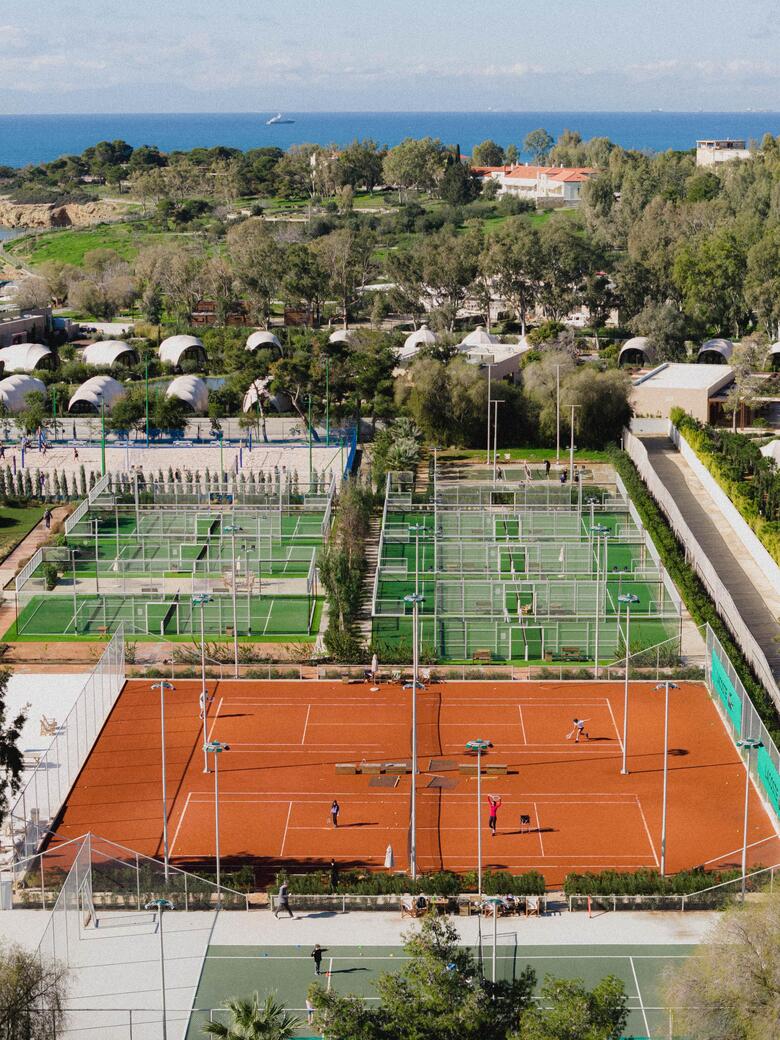
Nestled on the sun-drenched Athenian Riviera, Ten Twenty Club is a premier racquet and wellness destination that reimagines the classic country club for a modern, active community. Blending high-performance sports with holistic recovery and a vibrant social atmosphere, the club offers an unparalleled experience just steps from the beach.

WhatsApp Image 2026 04 21 at 11.25.47 2 3

Managing a destination like this is quite the feat! Can you share a bit about your journey? What originally drew you both to Greece, and how did you decide to call it home?

Isabella: I am originally Brazilian-Lebanese. My father lived here in Greece for many years. He’s Lebanese, but he absolutely fell in love with this country. He was the one who introduced it to us, and we loved it just as much. Eventually, we thought, "Why not give it a try?"

Marc: On my side, funny enough, my grandmother was actually born here. I didn’t discover Greece through her, though, as she moved to Lebanon where she married my grandfather. But we’ve been visiting for ten years, mainly because Isabella’s father retired here, and we fell in love. I always wanted to do something in Greece, especially since we have a large circle of Greek and Lebanese friends living here. After living in Qatar, when we decided it was time to move back to Europe, Greece was the first country that crossed our minds.

Every great venture has a "lightbulb" moment. When did you realize that you wanted to make Ten Twenty happen?

Marc: We were doing our own separate things while living in Qatar. Isabella was a consultant in the F&B industry, helping clients open new concepts, and I was in the sports industry. While in Qatar, I saw a massive opportunity in Padel and opened a small club there. After four years, we felt we’d had our fill of life in Qatar and wanted to return to Europe, but we knew we needed a strong idea.

Isabella already had her brand, La Linda, and we thought about opening that here. But I wanted to stay in sports, so I told Bella, "Why don’t we join forces?". We wanted to create a racquet club that goes beyond just sports, incorporating hospitality, a movement studio, and a strong community aspect. My experience taught me that for a club to succeed long-term, the hospitality side and the community vibe are just as important as the courts. So, we teamed up: Isabella handles the F&B and the aesthetics, and I handle the sports side.

"Ten Twenty" has such a catchy ring to it. Is there a hidden meaning behind the name, or does it represent something specific maybe?

Marc: I’ll let Isabella answer that; she’s the expert here!

Isabella: I handle the marketing, communications, and aesthetics. "Ten Twenty" actually refers to the size of a Padel court, 10 by 20 meters. But it’s also an angel number, which signifies that you are on the right path. It represents a good environment and positive vibes, which is exactly what we wanted to create: a place for like-minded people to connect, support one another, and learn from each other. That’s how Ten Twenty came together.

You’ve created a space where the energy is just as high at the café tables as it is on the courts. Was it a conscious decision from day one to make this a lifestyle hub rather than just a place to play?

Marc: Absolutely. Because we have La Linda as our partner in the club, we knew we could offer a beautiful environment even for non-players. Our ultimate goal is to encourage people who might not know much about Padel or Pickleball to feel welcome. Eventually, they might feel inspired to try it out and join the lifestyle. That’s why we love this beachside location. You can work here, connect your professional life with a training session, eat well, do some recovery, and then end your day with a swim in the sea. It’s about enjoying life.

Isabella: We didn’t want it to be just for the athletes. I remember when Marc used to play Padel elsewhere, I would drop him off and leave, or wait in the car, because the clubs didn't feel inviting. We wanted to build a space where the whole family could come. You can watch the game, hang out in the garden, try a sport, or just eat. We wanted something for everyone.

What made Voula the right home for your vision, and how does it influence the vibe of the club?

Marc: It checked almost every box. Economically, the timing was right, the weather is perfect, and the cost of living was attractive compared to trying to launch a club in somewhere like London. Greece naturally possesses the ingredients for the lifestyle we wanted to promote: healthy food, nature, and the ability to swim nearly all year round.

Three years ago, when we were researching, we felt people were hungry for international concepts that moved beyond the typical taverna. We turned out to be right; La Linda has been very successful, and the club is doing great. Greece feels like an "emerging market" within Europe. It’s an amazing place to be ahead of the game, especially with so many international people moving here.

Isabella, you’ve lived in São Paulo, New York, London, and Portugal. What is it about the "Greek way of life" that finally made you want to put down roots here?

Isabella: It’s the quality of life that sets it apart. Especially here in the South, you have the taste of city life, but you’re basically living on an island. Greeks prioritize family, weekends, and holidays, those things actually mean something here. We aren’t on this planet for very long, and we need to make the most of it. The food, the weather, and that mindset make all the difference.

You’re introducing Greece to Pickleball, which is exploding globally. How have the locals responded to this new "kid on the block"?

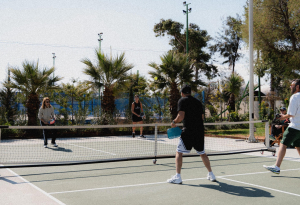
Marc: It’s been very interesting! We didn't just pick Pickleball out of nowhere. We knew it was huge in the US and Australia, and since Americans are a top tourist demographic here, we knew we could cater to them. Also, logistically, we had a corner of the space that was too small for Tennis or Padel, so we dedicated it to Pickleball and mini-tennis for kids. It started with just 10 people—mostly expats or tourists—and now we have over 100 people in our local Pickleball community.

Can you walk us through a typical day for a club member? What does the "perfect experience" look like from the moment they arrive until they leave?

Marc: For us, the experience begins before you even arrive; it starts with a feeling of inspiration from our social media and website. Once you step inside, our team will already know your name; we prioritize that personal connection. A typical day might start with an early tennis or padel lesson, followed by a refreshing shower in our facilities. Then, you grab a healthy brunch and settle into the garden or clubhouse to get some work done. In the afternoon, there's a "happy hour" vibe where friends and families gather. 

Isabella: On weekends, it’s even more vibrant with themed community events, like our Lebanese lunches or Brazilian carnivals, that celebrate our diverse cultures. It’s a place where you can find a purpose for every hour of the day.

Curious about what a typical day at Ten Twenty is really like? We recently spent a day there ourselves and documented the experience in this article

How do you strike that delicate balance between making the club feel like a high-end, exclusive community while remaining welcoming and inclusive to everyone?

Marc: We don’t actually try to be "exclusive." We just avoid aggressive mass marketing. We prefer to grow organically so we can get to know our customers and build a community of like-minded people. If you keep the environment positive and grow naturally, you attract the right crowd that respects the space.

How have you designed the space to ensure it’s a sanctuary for mothers and children specifically?

Isabella: Well, we are the perfect space for mothers. I work out two or three times a week and my baby is right there in the gym with me. We want women to feel they can bring their kids. We have a Kids’ Academy for tennis and padel, and on weekends we have gymnastics and social programs for children.

We also do a lot for women specifically. Every Thursday, we have a group called "Women of Ten Twenty." They play Padel for an hour in a social format with a coach—since many have never played before—then we have a smoothie together and head to the beach. I started this because Padel can be very male-dominated and intimidating for women. Interestingly, almost 100% of the women who attend are expats! It’s open to everyone, not just members.

For those who aren’t necessarily racquet sports players (yet!), you have an incredible open-air movement space. What can a guest expect from your gym and wellness facilities and is it as simple as just walking in for a session?

Isabella: We really wanted to make fitness accessible to everyone, not just the players. Our gym focuses on functional movement with high-quality, non-electric equipment like dumbbells, kettlebells, and resistance ropes. We also have an outdoor sauna and ice baths for that essential post-workout recovery. 

Marc: Exactly. Most importantly, we aren't a "members-only" fortress; while memberships are offered and come with great benefits, the club is not member-exclusive at all. The gym, the recovery area, and the café are open to everyone at an affordable price point. We have coaches available for everything, and people are always welcome to walk in. If there isn’t a class in session, the gym space is open for you to use. We’re open from 8:00 AM to midnight, so you can truly walk in anytime. If a coach happens to be busy for an hour or two, you can just grab a coffee at La Linda and soak in the garden atmosphere while you wait. We never want anyone to feel like they have to run out; we want you to stay and enjoy the space.

How do you balance being a "home" for the local residents of the southern suburbs while also catering to luxury tourists visiting the Athenian Riviera, perhaps through your Holiday Packages?

Marc: Logistically, the space is large enough to accommodate both. Tourists usually want to play at 10:00 or 11:00 AM while locals are at work. By the time locals finish work, the tourists are often at the beach or at dinner. There’s also a great synergy. Tomorrow, for example, we have a group of six French guys coming for a Padel retreat. A local who spends time here gets to meet them, hear their stories, and maybe make a new international friend. It’s a very nice synergy.

Looking ahead to the next five years, what do you hope the name "Ten Twenty" evokes in the minds of Athenians and travelers alike?

Isabella: In two words: Happy Place. I want them to feel inspired and healthy. Life can be very stressful, and I want this to be where people disconnect and recharge.

Marc: Exactly! But I also want them to feel a sense of accomplishment. We take the sports side very seriously. I don’t want you to just come for the social aspect; I want our coaches to help you genuinely improve your game. It’s that mix of a "happy lifestyle" and the thrill of personal progress! 


To stay updated on the club’s latest events, tournaments, and wellness workshops, you can follow Ten Twenty on Instagram. It’s the best way to catch a glimpse of the daily energy and see what’s happening on the courts!

A huge thank you to Isabella and Marc for welcoming us into their beautiful space. We left feeling inspired by the energy they’ve built in Voula and are already looking forward to our next visit!

Let’s say you are visiting Greece and you don’t feel like going to the beach, probably because it’s not that warm any more or you’ve seen enough beaches so far. You’ve seen most of Athens and you have a couple of days to spend, two days full of history and beautiful landscapes. Then you just have to rent a car, get a map and history is all yours! First stop will be at Isthmus of Corinth (the Corinth Canal).


This man-made canal is the border between mainland Greece and Peloponnese. Ancient Greeks used to carry their ships through a narrow road in order to bypass this small part of land.

Following the direction to Tripolis, we make a turn when we see the sign Mycenae. In less than 2 hours from Athens lies the ancient city of Mycenae, one of the first empires in the ancient Greek times. You may have heard it from Iliad, the world famous epic poem by Homer. The king of Mycenae, Agamemnon, was considered to be the king of the kings in ancient Greece. His capital, the citadel of Mycenae, was one of the first organized cities, with high stone walls called Cyclopean Walls. Due to their huge size these walls are considered to have been built not by humans but by Cyclops. Enter the city by the Lion Gate. Also pay a visit to the Treasury of Atreus, a very famous and impressive “tholos” tomb. Same ticket applies for the citadel and the Treasury.

Heading to Nafplio, we make a stop to the Acropolis of Tiryns. It also used to be one of the well known citadels in ancient Greece – 2.000 years BC. Both Mycenae and Tiryns are included in UNESCO’s catalogue as Monuments of World Cultural Heritage.

Napflio is one of the most beautiful getaways from Athens. It was the first capital of Modern Greece. The old city is full of narrow roads, beautiful buildings, many hotels and restaurants. You can find low prices off-season. Pay a visit to the Rosary Museum (“Kompoloe” in Greek), a hidden gem in Napflio. If the weather is good, consider taking a boat to Bourtzi castle, a small castle in the middle of Napflion harbour. Enjoy a meal in one of the traditional tavernas in the old city of Nafplio. Try local, traditional and seasonal food like stuffed vegetables, fresh fish and salads. Nafplio is also famous for ice cream shops, some following famous gelato recipes directly from Italy.

Next day, after having a breakfast in the old city opposite to Bourtzi castle, it’s time to pay a visit to Epidaurus. It is located about half an hour from Nafplio. The archaeological site is full of surprises and history. Visit the Asklipeio, one of the most famous ancient ‘hospitals” – healing process for Greeks was a mixture between medicine, science and belief. The Asklipeio was considered to be the birthplace of Asclepius, the healer, god of medicine and healing.

The ancient theatre of Epidaurus is probably the most known ancient theatre of ancient Greece and is still in use. If it happens that you are around during summer, book a ticket to see a play in this really beautiful with perfect acoustic theatre. You may not understand the words, but you can feel them with your other senses. The spirit is still there.
Returning to Athens via the coastal road near the Saronic gulf, full of memories, pictures and ancient spirit, you may imagine how all these places created the foundation of modern civilization.

P.S.: Check the opening hours of the archaeological sites before visiting in order not to miss anything.

Text by: Christos Loukas (aka Kitsos Mitsos) - World traveller and blogger - www.blogtravels.gr

To read more, please see blog.visitgreece.gr

Souvlakis are the hamburgers of Greece. At least they were until hamburgers arrived and now hamburgers are the hamburgers of Greece. Souvlaki shops have become more scarce and fast food places more plentiful, though you should not have trouble finding a souvlaki if you want one. It is usually meat of some sort, beef, lamb, pork or 'unknown' that is on a giant vertical rotisserie. The souvlaki 'cook' slices off the meat as it becomes done and puts it on a round pita bread with lettuce, tomato, onions, and sadziki, a cucumber-yogurt-garlic sauce that in my opinion is what makes souvlakis great.

In some souvlaki shops the meat is skewered and sometimes you can get ground beef, which is generally known as beefteki. In some upscale souvlaki shops you can get chicken souvlakis and even swordfish souvlakis (Very rare. I think there is a place next to MacDonalds at Syntagma where I saw it). Souvlaki comes in wax paper which keeps it all together and you eat it like you are peeling a banana. It can be messy but who cares?
When I was a kid I could eat three or four of them easily but now I have trouble imagining eating one. But that is only because the only time I would eat in a souvlaki shop would be in the day because dinners are eaten in tavernas as a form of entertainment as well as sustainance and who wants to eat a big greasy sandwhich when it is 95 degrees out? Well, many people do and they are still quite popular day or night. In fact when I tell my old friends who used to live in Greece I am going there, they always ask me to bring them back a souvlaki. One American kid from the US Airbase filled a suitcase with souvlakis when he left Greece after his father's tour of duty was over. So you see the power of the Souvlaki is strong and unless you are the most militant vegetarean you should not leave Greece without trying one.(You can get them without meat too.)
The great thing about souvlakis is that they are cheap and if your kids are hungry you can send them to the souvlaki shop for dinner. They can go and order for themselves and it will be a sort of adventure and fill them with confidence in their ability to survive in a foreign culture. Besides the souvlaki in the pita you can find street vendors selling souvlaki kalamaki which is skewered meat with a regular piece of bread instead of pita and no onions, tomatoes or sadziki. 
The Best Souvlaki Shop in Athens
Ask any taxi driver which is the best souvlaki shop and they will tell you it is Thanasis across the street. Is it the best? Who knows? Others say Kostas on Adrianou is the best. Some people like the souvlaki in Platia Iroon in Psiri. Probably the best is in some neighborhood tourists never visit. If you have a favorite let me know. See Readers Souvlaki Reviews The most popular Souvlaki shops are those at the end of Metropolis street right at Monastiraki square. The one on the corner is owned by the same guy who owns the famous old Taverna Sigalas, right next door. His name is Spiro and his picture is everywhere, happily posing with famous people, Greeks and international. In fact it is my personal goal to have my picture up there with Spiro one day since it is sort of Greece's answer to Gruman's Chinese Theater. So if you want to do a little active campaigning for me feel free to ask Spiro or the waiter when will he have Matt Barrett in one of his pictures. Generally you have to be a little more famous than I am but with the help of some of my readers maybe we can speed up the timetable and ensure my immortality.


 Copied with permission from Matt Barrett's http://athensguide.com

In this issue you will find the work of Elizabeth Jameson, Marissa Tejada, Hrair, Ezra Peace, Dancelen(D)s, Christina Lambert, Victoria Hislop, Bad Mathematics, Jake Kelley, Chrys Roboras, Gallery 7, Alexia Marouli, Kevin Champeny, C.Z. Heyward, Ana Brotas, Teodosio Sectio Aurea, Kate Salvi, Keith Edmunds and Katerina Koutsouri.

Here is the link:

http://free.yudu.com/item/details/2726506/Anatomy-of-the-Artist---Art-of-the-Mind

... we hope you enjoy the issue!!

Champagne consumption in the debt-stricken country is soaring - but it's largely driven by an influx of wealthy tourists, not locals.

Champagne consumption in Greece jumped by almost a fifth last year, making the troubled country the world’s fastest growing market for bubbly.

Greece’s champagne sales by volume increased by 18pc in 2014, which looks particularly stark compared to the global growth of 0.5pc, according to data from Euromonitor International. 

Consumption in the sparkling wine’s home country of France dropped by 1.9pc, while sales in the UK, champagne’s second biggest market, creeped up by 0.4pc. The disparity was even stronger in 2013, when Greek champagne consumption soared by 56pc and dropped by 0.8pc, 3.4pc and 0.5pc in the world, France and the UK respectively.  The relative size of the markets goes some way to explaining the vastly different growth rates.
 
“It’s not that all the Greeks in the last couple of years decided to go party and forget their troubles,” said Spiros Malandrakis, alcoholic drinks analyst at Euromonitor. “In general, we’re talking about minimal volumes in total. Champagne consumption is still lower than before the crisis.” 

Around 300,000 litres of champagne were drunk in Greece last year, a fraction of the size of France’s 107.2m litres and even the UK’s 20.4m. 
That works out to a per capita consumption rate of roughly 1.7 litres of champagne each year for a French person, a third of a litre (slightly less than half a bottle) for a Briton and a negligible amount per Greek.

To read more, please visit: The Telegraph


Thursday, 18 February 2016 07:00

Apple Cake / Milopita

Milopita (Μηλόπιτα) or apple cake is traditionally enjoyed for breakfast in Greece. So moist, chock full of sweet, juicy apples and spiced with cinnamon and cardamom, milopita is a delicate breakfast or dessert that will become a fast favorite in your house!

This simple to bake recipe is a great way to use up apples that might be a little too bruised or old to eat on their own. And you can choose to mix in chopped walnuts or golden raisins for an apple cake with even more texture and tastes.

The apples for this cake are sliced, baked and chopped to your preferred size. Apple cider adds another layer of yum and helps to make milopita light and airy. I always like to freshly grind the cardamom seeds as they bump up the flavor and are the perfect complement to apples.

To bake your apples, just peel, core, thinly slice and layer in a baking pan.  Cover tightly with foil and bake for 15 minutes at 400 degrees. This is about 5 minutes less than you would bake them for Oven Baked Apples and leaves your milopita apples with a little bit of crunch and a bit more texture.

You can do this step ahead and keep your baked apples covered, refrigerated for 3-4 days.

To read more, including Ingredients, please visit: Greek Vegan


The Fall and Winter months in Greece tend to bring more rainy days than we're used to! Don't worry, though. When the weather forces us to stay inside, there are still plenty of activities for children. Here are just a few options:

Visit Golden Hall Shopping Mall
 
This shopping mall is new and clean with great facilities for children. The square has many picnic tables and also a well organized and clean playground with a sand pit, swings, zig-zags, and a jungle gym for children 2- 4 years old. Inside the Golden Hall on the second floor, you will find an indoor soft play area for children starting 3 years old. There is also an area for older children to play computer games. Golden Hall can be easily reached by car and by public transport.

Playmobil FunPark
 
The funpark has recently moved into a new building and it is like being in a huge toy store where endless play with all sorts of playmobil is possible. Playmobil funpark is suitable for children starting from 18 months old and there is also a (non-smoking) cafe and a shop.

Blanos Sports Park
 
This entertainment venue is huge. It offers a long list of activities for young children, teenagers and adults. There are bowling lanes (with special children’s bowling balls!) table football, billiard, electronic games, roller skating, trampolines, restaurants, and bars. The best part is the enormous jungle gym. It is separated in different sections so young children can play safely separated from the older kids. Blanos is easy to access and has a large car park.

For the full list of ideas and more information, please visit: Family Goes Out
Over 1,200 children migrants and refugees completed their first trimester in school, according to the International Migration Organisation (IMO). IMO said that 35 school buses transfer every day children from 13 hosting centers throughout the country to the closest schools.

According to Greek Education Ministry’s planning, 400 additional children refugees and migrants will go to school in January after the end of Christmas holidays.

To read this article in full, please visit: Greek Reporter
Tuesday, 20 February 2018 17:02

Echoes of Athens - A Taste Of Home In America

At the age of 16, Vivian Economy came to the U.S. from Kalamata. Her adopted country offered many more opportunities than her beloved Greece. The young woman missed ‘home’ and came up with an idea to bring some of her old home to her new home. In 1949, at the tender age of 18, she launched the very first Greek radio show in the Southeast.

‘Echoes of Athens was broadcast on WATL in Atlanta, GA for 50 years. Vivian’s daughter, Vickie Henson, the show’s current host, recalled those days. “The entire Atlanta Greek Community would rush home after church each Sunday to tune in. Imagine, my mother, the young woman, a trailblazer! Her listeners would find out the latest in the world of Greek news, politics, music, concerts, local community events. From marriages to deaths — she covered it all.”
 
When Vivian retired in the 1990s, there was a void in the community. Vickie took up the torch in recent years, armed with a new technology her mother would never know — the internet — which now allows ‘Echoes of Athens’ to be broadcast all over the world.

To read this article in full, please visit: Windy City Greek

Please click HERE to listen to Echoes Of Athens!
Thursday, 07 March 2019 00:35

March 7 - Spring In Athens

Greek culture is full of wonderful traditions and the beggining of Spring is bound to have one as well! And since the weather is getting warmer, why not pay Stavros Niarchos Foundation Cultural Center a visit? In 2018 alone it received 5.3 million visits and has plenty to offer! Read all about them in this week's newsletter.


Please click HERE to view this issue of our newsletter!
Remember to stay connected with us through our weekly newsletterFacebookTwitter and Instagram!
Page 355 of 467