
BUSINESS CENTRE

XpatAthens
Halkidiki - An Ideal Family Holiday Destination
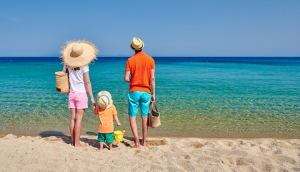
Halkidiki is a dream destination that perfectly balances an ideal combination of stunning landscapes, unspoiled nature, gastronomy, wellness, culture, and tradition. Funnily enough, Halkidiki is not an island; it's a region on the mainland near Thessaloniki with three fjord-like peninsulas (Greeks call them 'legs') that from a coastline of about 500km.
In the summer of 2014, Chryssa and her partner spent their engagement honeymoon in Halkidiki and two summers later they brought their 7-month-old baby. Year after year her family was seduced by Halkidiki's emerald beaches with crystal clear waters, family-friendly resorts and mouth-watering local cuisine. Anyone making their first holiday-with-baby should opt for a destination as stress-free and child-friendly as possible with all the necessary amenities and proximity to medical centres. Halkidiki ticks all the boxes!
Halkidiki's beaches are endless; actually, it is pretty safe to say that there is a beach for everyone! There are cosmopolitan beaches, and deserted coves, there are beaches where the party never ends, and of course, there are quiet shores with soft sand and shallow water ideal for the kids.
With the summer just around the corner and with its growing popularity, now is the perfect time to start planning your family summer escape to Halkidiki. You will fall in love with the sunset, taste fantastic food, enjoy excellent service in one of Halkidiki's family-friendly resorts, and swim in some of Greece's most immaculate beaches. Visit Halkidiki once, and you'll undoubtedly be coming back for more!
To read this article in full, please visit: Discover Greece
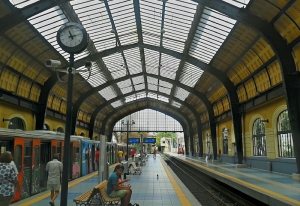
Piraeus Port To Get Direct Rail Link To Athens Airport
10 Places In Greece You Need To Visit In The Summer
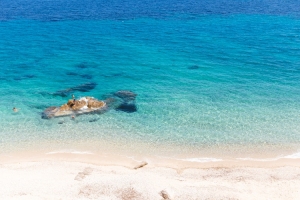
"Mysterious Lake Vouliagmeni is just 15 miles outside Athens but a world apart. Its name derives from the Greek word vouliiazo, which means “submerge” and indeed the mesmerizing lake formed when a huge underwater spring let loose and caused a massive cave roof to collapse."
"This Cycladic island stunner is where many Greeks go on their honeymoons or just to get away from it all for a few days. Like the celebrated and in summer overcrowded island of Santorini, Milos is volcanic in origin. The unique geology has endowed the island with a wealth of gorgeous beaches, including Sarakiniko with its surreal white landscapes. Milos is about a three-hour ferry ride from Piraeus."
"While Rhodes is the biggest and most popular of Greece's Dodecanese Islands, it's also the most touristy. Unless you're a big fan of medieval history (its main town is exceptionally well-preserved), I would say skip it in favor of the second largest island of the Dodecanese, Karpathos. While Patmos, another island in this Aegean archipelago, has attained more of a following as an in spot in recent years, slender Karpathos is arguably more authentic and has better beaches, too."
To read this article in full, please visit: Forbes
An Insider’s Guide To The Best Beaches In Crete
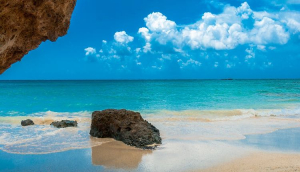
Condé Nast Traveller magazine, one of the most prestigious travel publications in the world, recently published an insider's guide to the best beaches on Crete. Read on to find out where to head for swimming, sunsets, and sun-bathing on the largest island in Greece!
1. Elafonisi
Even though it is tucked away in a remote part of Crete, Elafonisi is known to many island regulars and tends to get busy on summer weekends. Its raw beauty is undeniable, with aquamarine waters and pastel-pink sand kissing the shore – a natural phenomenon caused by thousands of shells washing up over the years and tingeing the white sands.
2. Kommos
Hugging Messara Bay in southern Crete, Kommos is a beautiful wide arc of sand backed by dunes and surrounded by patchy green mountains. A steep, winding road leads down to a beach of rolling blue waters, pearl-white sands, and views of an ancient Minoan settlement. At the southern end of the beach, there are sunbeds and umbrellas for hire and a couple of tavernas, ideal for sunset drinks and nibbles.
3. Matala
This once laid-back fishing village was discovered by hippies back in the 1960s. The legendary Matala is no longer a well-kept secret, so it's best to visit slightly out of season. According to Greek mythology, this was the spot where Zeus swam ashore disguised as a bull with the kidnapped Europa on his back. Honeycomb-like sandstone cliffs and mysterious caves flank the gently rippling waters of the Messara Bay, creating a unique, awe-inspiring landscape.
To read the insider's guide to the best beaches on Crete in full, please visit: Condé Nast Traveller
#StayHome Special Edition
In times of unknowns, we question, we think, we seek knowledge, and this edition of the XpatAthens newsletter is more like a 'keep coming back to' resource that is full of content to keep you pondering, interested, and hopeful for a greater tomorrow. As we all adjust to the daily realities of staying home, so too does the entire world collectively. No one is alone in this one.
We welcome you to share this newsletter with friends and family around the globe, and thank you for keeping Greece's international community connected and active digitally! From all of us to all of you, #StayStrong #StayPositive #StayHome!
The Evolution of Greek Music In A Single Video
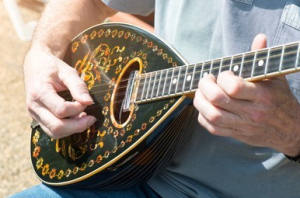
Greek cinema bloomed in the 60s and so did Greek music since many movies had music and dance sequences like modern musicals. It is thus no coincidence that this part of the videos starts with Ipomoni and Tosa Kalokairia, which are both from Greek movies of that time.
To read more and learn some Greek music history please visit: masaresi.com

Masaresi.com was founded by Maya Cornelissens-Andreadi, who shares her experience about how “to integrate in Greece and feel like a local”. Masaresi = μας αρέσει = we like it! Discover the “real Greece," while delving into all the aspects of Greek life – from modern lifestyle and culture to history, literature, traditions, and many more.
Explore Greece - Read About Greece - Buy Greek - Learn Greek
Santorini Hotel Runner-Up For Best In The World By Travel + Leisure
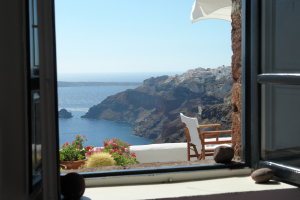
It was also runner-up for Best Hotel in Europe and Best Hotel in the World. These important distinctions for the 20-room luxury boutique hotel in Imerovigli on the southern Aegean island, “reflect the effort of the entire hotel team and are a special reward,” said Giorgos Avgoustis, general manager of Grace Hotel.
The complex also hosts the Varoulko Santorini restaurant, where Michelin-starred chef Lefteris Lazarou presents a menu of Greek and Mediterranean cuisine.
Originally published on: greekcitytimes.com
Even Smarter SMART Goals

You’ve probably heard of SMART goals and the proper goal setting. The initials from the word SMART form an acronym and provide “technical” characteristics to a goal to make it more achievable. The original SMART traditionally formed the words Small, Measurable, Accurate, Realistic and Timed, or variations of them, to help create attainable goals. With newer insights in the neurosciences and an improved understanding of the functioning of the human brain, the landscape around the use of the subconscious mind has changed. Thus, the newer, “smarter” goals that emerged allows us to have even greater accuracy and therefore success in what we want to achieve.
Based on Neurolinguistic Programming (NLP) and the science of Coaching, there are other concepts that are good to include in the right goal setting that make the goal much more achievable, so that SMART is enriched. So what is SMART targeting with the latest data and how can you use it to your advantage?
S for Specific, Sensory-based, Simple, Small
Specific: your goal must be specific in order to be measurable (eg date, exact proof that you did it)
Sensory-based: What you will see, feel, hear, what do you say to yourself when you achieve your goal? The more you use your sensory system (Visual, Auditory, Kinesthetic, Olfactory, Gustator, using all of our five senses - VAKOG) to describe the goal, the better it is recorded by your subconscious
Simple: simple, not simplistic
Small: even if the goal is big, we break it down into small steps
M for Measurable, Meaningful to you
Measurable: exactly how much money, what exactly will I look at, exactly how much will it be to know that I did it
Meaningful to you: the goal must have been set by you for you, so that it matters and is something that motivates you.
Α for Achievable, As if now, All areas of your life
Achievable: even if not now with the tools and knowledge I already have, in the future with what I will acquire
As if now: think of your goal as if you have already achieved it
All areas of your life: in successful goal setting, achieving a goal improves the overall quality of life of the individual.
R for Realistic, Responsible / Ecological
Realistic: can the goal be achieved, is it realistic, have others achieved it? If so, we measure our skills / abilities / knowledge, acquire those we do not have or ask for help, and resolve situations and views that keep us blocked. If not, reassess the goal so that it is achievable.
Responsible / Ecological: achieving the goal improves our ecology, i.e. the environment where we live / work / relationships / the natural environment etc. Does our goal promote the greater good? Is it positive and does it positively affect other areas of our lives and life in general? The better for our ecology, the easier it is to achieve the goal.
T for Timed, Towards what you want
Timed: when exactly do I want to have achieved it? The use of specific time frames helps and informs us about our course
Towards what you want: all your attention should be where you want to get and not where you want to get away from. If your focus is on poverty, you will never be able to reach abundance.
Other acronyms that can help you clarify what you need in order to set successful goals are:
PURE: Positively stated Understood Relevant Ethical / Ecological
CLEAR: Challenging Legal Environmentally Sound Appropriate Recorded
Let’s set goals properly and achieve what we long for!
Originally published on: christinadrakopoulou.com
Discovering Arki: A Hidden Gem In The Dodecanese
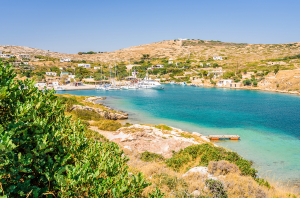
Far from the crowds and commercialism, Arki offers a retreat into solitude, where you can bask in the warmth of the sun and the gentle embrace of the sea. With just 40 permanent residents, the island exudes a sense of tranquility, making it an ideal haven for weary souls.
Most shops and accommodations are clustered around the harbor, ensuring easy access to amenities while maintaining the island's unspoiled beauty. In recent years, Arki has become a popular destination for yacht owners, drawn to its pristine waters and uncharted territories in the Eastern Aegean.
Embracing New Beginnings: How To Treat Each Month As A Fresh Start For Your Career