

BUSINESS CENTRE

XpatAthens
Stavros Niarchos Foundation Cultural Center

The SNFCC was created thanks to an exclusive grant by the Stavros Niarchos Foundation, which delivered it to the Greek State upon completion. SNFCC Single Member S.A. is a public-benefit nonprofit organization responsible for the operation, maintenance and management of the Stavros Niarchos Foundation Cultural Center and the Stavros Niarchos Park while developing and organizing its own series of cultural, educational, environmental and sports activities. It is supervised by the Greek Ministry of Finance.
Redefinig Public Space
The SNFCC and the Stavros Niarchos Park design and construction have significantly contributed to the revitalization of Athens’ Kallithea neighborhood and the Faliro Delta waterfront area after years of neglect.
The high-quality events and activities organized, realized and hosted at the SNFCC, as well as the staff and collaborators’ professionalism, have made the Stavros Niarchos Foundation Cultural Center a reference point in the greater Athens area, redefining the concept of public space.
The Stavros Niarchos Foundation Cultural Center is a public space open to all, without any barriers.
Architectural Landmark
Designed by the architectural firm Renzo Piano Building Workshop, the SNFCC is a donation of the Stavros Niarchos Foundation (SNF). In February 2017, upon the completion of its construction, the SNF delivered the SNFCC to the Greek State and society. SNFCC has earned significant architectural distinctions, including the 2018 Award for International Excellence of the Royal Institute of British Architects – RIBA.
Sustainability Hub
Sustainability has been an integral component and a priority of the Stavros Niarchos Foundation Cultural Center since its original inception. This sustainability mandate is reflected upon every aspect of the SNFCC, emerging as a new paradigm in terms of construction, operation, and maintenance of public places and infrastructures.
Committed to being open to all, the SNFCC has been designed to be fully accessible to persons with disabilities. In addition, many educational programs are been organized to encourage collaboration among children with and without disabilities.
People aged over 65 with minor mobility impairments comprise another group for which the SNFCC has designed programs.
Learn more about the Stavros Niarchos Foundation Cultural Center at SNFCC.org
Global Expertise Versus Local Players

Companies continuing to rely on global expertise of IWG instead of local players

As flexspace-industry experts, IWG serves a massive 2.5m people to work more productively right around the globe via state-of-the art offices that include business-class broadband, virtual offices, meeting rooms and shared office spaces. These facilities, combined with unrivalled expertise, make it simple for companies to up- and downscale, control their rental costs, stay agile and also make their businesses more appealing to potential new recruits, with 80% of workers saying they would choose a job that offers them the flexible-working option.
This all helps to ensures that every office and every new client is following a well-trodden path to success, and it’s this reliable reputation as flexspace-industry experts that Baeva says is continuing to place Regus as the preferred office space provider in the market, regardless of which newer, smaller companies emerge.
The outlook is clear: for companies looking for a reliable, stable flexible-office space provider with an established business model that’s stood the test of time, IWG is the ideal solution.
To find out more, visit IWG today.
This content has been sponsored by IWG - an XpatAthens Brand Partner.
Originally published at IWG
New Year’s Resolutions That Actually Work: A Fresh Take For Business Leaders

- Year of Efficiency: Streamline processes and cut unnecessary costs.
- Year of Connection: Strengthen relationships with clients, partners, and employees.
- Year of Experimentation: Test bold ideas, new markets, or innovative products.
- Test new social media platforms for engagement.
- Experiment with remote work policies to improve productivity.
- Pilot a subscription model for one of your services.
- What activities or processes are draining resources without delivering results?
- What meetings could be eliminated?
- What products or services no longer align with your mission?
- Create a "personal growth fund" for employees to spend on courses, workshops, or hobbies.
- Host monthly brainstorming sessions where every team member can pitch ideas.
- Recognize and celebrate achievements—big or small—regularly.
- If word-of-mouth brings in most of your clients, resolve to amplify customer referrals.
- If your team shines in creativity, invest in innovative campaigns.
- If a specific product dominates sales, explore complementary offerings.
The First Regus Business Center Opened In Thessaloniki
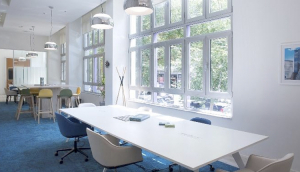
The largest provider of ready-made workplaces came to Thessaloniki offering flexible solutions for every professional.
Regus, with presence in over 110 countries and 1000 cities around the world, opened its first offices in Thessaloniki this early July.
In a 1,934-square-foot space that spans 5 floors, Regus has created 66 offices, two meeting rooms and 211 individual workspaces for anybody who wants to save on office costs, start their business quickly and hassle free, for those in need of a flexible contract for their headquarters or for companies that want to be active in the city without spending time on looking for a conventional space.
Regus's offices in Thessaloniki are located in the city center, on Karolou Del Street, very close to the port and across from Otton Square, with easy access to the bus stop and the main train station. Main buildings such as the Museum of the Macedonian Struggle and the Jewish Museum of Thessaloniki are only a few steps away.
Katerina Manou, Regus General Manager for Greece said in a statement: “We are excited about the expansion of our offices in Thessaloniki, a city with strong entrepreneurship and significant growth in recent years. We believe our offices will be of great help to anyone looking for a modern and easily accessible workplace in the heart of the city, providing all the modern services and networking opportunities in our well-designed spaces. "
Regus is reaching out to any freelance professional or company of any size looking for a professional and enjoyable workspace enhanced with state-of-the-art equipment, high speed internet infrastructure, administrative support and an ergonomically designed environment that stimulates employee profitability.

About Regus
Check out Regus' flexible workspace locations to find a base for your international team!
This content has been sponsored by IWG - an XpatAthens Brand Partner.
Serviced Offices Take-Off In Greece
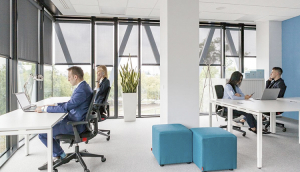
Greece's recovery from the economic crisis is still ongoing, but as its startup and tech community has begun to grow in earnest, so has the demand for flexible co-working spaces from entrepreneurs and executives over the traditional, fixed office environments that come with long-term leases and high overhead costs.
Co-working spaces provide shared, collaborative environments that can house like-minded people, and have been used by companies to better manage risk and reduce CapEx/OpEx, while Athens has become a real hub for the country's burgeoning tech sector, which is now starting to truly thrive.
Marco Veremis, an angel investor and the founder of one of Greece's tech success stories, Upstream, recently told the Financial Times that he estimates Greek tech companies today have a combined market capitalisation of around €2bn – a decade ago, it was nearly zero.
This has been helped by the government-backed investment schemes created in recent years to help young Greek businesses get going. Uni.fund provides seed capital to startups in Greek universities focusing on R&D and the tech space, while SMEs can apply to EquiFund, a fund-of-funds co-financed by the European Investment Fund that aims to strengthen the venture capital market in Greece.
While tech companies grow and the country’s economy continues to recover, flexible workspaces are becoming increasingly popular. By September, IWG will have opened four coworking spaces in Greece in the space of a year.
Katerina Manou, VP Sales at IWG in Greece, says flexible workspaces have emerged in the country as a response to specific market conditions and firm requirements. “Increased external volatility, high sunk costs for setting up conventional office space, an emphasis on flexibility to expand and contract operations in line with business development are all factors that have contributed to making flexible workplaces an attractive option,” she said.
One of the outcomes of the crisis over the past decade has been that perceptions within the business community about the most efficient way to run both small and large firms have been “fundamentally reshaped,” Manou said. “It is now clearer than ever that the workspace should not be a liability for the bottom line of a firm, but an asset contributing to a firm's operations,” she added.
And Manou says that “a new generation of entrepreneurs and executives have embraced the idea, and are driving demand, as the Greek economy is slowly picking up again”. On a real estate level, turning conventional office premises into coworking spaces can breathe new life into under-utilised properties, and can revive entire districts that are run down due to the economic downturn,” she added.
But flexible workspaces offer benefits to all types of businesses, not just start-ups. And as IWG's 2019 Global Workspace Survey has shown, flexible working is the new norm. After canvassing more than 15,000 businesses across 80 countries, IWG found that the number of employees who want flexible working options has grown to 75 per cent, while over half of workers globally are getting their job done from outside their main office headquarters for at least 2.5 days of the week.
And while flexible working may once have been the natural choice for small-to-medium sized businesses, it is becoming a cost-effective option for a number of large, global corporate companies that are using it as a way to become more agile and to help mitigate risk, the research found. A total of 65% of businesses said having a flexible workspace helped them to reduce CapEx/OpEx, shed unnecessary assets, and consolidate their portfolio.
Manou adds that while flexible workspaces allow companies to reduce the cost of operations and become more competitive, which in turn benefits the Greek economy, they are also helping a new era of business leaders “who have come to terms with the idea that business survival depends on how flexible firms are in reacting to external disruptions, and are able to adapt by turning challenges into opportunities,” she said.
Could a serviced office be the right option for you?Check out Regus' flexible workspace locations to find a base for your international team!
This content has been sponsored by IWG - an XpatAthens Brand Partner.
Co-Working Is The Innovation That HR Can't Afford To Ignore
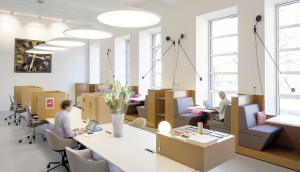
Can you afford to lose out? Find out more about how co-working can work for your company.
Flexible Workspaces Add $254 BN To Local Economies
Mark Dixon, the CEO of International Workplace Group (IWG), believes this growth in out-of-town workspace is partly down to support for a flexible working policy among employees: “When people commute into major cities, their wallets commute with them,” he says. “Working locally keeps that spending power closer to home. What this study shows is that providing more opportunities for people to work closer to home can have a tremendous effect, not just on them, but on their local area too.”
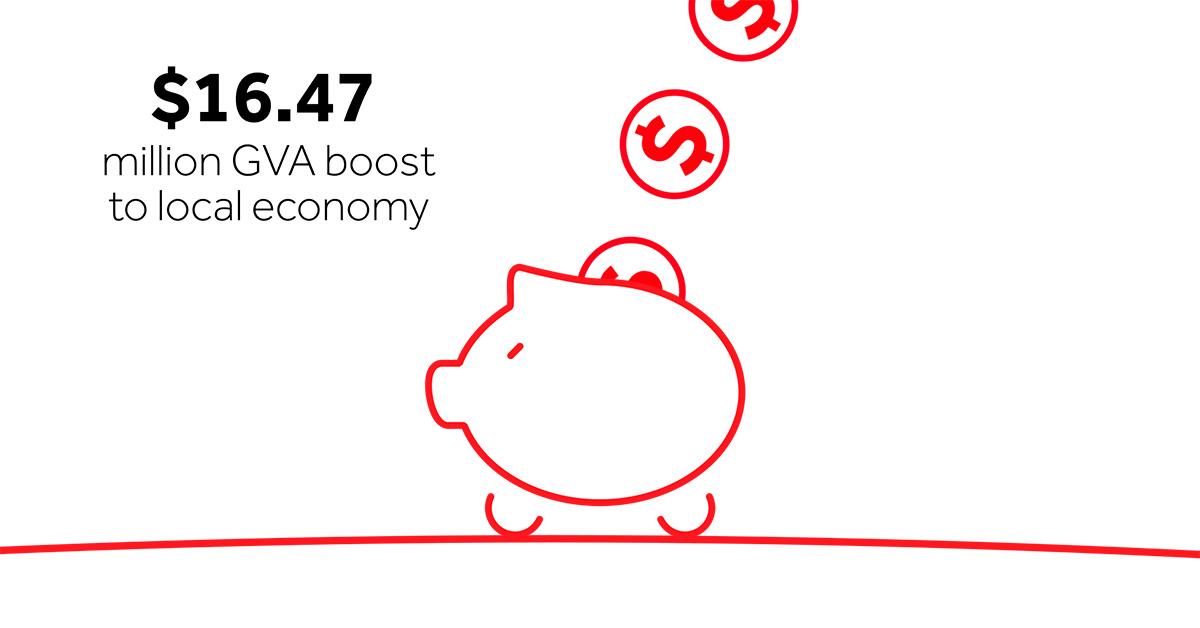
The first major socioeconomic study of its kind, it found that the presence of flexspace created up to 128 new jobs and a Gross Value Add (GVA) – or sandwich economy – of $16.47m (£12.7m) per area.
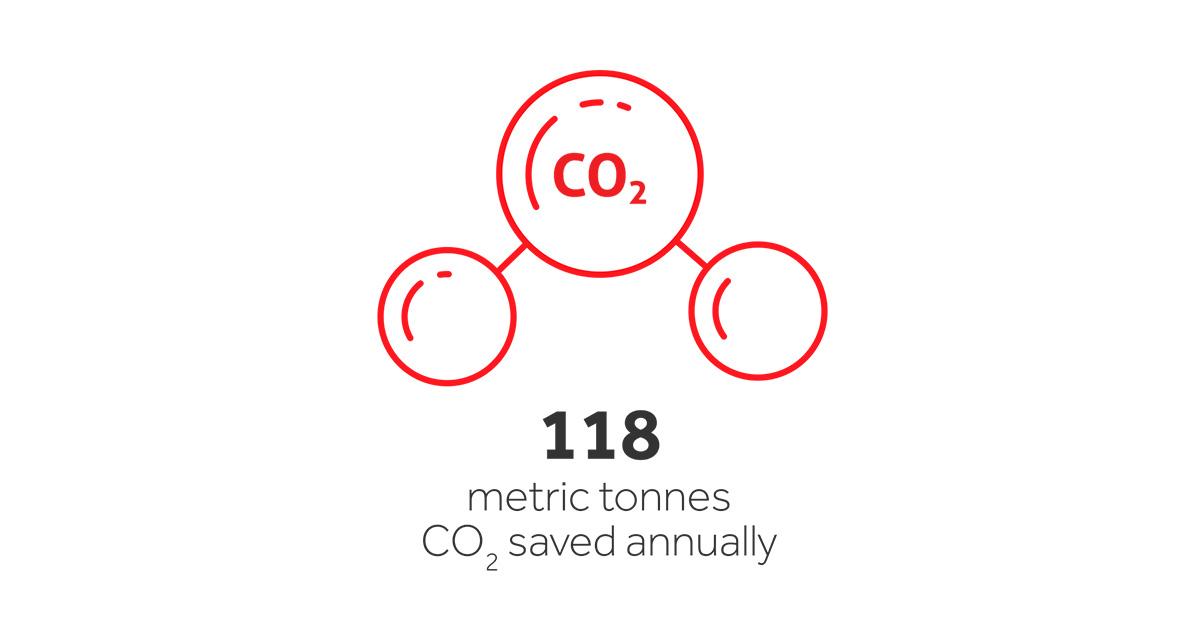
As the trend for a flexible-working policy continues to spread, the numbers are getting bigger too: from the roles created by running the building itself, to the ancillary jobs that spring up to serve the new business community. Amongst these many economic benefits, flexible office space is predicted to add a staggering $254bn of value to local economies around the globe over the next 10 years – roughly the same as the entire economy of the Czech Republic in 2019. It’s perhaps another indication that growth is still an important part of an economy – but it’s shifting location, and it’s doing so with the potential to be more evenly distributed.
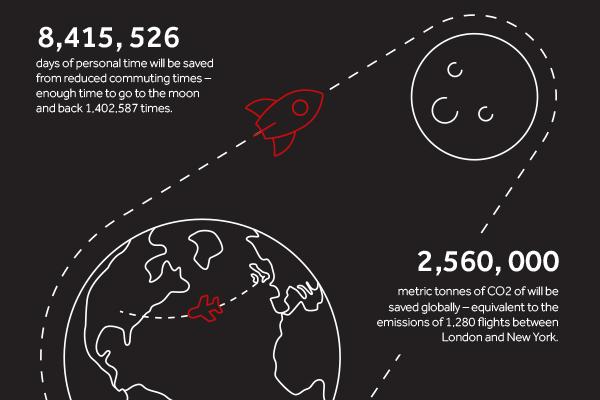
Dig deeper: read the full Regus report here.
Originally published at Regus.com
The Rise Of The Freelance Workforce

There’s been a lot of talk recently about freelancers disrupting the workforce and existing markets. A 2016 McKinsey Global Institute report found that a huge 20-30% of the workforce in Europe and the US engage in some form of independent work – and its more than just new players like Uber making up the numbers. We’re seeing a broader shift in both corporate strategy and workforce attitudes that’s changing the way we do business, for the better.
Empowering Individuals
A big factor in the rising freelance workforce comes from an increasing desire for more freedom and control. Around 61% of respondents to our Great Big Survey, which included 40,000 workers from around the world, said that work-life balance is the main driving force behind flexible working.
Workers also want greater autonomy to forge ahead on their own path. You can see this in the OECD’s Entrepreneurship at a Glance 2015 report, which surveyed people aged 18-64 from 41 different countries. This study found that 48% of men and 36% of women would rather start their own business than work for someone else.
Spotting The Trend
The people behind the gig economy (using freelancers on an ad-hoc basis) were early birds: they recognised a rising value for independence and entrepreneurial spirit and they leapt at the chance. All companies have the power to respond and integrate this system to benefit their own workforce, and there’s evidence they’re starting to do so. Around 42% of executives surveyed by Deloitte in their Global Human Capital Trends 2016 report said they planned to employ more ad-hoc workers over the next three to five years.
This isn’t simply a response to worker demands. 58% of businesses told us that reducing permanent staff overheads is key to their post-recession plans. It also helps them work in a more agile way, scaling their workforce up and down to meet changes in demand and new industry developments.
To integrate larger numbers of freelance workers, companies are changing their office environments. PwC’s 2016 Emerging Trends in Real Estate survey found that more and more businesses are looking for high-quality, flexible and serviced office and co-working spaces, like Regus, where they can scale up and down quickly.
The next step is to ensure that these flexible, changing teams are working in the most creative and productive ways possible. According to the 2017 Deloitte Human Capital Trends report, this will mean moving away from management hierarchies and towards groups of empowered networks that are able to change regularly and quickly.
Explore Regus' flexible workspace locations to help increase business productivity!
This content has been sponsored by IWG - an XpatAthens Brand Partner.
Diverse Teams Drive Better Outcomes

On average, only 33% of women living and working in the European Union are likely to hold a management position. When it comes to the world’s largest corporations, only 24% of women (4.8%) are CEOs of Fortune 500 companies, with female professionals accounting for less than a quarter (24%) of senior roles globally, according to the 2018 Fortune list. In practice however, attitudes are changing.
This content has been sponsored by IWG - an XpatAthens Brand Partner.
Originally published at International Workplace Group
New Business Hubs Attract Startup Talent

Entrepreneurs, SMEs and startups flock to new wave of business hubs
The tiger economies of Asia may conjure up striking neon images of Hong Kong, Taiwan and Singapore, but there’s a new player on the scene. Ho Chi Minh City, formerly known as Saigon, has been earning an enviable reputation in recent years for its vibrant startup ecosystem.
With a population of 7.5 million people, Vietnam’s most populous city has established itself as somewhere entrepreneurs can set up a business on a limited budget, with more and more staff from established companies in the States such as Apple making the trip there to begin their own startup dream.
Take a trip over 7,000 miles away and you at Tel Aviv. Israel’s business and financial centre has embraced the startup scene like few others cities in the world. An enviable talent pool and corporate entrepreneurship combine to create a city that truly feels dynamic, welcoming and that has its eye firmly fixed on the future. Because of its burgeoning reputation, the city’s business rents are fast catching up to those of more established business centres in the USA and Europe, but serviced offices such as those operated by Regus offer a ready-made way to keep costs online, while still enabling startups to truly make the most out of being part of this vibrant destination.
The Finnish capital of Helsinki, quite simply, has it all. Combining access to a wealth of local talent, business accelerators and the government’s own support for newly formed business known as the Finnish Start-up Permit, there are few better places in Europe to turn dreams into entrepreneurial reality. And while the West Coast of the States has earned plenty of kudos for its tech giants like Google and Facebook, Helsinki has got its fair share of heavy hitters too, with companies such as Nokia and Linux helping establish it as a true technology and innovation powerhouse.
If warmer climes are what you’re looking for, the subcontinent might have just what you need. Previously known as Bangalore, Bengaluru boasts a wealth of tech talent that has seen the city ranked as the third-largest tech ecosystem in the world. Its fast-growing reputation has led to an influx of both new businesses, and government funding for affordable housing has helped drive continued growth.
While Berlin may earn all the plaudits when it comes to new business and a vibrant night-time economy, Cologne has the added bonus of being much quieter, less populated and altogether less stressful than the German capital. The presence of companies including Electronic Arts and Deutsche Telekom mean the city is no stranger to corporate giants and has an enviable history of investing heavily in media and tech.
Over in Iceland, things are certainly warming up in a business sense too. Despite being one of the least populated areas in the developed world, Reykjavik benefits from an open business culture and a true entrepreneurial mindset. With a range of incubators, co-working spaces and a government that has put innovation firmly at the top of its business agenda, Reykjavik really is an exciting place to be.
From chilly and sparsely populated to sunny and busy, with a gargantuan population of 12.11 million people, there’s certainly no shortage of potential customers in São Paulo. Brazilians may be known for their love of football, but as a business hub this sprawling certainly knows where the back of the net is when it comes to scoring a startup success. And with business accelerator schemes and co-working spaces playing host to some of the most innovative startups in the country, an impressive higher education system also makes it a great place to attract the very best talent.
Taking a step across the Atlantic, there’s another city bathed in warmth that’s also earning an enviable reputation in SME and startup circles. Nestled in the shadow of Table Mountain, Cape Town is a true Africa Business Center and has its sights set firmly on being the continent’s main technology hub. With its thriving incubator scene, diverse population and great universities, the city has also benefited from ‘the Silicon Cape’ initiative, combining a community of venture capitalists, developers and creatives.
With the rise of flexible workspace, all these incredible locations can easily become the new HQ for a startup or SME looking for a Scalable Network. Regus has affordable, serviced offices in each location, each with the same business-grade IT infrastructure and high-speed Wi-Fi access. What are you waiting for?
Find out more about how Regus can help your business!
This content has been sponsored by IWG - an XpatAthens Brand Partner.
Originally published at Regus