
Giving Equines A Second Chance - 20 Years Of Compassion At ESPI
- by XpatAthens
- Monday, 09 November 2026

There are some places you visit and leave feeling that you have seen something genuinely meaningful. Not because of grand gestures or impressive surroundings, but because of the people, the stories and the quiet acts of kindness that happen there every single day.
On a Sunday, we made our way to Markopoulo to visit the Hellenic Society for Equine Welfare (ESPI) which welcomes visitors between 11 am and 2 pm. We arrived curious to discover the organisation and its work, but we were in for a lovely surprise right from the start.
Before we even had the chance to properly look around, we were greeted by some beautiful dogs who seemed absolutely delighted to see us. Tails wagging, excited little greetings and plenty of affection made us feel at home almost instantly. And then, there were the horses.
Among the first to catch our attention was Petritis, one of ESPI's longest-standing residents. As we would soon learn, he has been under the organisation's care since 2007, making him one of the very first animals to be rescued by the association. Nearby was little Eftichis, one of the more recent additions, whose curious personality made him equally hard to miss.
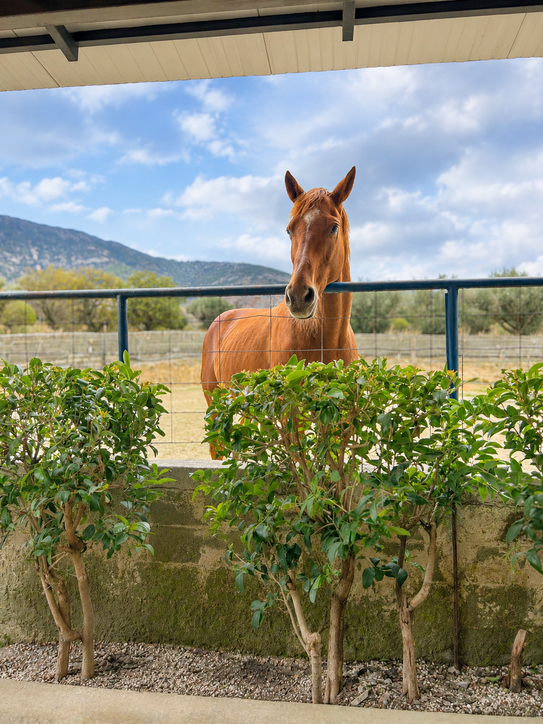
It was a lovely introduction to a place where every animal has a name, a personality and, perhaps most importantly, a story.
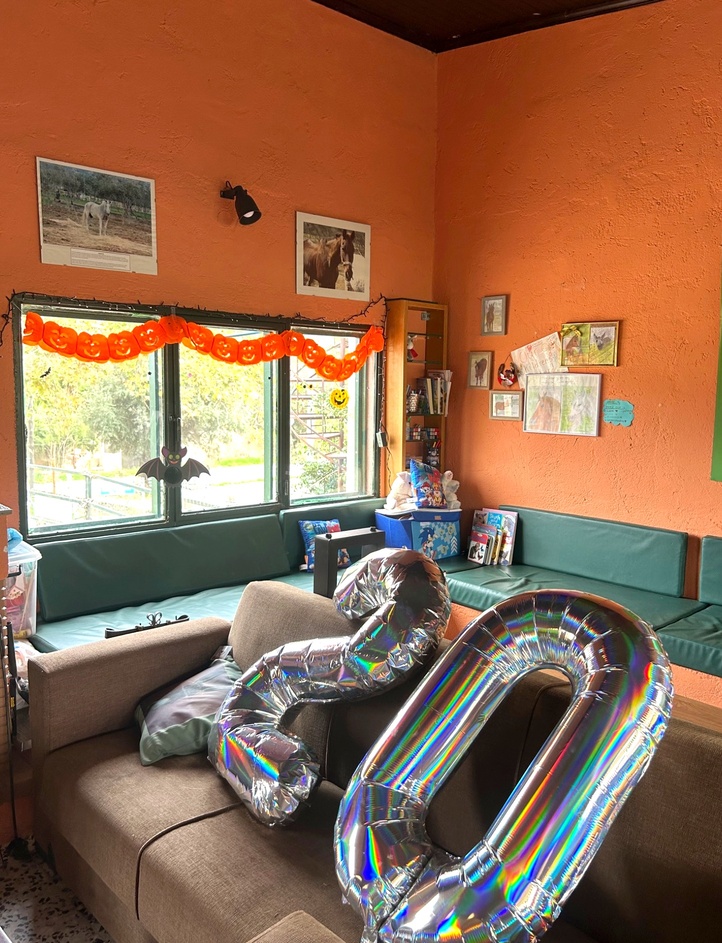
We were then invited to explore the grounds. There is a welcoming little coffee area where visitors can enjoy a drink, browse ESPI memorabilia and pick up a few snacks, all while taking in the peaceful natural surroundings. Set in the countryside of Markopoulo, the space offers a lovely opportunity to slow down, spend some time outdoors and get to know the animals.
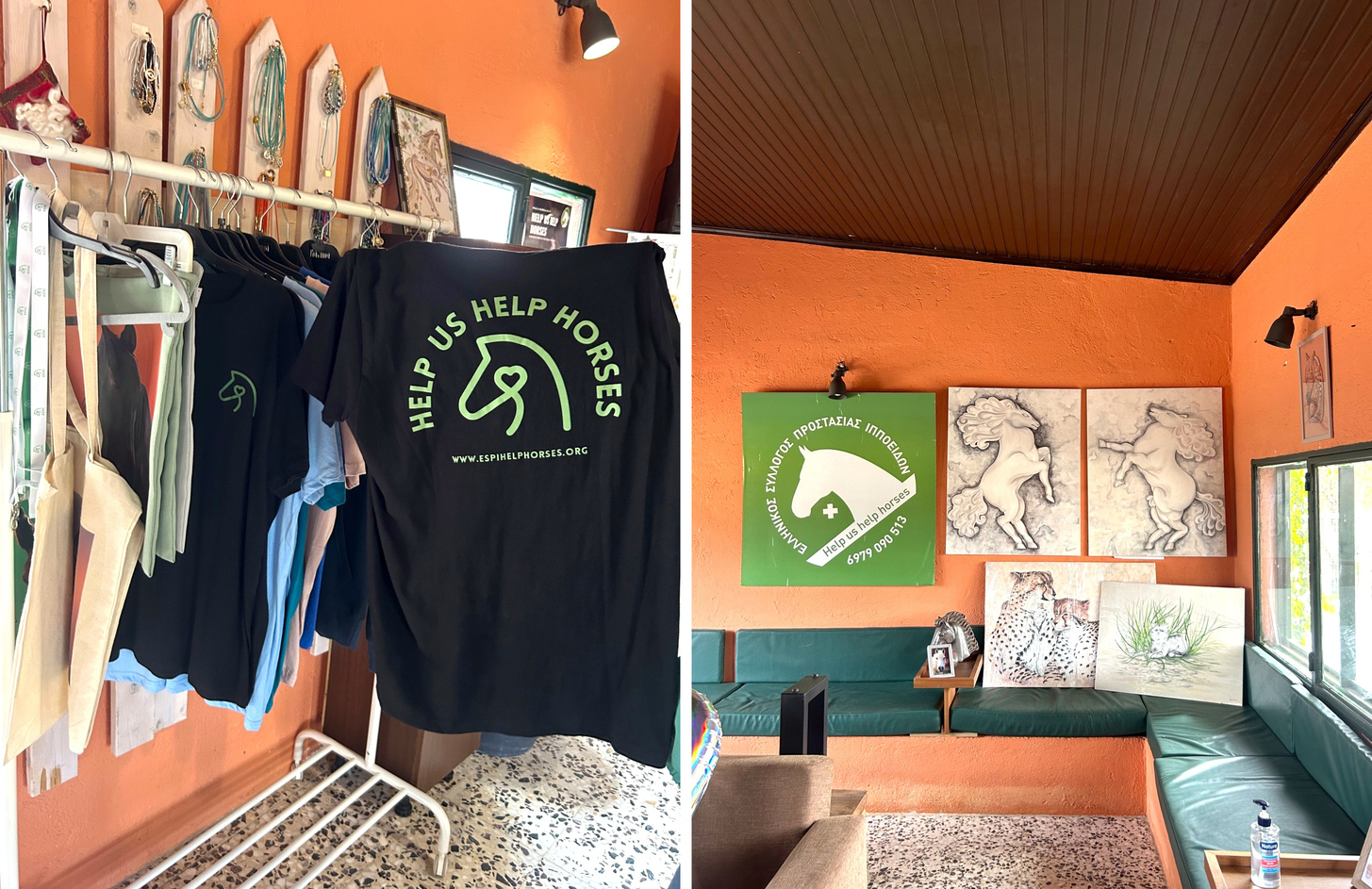
But behind this peaceful setting lies a great deal of work, responsibility and, in many cases, heartbreak.
Twenty Years Of Giving Animals A Second Chance
As ESPI celebrates its 20th anniversary in 2026/2027, its story is a reminder of what determination and compassion can achieve when people decide that looking the other way is simply not an option.
Founded in 2006, the non-profit association was born out of a distressing animal welfare case. It all began with a report concerning 64 equines living in appalling conditions on an estate in Aspropyrgos. Most were destined for slaughterhouses in Italy. Following their confiscation, the animals needed somewhere safe to stay and receive care, spending the following year in facilities in Koropi.
Soon after, another case followed: 24 animals were discovered at the port of Patras, also destined for slaughter. They had endured more than 48 hours inside a transport truck, crammed into terrible conditions without food or water. Many were already ill.
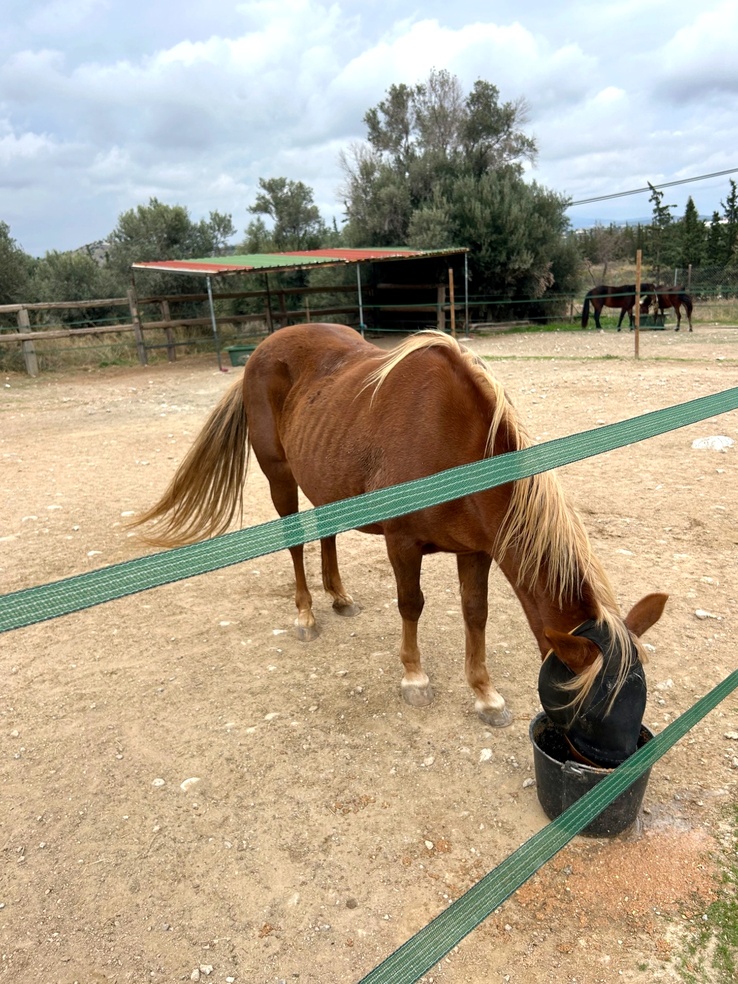
A dedicated group of people stepped in, taking the necessary measures to restore the animals' health and find suitable families who could offer them the love and care they deserved. What began as an urgent response to two deeply troubling cases gradually became something much bigger: ESPI.
In 2008, the association acquired its own stable facilities in Koropi, creating a space that could accommodate approximately 20 horses at a time. In February 2016, it moved to its current, larger premises in Markopoulo, allowing it to expand its work and provide care for more animals.
Twenty years later, that commitment continues. Today, 22 animals call ESPI home.
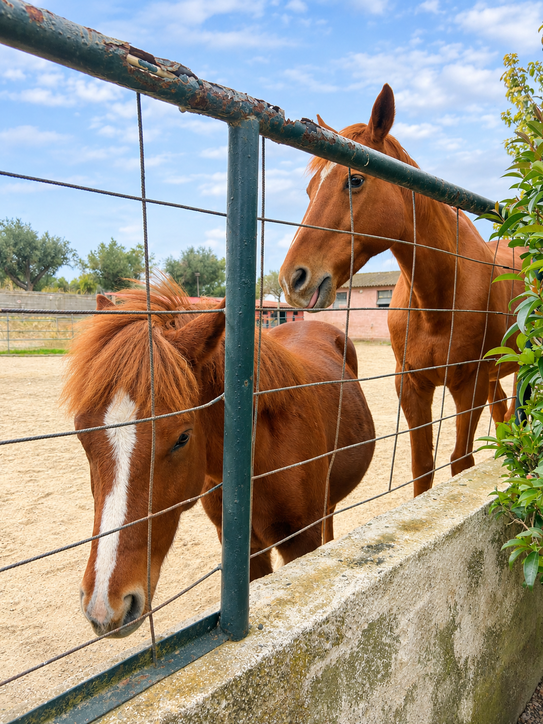
Twenty-Two Animals, Twenty-Two Different Stories
As we walked around the stables, we began to understand that caring for rescued equines is about much more than providing food and shelter. Many of the animals have experienced abuse, neglect or abandonment, and several have significant health conditions that require specialised, ongoing attention.
Some have dental or oesophageal problems and can no longer chew or swallow food normally. Their meals need to be specially prepared, sometimes in the form of soup, to ensure they receive the nutrition they need. Others require supplements, regular veterinary examinations, physiotherapy, hoof treatments or other forms of rehabilitation.
There is Nikoleta, aged 32, the oldest resident at ESPI. She has serious oesophageal problems and can only manage specially prepared liquid food. There is Jerry, a former racehorse who has been with the association for 13 years and suffers from a kissing spine, a condition that requires ongoing support from physiotherapists and other specialists.
We also met Kitsos, a little white donkey of around 26 years old, who is dealing with several health issues, including anaemia, and Klearchos, a black donkey facing serious hoof complications.
And then there are the stories that stay with you for reasons beyond their medical needs.
Litsa, for example, is a former racehorse whose past has left her deeply distrustful of people. She cannot easily be approached, and visitors must be particularly careful to respect her personal space.
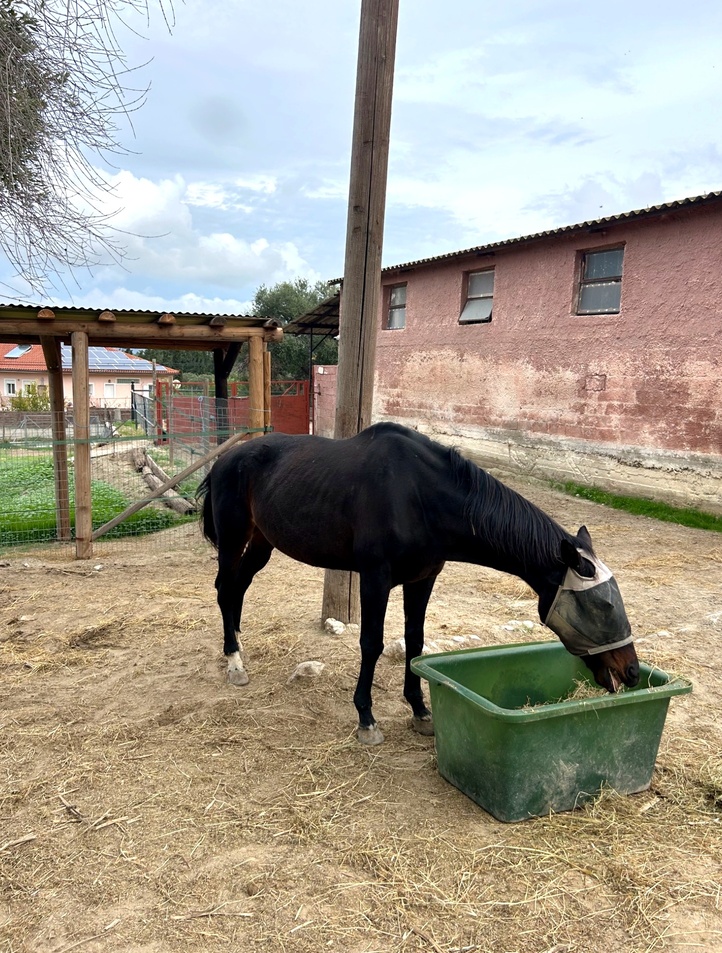
Her story is especially moving. After her racing days ended, she was found wandering in Crete, without the care she needed. Since April 2016, Litsa has found her home at ESPI. She has also found companionship in Angel, another horse who has become her inseparable friend. The two are a lovely reminder that animals, just like people, need connection and a sense of belonging.
Then there is Melina, a former breeding mare who was used for reproduction rather than given the opportunity to live as an individual animal with her own needs. She was subsequently placed for adoption twice, but unfortunately neither experience worked out well. Today, she is back under ESPI's care, where her wellbeing comes first.
These stories make you realise that rescue does not always mean an animal is immediately ready for a new home. Sometimes, the greatest gift is simply allowing it to feel safe, perhaps for the first time in its life.
Every little bit makes a difference. From daily meals and veterinary care to medication and rehabilitation, your support helps ESPI continue giving these animals the safe and loving life they deserve.
A Mother & Her Little Miracle
One of the stories that touched us most was that of Marianna and her baby, Eftichis.
Marianna arrived at ESPI while pregnant, carrying her little one with her. Sadly, she was already suffering from severe laminitis, a painful and debilitating condition that has caused significant damage to her hooves and affected her ability to stand and move comfortably.
Her condition requires immediate and specialised attention, and despite the care she has received, her health has not improved as hoped.
Her little Eftichis, however, is now a happy, strong and healthy youngster. He was the curious little horse who greeted us when we first arrived, completely unaware of how much his story represents.
It is difficult not to feel emotional when you see the two of them and understand what Marianna has been through. She has given birth to a healthy foal while continuing to face a serious battle of her own.
Horses are naturally active animals. They are made to stand, walk, graze and move around, not spend their lives confined to a stable. This is why ESPI does everything possible to ensure that the animals have access to outdoor spaces and the freedom to move around whenever their health allows. Stables are there when medical needs or recovery require them, but the ultimate aim is always to give each animal the best possible quality of life.
And that means allowing them to enjoy being horses.
Come and meet the animals who make ESPI so special!
ESPI welcomes visitors every Sunday, between 11:00 am and 2:00 pm, at its facilities in Markopoulo. Spend some time with the animals, discover their stories and learn more about the important work taking place behind the scenes.
Come for a visit or get to know them HERE!
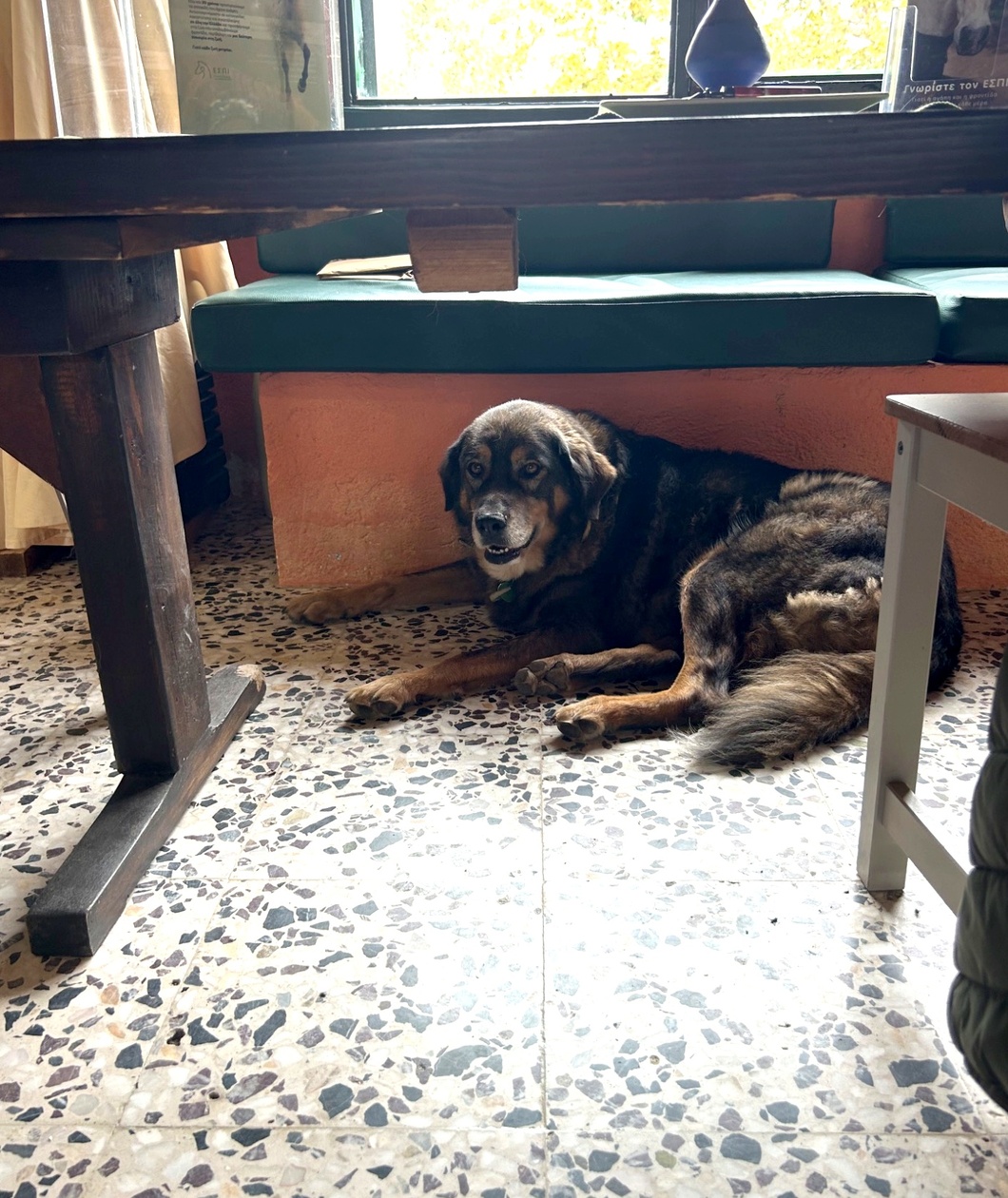
The People Who Make It All Possible
During our visit, we had the opportunity to speak with Christina, whose love for the animals was evident in every conversation. The way she spoke about each horse, remembering their individual needs, personalities and histories, gave us a glimpse into the level of dedication required to run an organisation like ESPI.
Behind the scenes, there is a team of eight people working across different responsibilities. We also learnt about Thanasis, one of the longest-standing members of the association, who is actively involved in handling complaints and reporting cases of animal abuse, as well as contributing to educational initiatives.
But the work is far from easy.
The costs of caring for 22 animals are substantial and ongoing. Food alone, particularly the hay needed to sustain them, represents a significant recurring expense. Add veterinary bills, medication, supplements, specialised diets, transport and rehabilitation, and it becomes clear that keeping the association running requires continuous financial support.
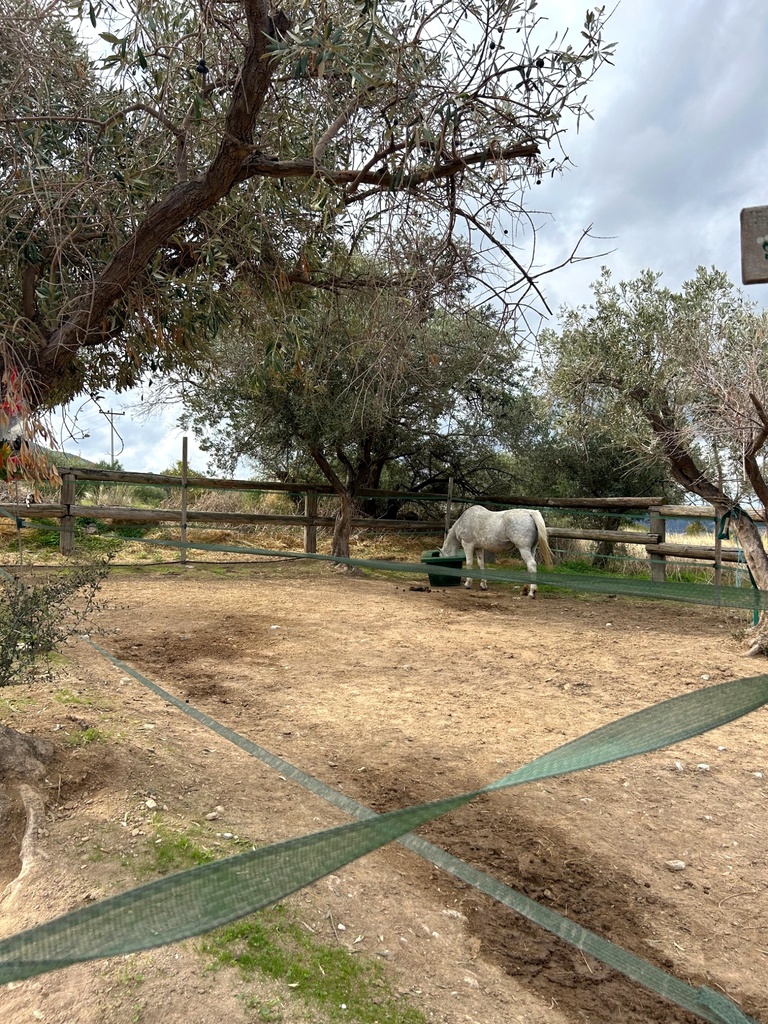
ESPI relies entirely on donations and the contribution of volunteers.
And when we talk about volunteering, we are not simply talking about dropping by for a quick visit or spending an afternoon taking photographs. The association is looking for people who genuinely want to contribute, who can commit their time, learn how to handle and care for the animals properly, undergo training and become a consistent part of the effort.
There is also a strong desire to expand educational programmes, helping more people understand equine welfare. Because, as we discovered during our visit, many people simply do not know what proper horse care involves, how to recognise signs of neglect or how to approach these animals safely.
Through its volunteer training programme and educational visits from schools and organisations, ESPI hopes to build a more informed and compassionate community.
What Can You Do If You See An Animal In Need?
One of the most important things we took away from our visit is that everyone can play a role in protecting equines.
If you come across a horse or donkey that appears neglected, abandoned, injured or mistreated, you can contact ESPI and submit a report through its complaints form. The association reviews the reports it receives and, where possible, intervenes in collaboration with the relevant authorities to help ensure the animal's protection.
Adoption is another way to make a difference. ESPI carefully assesses potential homes and maintains responsibility for the animals even after they are placed with adopters. If circumstances change and an adopter can no longer care for an animal, ESPI must be informed and can arrange for the animal's return or an alternative placement.
You can also support an individual animal through fostering, becoming a sponsor and contributing towards its ongoing care, even if you cannot offer it a home yourself.
And, of course, financial donations make an enormous difference. Every contribution helps cover the daily essentials that keep these animals healthy, comfortable and safe. ESPI's work is sustained entirely through the generosity of people who believe that these animals deserve a better life.
You can find out more about how to donate and support the association through its official support page.
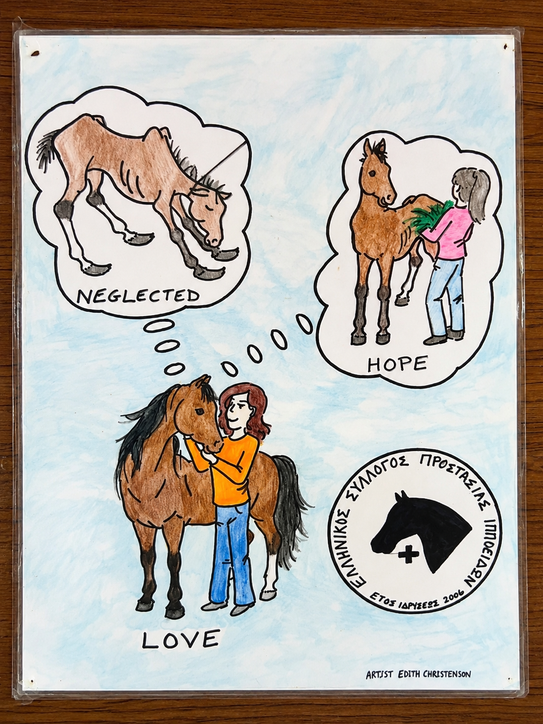
A Little More Kindness Can Go A Long Way
As we left ESPI, we found ourselves thinking about the different lives we had encountered that afternoon.
Twenty years is a remarkable milestone, but it also represents twenty years of responsibility, difficult moments, countless veterinary visits, endless meals, unexpected challenges and people who have chosen to show up, day after day.
In a world where stories of animal neglect and cruelty can sometimes make us feel helpless, discovering places like ESPI is a welcome reminder that there are people who refuse to accept that things cannot change.
They may not be able to save every animal, and their work is certainly not easy. But for the 22 animals currently under their care, ESPI is not simply an association or a shelter. It is home.
And perhaps that is the most important thing we took away from our Sunday visit: sometimes, giving an animal a second chance does not mean finding it a perfect new beginning somewhere else. Sometimes, it means giving it a safe place to stay, a full stomach, room to run, a friend to stand beside and people who will never give up on it.
Twenty years on, ESPI continues to do exactly that. And these animals still need us.
You can follow ESPI on Instagram, Facebook and TikTok to keep up with its rescue stories, daily activities, upcoming initiatives and the animals currently under its care. Every follow, share and show of support helps bring greater visibility to its work and the ongoing need to protect horses and donkeys in Greece.
You can follow ESPI on Instagram, Facebook and TikTok to keep up with its rescue stories, daily activities, upcoming initiatives and the animals currently under its care. Every follow, share and show of support helps bring greater visibility to its work and the ongoing need to protect horses and donkeys in Greece.
LIFE & CULTURE