Holy Oddities: Greece’s Most Astonishing Churches & Monasteries
- by XpatAthens
- Sunday, 22 March 2026

You’ve probably noticed it by now: Greece is absolutely overflowing with churches - more than 10,000 scattered across islands, mountains, villages and cliff edges. With so many of them dotting the landscape, it’s only natural that some turn out to be wonderfully unusual: tucked into rock faces, shaped in unique styles, or carrying the kind of wild backstories you’d expect from a novel.
With the celebration of March 25th, it’s a particularly special time to explore these landmarks. Not only is it a major national holiday, it is also a major Orthodox celebration—the Annunciation—where churches across the country become the heart of the festivities. To mark the occasion, we’ve looked beyond the famous blue domes to find the hidden gems that truly stand out.
Kakavo Cave Church — The Roofless Wonder Of Lemnos
Perched right at the top of Mount Kakavo in Lemnos from which it takes its name, this 14th‑century oddity is one of Greece’s most surprising churches. Its claim to fame? It has no roof at all. Not a missing one, not a ruined one ; simply none, because the entire sanctuary sits safely tucked beneath a natural cave. Practical, really. Back in the day, monks used this hidden spot as a refuge from Turkish raids, but as time went on they left for Mount Athos, leaving behind a tiny, open‑sky chapel that now stands as both a peaceful place of prayer and a wonderfully isolated curiosity.
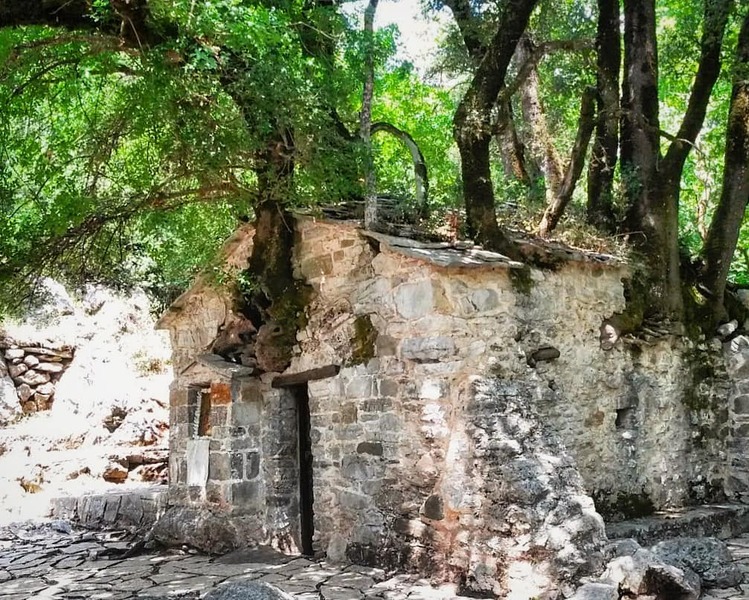
Agia Theodora — The 17 Trees Chapel
@gkhmaladze78
Why does such a small 12th‑century Byzantine church, tucked between Arcadia and Messinia, attract so many visitors? Agia Theodora owes its fame to the 17 trees that spring straight out of its roof, trunks and branches piercing through the walls and tiles, all mysteriously nourished by the nearby river. The Guinness Book of World Records even listed it as a “wonderful nave”, and while the setting is already magical on its own, the legend behind it gives the place an even deeper aura.
The story goes that Agia Theodora was the eldest daughter of a very poor family, who forced her to disguise herself as a man and serve as a mercenary soldier to support them. As “Theodoros”, she caught the eye of a young girl who, hurt by “his” lack of interest, accused “him” of leaving her pregnant. Condemned to martyrdom by the girl’s family, the deeply God‑fearing Theodora prayed before her beheading and her hair became trees, her blood became the flowing river, and her body became the temple itself.
Trypti Church — Athens’ Hidden Cave‑Carved Sanctuary
While visiting Athens, don’t miss this rather strange little church hidden on Mount Ymittos, the perfect excuse for a little hike. Known as Trypti Church, it’s built directly inside a cave, with the exterior chapel of the Ascension of Jesus forming an open, hollowed‑out sanctuary carved straight into the rock. It’s lovingly tended all year long by the locals, who keep this tucked‑away spot glowing with candles, flowers and quiet devotion.
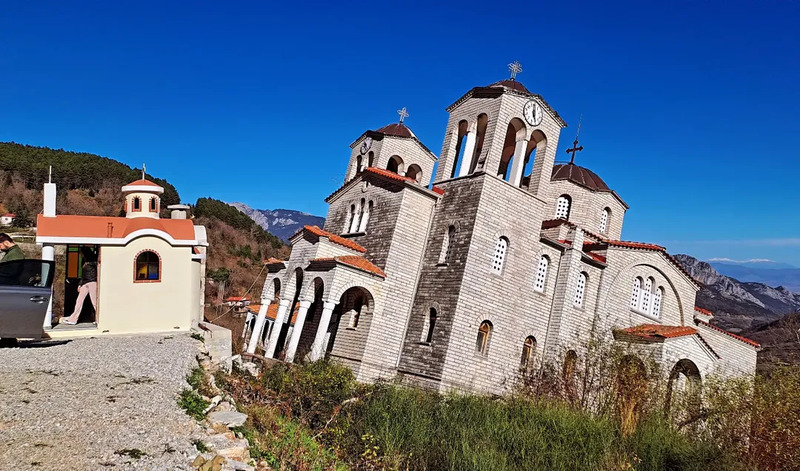
Ropoto Virgin Mary — The Leaning Miracle
@mr.kaspars
@mr.kaspars
In 2012, a major landslide turned life upside down in the small village of Ropoto, tucked into the mountainous region of Trikala. After years of ignoring warnings about unstable ground, the inevitable finally happened: houses cracked open, roads collapsed, and residents were forced to abandon their homes. Yet in the middle of all this destruction, one building remained standing : the Church of the Virgin Mary. Leaning at a dramatic 17‑degree angle, it somehow avoided collapsing and suffered no serious damage. Many locals and believers are convinced this wasn’t luck at all, but a genuine miracle. Today, the church has become both a symbol of hope and faith, and a rather unusual tourist attraction. And although the area hasn’t been officially declared completely safe, that certainly doesn’t stop visitors from coming, snapping photos, and sharing the story of this stubborn little survivor.
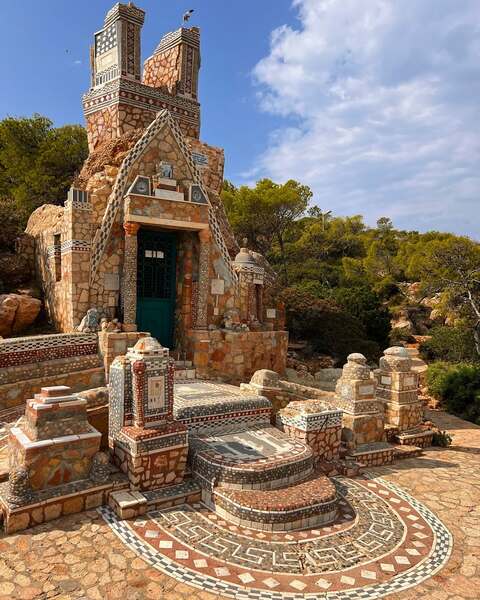
Chapel of Nikolaos Xenos — The Pebble‑Clad Fisherman’s Masterpiece
@farahsamuray
@farahsamuray
Past the megayachts in Vouliagmeni’s hyper‑modern marina, tucked away down a short path on Laimos Hill near the tip of the peninsula, you’ll stumble upon a hidden little chapel, a true gem covered in pebbles and maritime motifs. It’s the work of local fisherman and sculptor Nikolaos Xenos, who, with remarkable dedication, brought all the materials by boat himself and carried out the entire construction by hand. A real passion project that took years to complete, the chapel is tiny but brimming with details, including an interior filled with icons. Its architectural style is unlike any traditional Christian chapel you’ll find in the city, and its folk‑art touches and sea‑faring imagery make this holy spot stand out beautifully against the marina’s sleek restaurants and fashion boutiques.
Agios Isidoros, Leros — The Chapel In The Sea
@gokcenkuru_
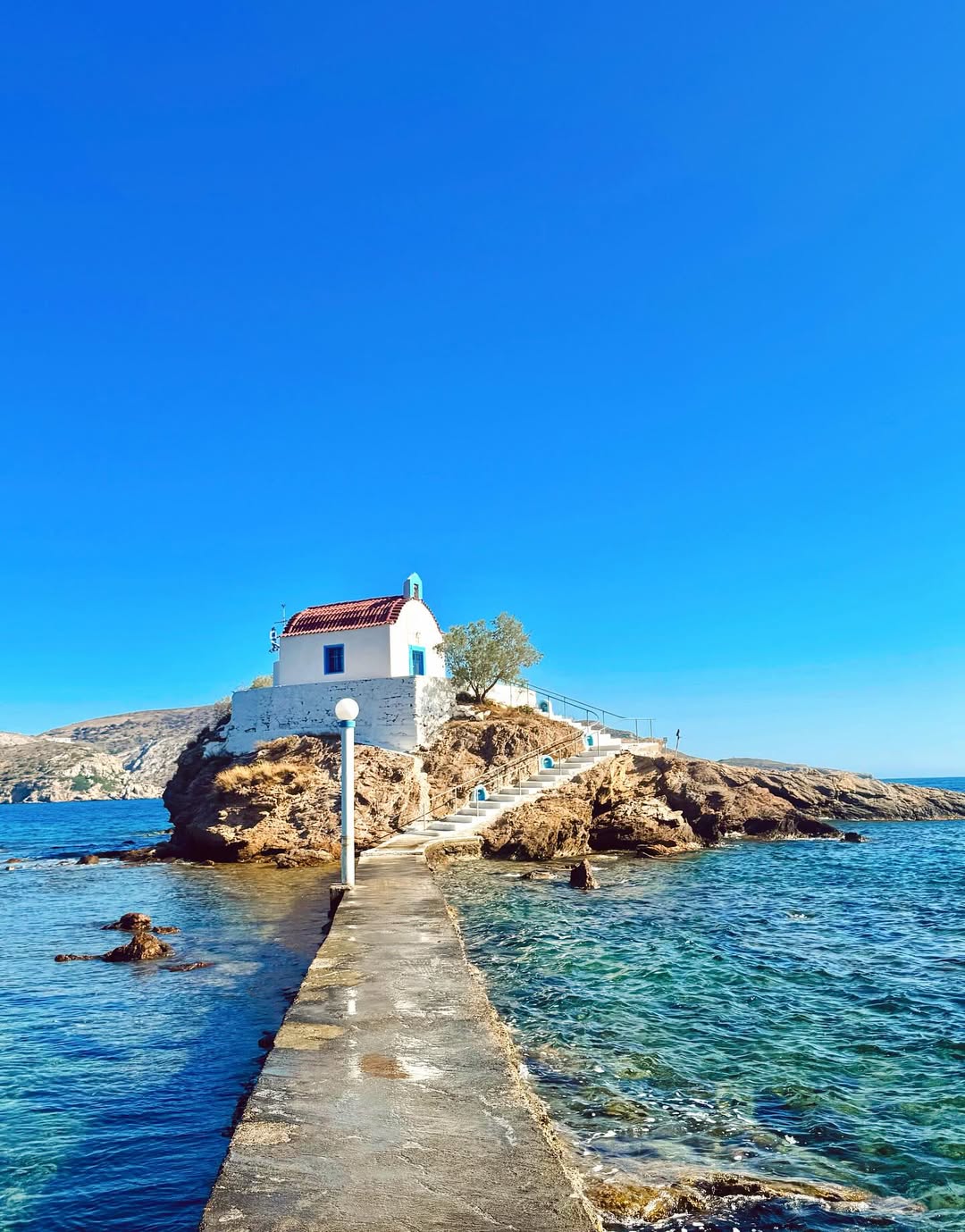
A stunning little chapel perched on a rock in the Mediterranean Sea : that’s Agios Isidoros, one of the true gems of the island of Leros. Standing about 50 metres off the coast, the tiny whitewashed church is linked to the land by a narrow footpath that seems to float above the water. The building itself is simple, with just a few pieces of religious art hanging on the walls and a golden light fixture adding a touch of ornate charm.
Agios Isidoros sits in the Bay of Gourna, not far from the village of Kokkali, and was built on the site of an ancient temple, the remains of which can still be seen behind the altar. More traces of old structures lie scattered in the waters around the chapel, giving the whole place a quiet, timeless feel. And as if that weren’t enough, it also happens to be one of the very best spots on the island to watch the sunset!
Agios Spyridon, Nafplio — The Basilica That Became A Crime Scene
An unassuming church that has witnessed some truly wild chapters of Greek history: the Church of Agios Spyridon in Nafplio, which at the time belonged to the Republic of Venice. With the Venetians allowing freedom of religion, the Nafplian Brotherhood of Orthodox Greeks openly raised funds in 1702 and built Agios Spyridon right in the heart of the city. The church was designed as a single‑dome basilica, its walls covered in Byzantine paintings, the most striking being a colourful fresco of the First Ecumenical Council of Nicaea. A hexagram was even placed on the floor, an unusual feature for a Greek Orthodox church.
Nafplio fell back under Ottoman rule in 1715 and stayed that way until it became the capital of the First Hellenic Republic at the start of the Greek Revolution in 1821. And then came the moment that sealed Agios Spyridon’s place in history: in 1831, Greece’s head of state, Ioannis Kapodistrias, was assassinated right at its entrance by members of a rival clan who opposed his vision for the newly independent country.
Kapodistrias’s embalmed body was displayed in his mansion for several days, and since holding a funeral in the very church where he was murdered was deemed inappropriate, the ceremony took place in nearby Agios Georgios. Shortly afterwards, his internal organs were placed in a casket beneath the altar of Agios Spyridon. A bell tower was added in 1853, and only minor renovations have been made since.
To this day, the church still bears the scars of that dramatic moment: the bullet mark believed to have killed Kapodistrias is framed in brass and glass on the right side of the entrance, a quiet but powerful reminder of the turbulent history this church has witnessed.
Agios Sostis, Athens — From Paris Exposition To Athens
@iliasx_01
@iliasx_01
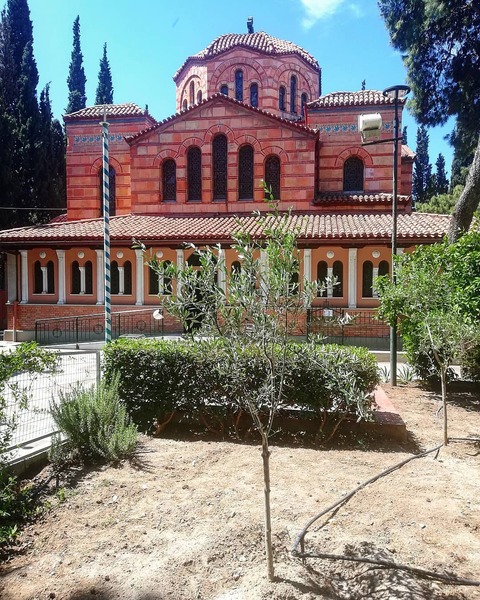
Shortly after the end of the Greco‑Turkish War of 1897, King George I of Greece was travelling in an open carriage with his daughter, Princess Maria, when an assassination attempt took place. In the midst of the attack, George showed astonishing bravery, shielding Maria from a volley of bullets fired by two rifle‑wielding shooters. This act of courage made him so wildly popular that Athens’ mayor, Spiros Mercouri, pushed the city government to build a church on the very spot of the attempt, as a tribute to the king’s heroism.
Mercouri soon learned that Greece was taking part in the 1900 Paris Exposition with a pavilion featuring a large Byzantine‑style church surrounded by Greek ruins. He arranged for the entire structure to be shipped back to Greece once the seven‑month exhibition ended. In the meantime, he had a stone foundation laid at the site of the assassination attempt. After the Paris Exposition closed, the 150‑ton church was dismantled, transported to Athens, and reassembled block by block on its new foundation.
It was named Agios Sostis (Christ the Holy Saviour) in honour of the king and princess who had been “saved” from the assassin’s bullets.
Meteora — The Monasteries Suspended Between Earth & Sky
@anastasi.simple
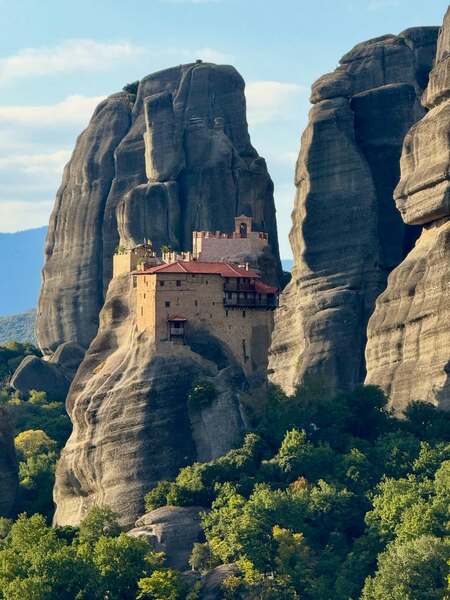
Of course, when it comes to astonishing religious sites, there’s no skipping Meteora. These monasteries rise out of a spectacular landscape in Thessaly, on the northern Greek mainland, where the first hermits carved out their refuges in crevices and caves at dizzying heights at the foot of the Pindos Mountains back in the 9th century. These early places of prayer were primarily shelters — remote, hidden, and safe. Between the 12th and 14th centuries, the first monasteries were built on top of the towering rock pillars. The monk Athanassios Meteoritis founded the very first one, Metamorphosis (Megalo Meteoron), in 1356, and he was the one who gave the entire region its name: Meteora.
Until the early 20th century, the monasteries were practically unreachable. People and supplies were hauled up in nets and baskets using winches — and you can still see remnants of these old systems at some of the monasteries today. Nowadays, all the inhabited monasteries have stairways, making them far easier to access. Over the centuries, a total of 24 Greek Orthodox monasteries and hermitages were built here, and six of them are still active and open to visitors. No surprise, then, that Meteora is now a UNESCO World Heritage Site — a place where nature, faith and sheer human determination come together in the most breathtaking way.
Agios Andreas, Syggrou Park — Greece’s Only Gothic Orthodox Chapel
If you’re planning a walk through the lovely Syggrou Park of Agios Andreas, make sure you stop by this one‑of‑a‑kind church. Agios Andreas is the work of Bavarian architect Ernst Ziller — the very same artist behind the Syggrou Villa. His foreign background explains the chapel’s utterly unique appearance: it is, in fact, the only Gothic‑style Orthodox church in all of Greece.
This small chapel in Alsos Syggrou follows the basilica type, yet its architecture shares several features with the Catholic church of Agios Loukas in Neo Irakleio, Attica. The result is a delightful little oddity: a Gothic gem tucked inside a Greek park, standing quietly apart from every other Orthodox church in the country.
Agios Stefanos, Galissas — The Cliffside Chapel
@hundertmalmeer
@hundertmalmeer
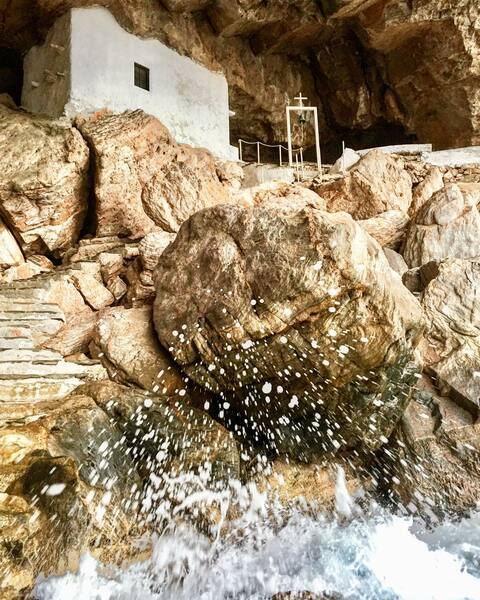
Agios Stefanos is a little treasure you truly have to earn. Built by a fisherman who was saved from the tentacles of a giant octopus after praying to the saint for help, the chapel sits tucked among the rocks in the Galissas area — reachable only by a short walk down the cliff or by boat. On the 19th of August and the 26th of December, the feast days of Agios Stefanos, crowds of people make their way to this tiny seaside sanctuary to attend the liturgy. And after the service, every pilgrim is treated to loukoumi, the beloved local sweet, along with fragrant mastic from Chios. A small chapel with a big story, perched right where the sea meets the rocks.
LIFE & CULTURE