
Moving To Greece? Tonia Tsirogianni Of TaxWise Greece On Navigating The Greek Tax System
- by Aggeliki Vourliotakis
- Friday, 25 September 2026

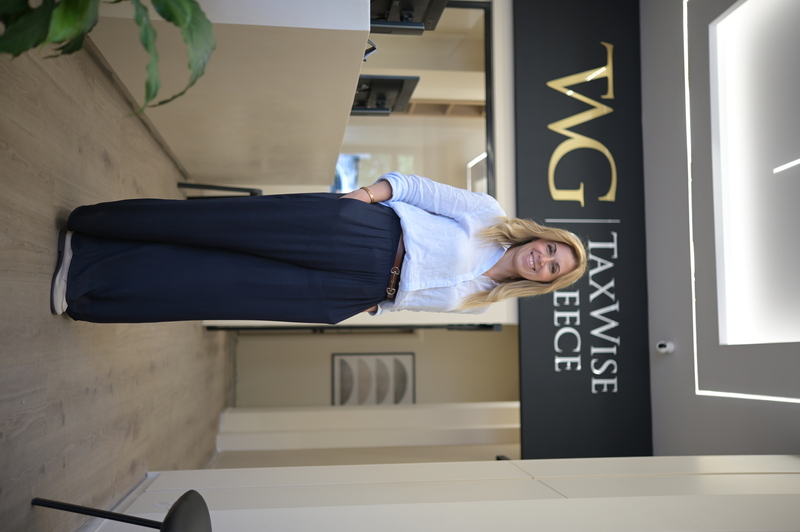
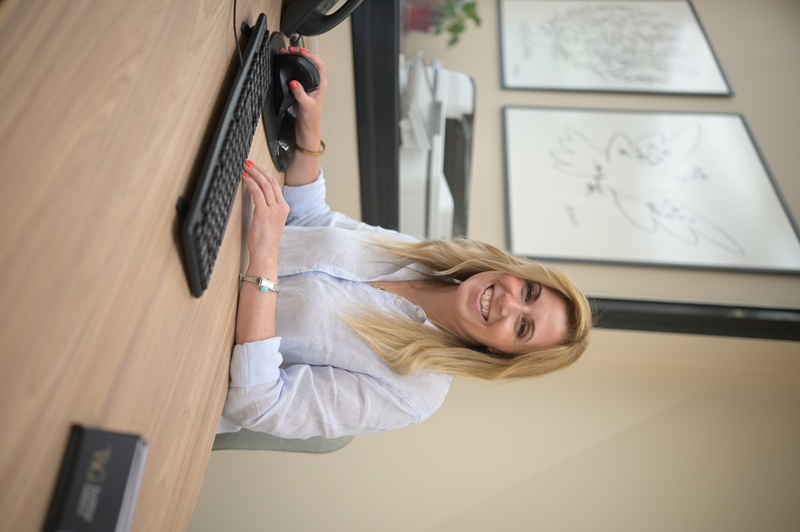
We sat down with Tonia Tsirogianni, Founder of TaxWise Greece, our trusted accounting partners, to talk about one of the most important (and often most confusing!) aspects of relocating to Greece: understanding the tax and financial system.
With particular expertise in working with digital nomads, expats, international clients and people relocating to Greece, TaxWise Greece helps clients navigate everything from obtaining a Greek Tax Identification Number (AFM) and understanding their tax obligations to setting up a business, buying property and making the most of available tax incentives. The team also works with Greek clients, providing accounting and tax advisory services tailored to their individual needs.
In this conversation, Tonia shares practical advice for anyone considering moving to Greece, explains some of the most common misconceptions foreigners have about the Greek tax system, discusses the tax incentives available to those relocating, and explains why preparation and having the right advisor by your side can make such a difference.
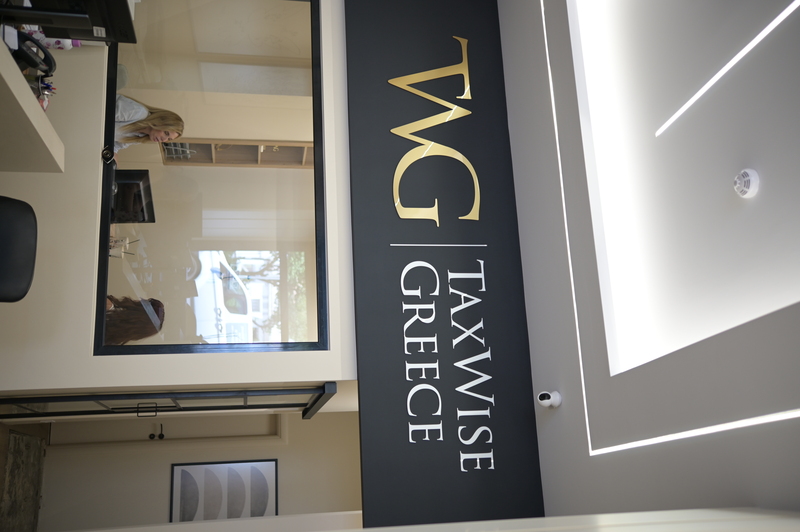
Over the last year, we went through a rebranding. Our previous name was LogistisMou, and the reason behind the rebranding was our vision to connect more with international clients and Greeks living abroad.
This is also something very personal to me, because my sister and other members of my family have moved abroad. I have lived through it, heard their experiences, and helped them with the difficulties of moving to another country. So I can understand, feel, and empathise with people who come to a new country and don't know where to start.
What we're trying to do with TaxWise Greece now is to help people by giving them clarity and guidance, showing them all their options, and then helping them make the right decisions.
Relocation is not only about a new lifestyle, the weather, the food, or the dreams you have. It's also a new chapter in your life. So, it's very important to have a trusted partner throughout this journey. This is what we try to achieve with our clients: to be there throughout the whole journey, helping them make the process better, with fewer obstacles, so they can actually enjoy it.
It's a new chapter in their lives, and we hope it will be less stressful for them. That's the vision behind the name and the whole team. Every time someone calls us or sends us an email, the first thing we want to do is understand why they want to come to Greece and what they need.
The name, well, it came out through a lot of thought and discussions. First of all, we wanted it to be a name that foreign clients could easily spell. Secondly, we wanted to include the word "Greece", so it would be easy for someone to find out about us.
We also wanted to be very specific about what we do. We're not an education company; we're talking about taxes and your finances. So we tried to combine "Tax", "Greece", and "Wise", because being wise is also about making the right decisions. That's how the name TaxWise Greece came about; to be focused on what we offer and what we want to help our clients with.

What is it that makes you different from other traditional accounting firms?
I think our biggest difference is that we don't just provide accounting services. We go through all the options and explain their possibilities to our clients in English.
What people think is best for them is not always the best, and what their friends have told them may not necessarily be the right option either. So we try to give them all the options, make sure they have all the information they need, and then let them decide.
International clients come to a new country knowing nothing about the system. So our mission is to speak their language. All of our team members speak English, and basic communication is always in English. Because it's not easy when you don't know the language, and many things are not available in English, even websites and information.
So, first of all, we try to adapt to them and make the process easier. We also aim to respond within 24 hours. I think it's very important for someone who doesn't know us yet to feel that whenever they call us or contact us, we will be there to respond to them.
I think these are the three things that make us different and unique from other accounting firms: English communication, responsiveness, and empathy for people who are coming to a new country. And, of course, our expertise with this particular clientele.
If you are considering relocating to Greece, already living here, setting up a business, buying property, or simply need help navigating your tax and financial obligations, you can get in touch with TaxWise Greece directly here, send an email at info@taxwisgreece.com or call (+30) 210 8239877 and (+30) 690 7788191.
Many experts assume that moving to Greece is, as you mentioned before, mainly about lifestyle. What are some of the most important tax and financial considerations that people should think about before relocating?
So, before relocating, it is important for everyone to understand that by coming to Greece, they become tax residents of Greece, and their global income will be subject to taxation in Greece. The majority of people ignore this, so that's one of the most important things to understand.
It's also important to check whether there is a Double Taxation Agreement between the two countries and, if there is, what it means for them and how it applies to their specific situation.
The second thing is time. In Greece, everything takes longer, so it's good to have your documents prepared in advance. Another thing we often see is that people don't come prepared with the necessary documents.
The documents need to be apostilled and translated because, once you leave your own country, it can be very difficult to access all these documents.
So, when we say "bring your documents with you", we mean to have them already apostilled and translated before you relocate.
What are the most common misconceptions about the Greek tax system that foreigners have?
I think the first misconception is that all the information and documents will be available in English and that it will be very easy for them to navigate the Greek tax system. In reality, language can be a significant barrier. Many people think they can do everything on their own, even if they don't speak Greek, simply by translating documents or using translation software. But the Greek tax system can be difficult to navigate without understanding the language and the processes behind it.
The second misconception is that they think all the different systems in Greece are connected and that information is automatically shared between them. They are not always connected, so there are often different procedures, platforms, and authorities involved. This can be confusing for someone who is used to a more integrated system in their home country.
The third, and probably one of the biggest differences between Greece and many other countries, is the concept of the annual income tax return. In Greece, filing an annual income tax return is mandatory, whereas in many other countries, individuals are not necessarily required to file a tax return every year, depending on their circumstances.
This is often a major point of confusion for our international clients. They may come to us and say, "I don't have to file a tax return in my country, so why do I have to do it in Greece?" But in Greece, the annual tax return is part of the standard tax obligations, and people need to understand this from the beginning.
Another important difference is that people may come from countries where there is more flexibility around tax deadlines. For example, in the US, people may be familiar with the concept of requesting an extension to file their tax return. In Greece, you cannot simply assume that you can request an extension because you are not ready by the deadline. The deadlines and rules are different, and it is important to be prepared and file on time.
There is also an important difference in the way self-employment and freelancing are treated compared with other countries. Many of our clients come to us and say, "I'm a freelancer, but I don't declare it," or "I have a side job, so I don't need to declare it." In Greece, however, income from freelance or self-employed activities needs to be properly declared, and in many cases, this means setting up a business as a self-employed individual and fulfilling the relevant tax obligations.
Greece has become very attractive for digital nomads, retirees, entrepreneurs, and investors. What opportunities and tax incentives are currently available for those considering relocating here?
All the incentives that we have now are mainly for people who can work here or who are already pensioners. People who don't have access to the Greek market cannot take advantage of these initiatives. Also, people who don't live in the EU and don't have the appropriate visa or residence permit cannot benefit from these incentives.
There is Article 5C for both employees and self-employed individuals, with different conditions and tax benefits depending on the situation.
For pensioners, if you meet the requirements and become a tax resident of Greece, you can benefit from a flat tax rate of 7% on your pension global income for 15 years. For working individuals, Article 5C also provides specific tax incentives when they transfer their tax residence to Greece and meet the relevant requirements.
And, of course, these incentives are not only for foreigners. They can also apply to Greek citizens who have been living outside Greece for a minimum of five years, provided they meet the relevant requirements.
For someone who's moving to Greece for the first time, what are the first tax-related steps that they should take?
Preparation is everything. The most important first step is getting your Greek Tax Identification Number, your AFM, as a non-tax resident, ideally before you come to Greece.
The first step is also connecting your phone — whether it's a Greek or non-Greek mobile number — with your new tax ID. This is very important because it allows you to receive the necessary notifications and access different services.
Once you have your AFM, collect all your official documents from your country. If they are public documents, you need to have them apostilled and translated. All of this needs to happen before you come, because once you're here, it can be much more difficult to access documents from your home country.
And once you're here, speak with a tax advisor. Then, depending on your situation, you need to understand what your tax obligations are going to be.
If you're going to work here, when do your tax obligations start? Should you set up a business? What are your obligations as a self-employed person? If you're going to rent an apartment, what do you need to do? And if you're buying property, when do you need to pay property tax for the first time?
That's why I always say: go to a tax advisor and prepare everything in advance. Understand the system, understand your obligations, and know what to expect. Even if there are things you cannot do in advance, at least you will know what you need to do once you arrive.
What advice would you give to someone looking to start a business in Greece as a foreign resident?
Go simple. For example, if you are setting up a business, don't choose the most complicated option from the beginning.
Start with something simple, such as being self-employed, so you can navigate the system for the first year and understand how everything works: what your tax implications are, what your obligations are, and what you need from an accountant.
Then, if your income or revenue becomes high enough and you see that there could be tax benefits to changing your structure, you can always make that change later.
So sometimes, go simple, even if you pay a little more in taxes. It's more important in the beginning to understand the system, understand your business, and make sure everything is working properly before moving to a more complicated structure.
How do you help simplify the process for your clients?
As I said in the beginning, our role is to simplify things, coordinate the process, and prepare our clients in advance for every step.
The first thing we do, if a client already has a Greek Tax Identification Number, or AFM, is to make sure that the email address registered with the tax authorities is the client's own email address, and not the accountant's. This is very important because they need to receive notifications and official communications directly. If everything is registered under the accountant's email, the client may not see an important notification or may not be aware that something has been sent to them.
From our side, we also communicate with the authorities on behalf of our clients. In every request we submit, we include our phone number and our name, so that if the tax authorities have any questions or need additional documents, they can contact us directly instead of putting the client through that process.
We don't want our clients to be stressed or worried about navigating the system themselves. Our role is to coordinate everything, communicate with the authorities, make sure they are informed, and guide them through every step.
Ultimately, we want our clients to feel that someone is taking care of the process for them, while still making sure that they are personally informed about everything that concerns them.
What would you say is the biggest benefit of working with someone who understands both the Greek tax system and the needs of international clients?
The knowledge and the expertise are one part of it. Having a specialist who understands the Greek tax system is very important, but with international clients, there is another important element: understanding their mindset.
We take it, by default, that they don't know anything about the Greek system. They don't have any prior knowledge, so we need to approach them in that way and explain everything step by step. Even the simplest things that we may take for granted ourselves are not necessarily simple for someone who has just arrived in Greece.
So, for us, it's a combination of technical expertise, responsiveness, speaking English, and transparency from beginning to end.
Usually, clients contact us because they don't know where to start. They don't know where to communicate, who to contact, or what they need to do. So we also become their main point of contact.
Usually, you start with the Greek Tax Identification Number, the AFM, and then we can help with the Social Security Number, if they are eligible to have one. If they are going to have a business, we explain their obligations. We explain their income tax, their rental agreement when they rent an apartment, and all the other things they need to know.
These are some of the most common questions and services we provide. However, many of our clients also ask for help with opening a bank account, or even with obtaining a mortgage because they want to buy a property in Greece. So we can also help them navigate that process.
We also have clients who come to us because something has gone wrong or because a previous process was not handled properly.
For example, we had a client who had applied for Article 5C, but the application had been sitting for almost two years without moving forward. There had been some communication from the tax office, but the previous accountant had not responded to the request, and the application was at risk of being cancelled.
The client came to us after approximately two and a half years, and we took over the request and followed up with the tax authorities. Eventually, the application was approved, and the client was able to benefit from the tax incentive for the remaining seven years.
This is something we see quite often. Many clients come to us after mistakes have been made or because something has not been followed up properly. Sometimes they don't even know that there is a problem until they come to us.
With international clients, you need to explain the deadlines, what they need to do, which buttons they need to press, and why. They need to feel comfortable and understand what is happening.
We don't only communicate with our clients when they have an immediate tax issue. We very often send emails and notifications to our clients, even if someone has only come to us once a year for their income tax return, in order to keep them informed about changes in the tax system.
They may not understand today why a particular tax initiative is important, but six months later they may decide they want to buy an apartment in Greece, and that information could become very important for them. So we want to make sure that they are always informed about new initiatives and tax changes, using basic and clear information, because we know they don't necessarily have the background knowledge.
And, of course, all of this communication is in English. We explain everything because we understand that, for an international client, the Greek tax system is completely new.
 https://www.xpatathens.com/living-in-athens/practical-information/accounting-taxes/item/10380-article-5c-greece-what-you-must-know
https://www.xpatathens.com/living-in-athens/practical-information/accounting-taxes/item/10380-article-5c-greece-what-you-must-knowHow do you envision TaxWise Greece in the next few years? What are your goals and your vision for the company?
We're hoping that people who relocate to Greece will stay here until they become pensioners, and that we can be with them throughout all these years, from the beginning until the end.
We want to be able to support them whenever they have questions. Even if something is not necessarily our field, at least we can guide them towards where they need to go, who they need to contact, or what they need to do.
We want TaxWise Greece to be a firm that someone who wants to relocate to Greece, or someone who is already living here, feels they can trust. We want them to feel that there is transparency, responsiveness, and support whenever they have a question or a problem related to their finances, their property, or their life in Greece.
Every time they have a question, we want them to think of us first. Because, ultimately, we want to build trust and have a long-term relationship with our clients.
We don't want to be there just for one tax return or one particular service. We want to be their trusted partner throughout their journey in Greece.
So, if someone wants to get in touch with you, what is the first step they should take?
I think the best way is by sending us an email, but we always ask them to include their phone number. This way we can call them directly and have a conversation.
We usually start with a 15-minute brief call to understand their situation and see if we can provide the specific service they need. Then, if we can help, we schedule an appointment of around 40 minutes, where we navigate them through the process, explain the deadlines, the steps, the obligations, and the documents they will need.
But, of course, someone can also call us directly. We are available Monday to Friday, so they can contact us by phone as well.
A big thank you to Tonia Tsirogianni and the TaxWise Greece team for taking the time to speak with us and for sharing such valuable insights with our readers.
If you are considering relocating to Greece, already living here, setting up a business, buying property, or simply need help navigating your tax and financial obligations, you can get in touch with TaxWise Greece directly here, send an email at info@taxwisgreece.com or call (+30) 210 8239877 and (+30) 690 7788191.
LIFE & CULTURE