
Where To Celebrate Apokries This February: A Guide Through Greece’s Carnival Season
- by XpatAthens
- Thursday, 29 January 2026

If February feels a little louder, brighter, and smokier than usual… it means Apokries is quietly starting to unfold.
Though many now associate it with the Catholic calendar, Apokries actually has deep roots in ancient Dionysian festivals, celebrating the end of winter and the promise of spring. The word apokries literally means “away from meat,” marking three weeks of joyful excess before the fasting period of Orthodox Lent.
Across Greece, the month reveals a series of cherished customs: smoky barbecues, masked parades, flour battles, bonfires, traditional dances, and a whole lot of joyful chaos. Here’s your guide to making the most of it.
Across Greece, the month reveals a series of cherished customs: smoky barbecues, masked parades, flour battles, bonfires, traditional dances, and a whole lot of joyful chaos. Here’s your guide to making the most of it.
A quick calendar of Apokries
- Apokries (February 1–22 2026) : The full carnival period, with each week bringing its own traditions and event
- First Sunday (February 1 2026) : This Sunday officially kicks off Apokries, with ceremonies held mostly in church. It’s preceded by the “Saturday of Souls,” a day when families honor their departed loved ones
- Tsiknopempti (February 12 2026): The real party begins! And even if you somehow forgot about it, the mouthwatering smell of grilled meat will remind you soon enough. In this “smokey Thursday”, cities fill with the irresistible aroma of barbecues firing up on every corner: souvlaki, lamb chops, sausages, kokoretsi… a true carnivore’s dream before meat disappears from the menu for Lent.
- Carnival Sunday (February 15) : Costumes, confetti, dancing — the festive peak.
- Tyrini (February 22) : This final day before Lent, translated as “Cheesy Sunday”, devoted entirely to dairy delights, falls right after the second Psychosavvato.
- Kathara Deftera (February 23) : The first day of Lent comes with its own delicious rules: no meat, no dairy, no fish — but shellfish is absolutely allowed. It’s the perfect excuse to head to the sea for seafood feasts, fresh salads, and sesame‑covered lagana bread. Whether you’re by the waterfront or perched on one of Athens’ city‑center hills, Clean Monday is all about picnics and kites. You’ll see them floating across the sky everywhere — a tradition that dates back to antiquity, symbolizing purity and the soul rising toward the divine.
Athens: Street Parties & Confetti Battles
The capital bursts with free events: dance workshops, outdoor concerts, costume parades, and tastings of traditional treats. The city’s official website posts the full program each year.
Head to Kerameikos for lively costume processions, then climb up to Plaka at night for spontaneous confetti fights and street dancing.
Patras: The Queen of Greek Carnivals
Athens may be the capital of Greece, but the undisputed capital of Apokries is Patras. Every year, it’s more than 300,000 participants and spectators that flood the city for its legendary carnival.
The grand parade on the final Sunday ends with the symbolic burning of the Carnival King, marking the transition from winter to spring. In the days leading up to it, the city hosts bouboulia balls (where women choose their dance partners!) and a massive city‑wide treasure hunt.
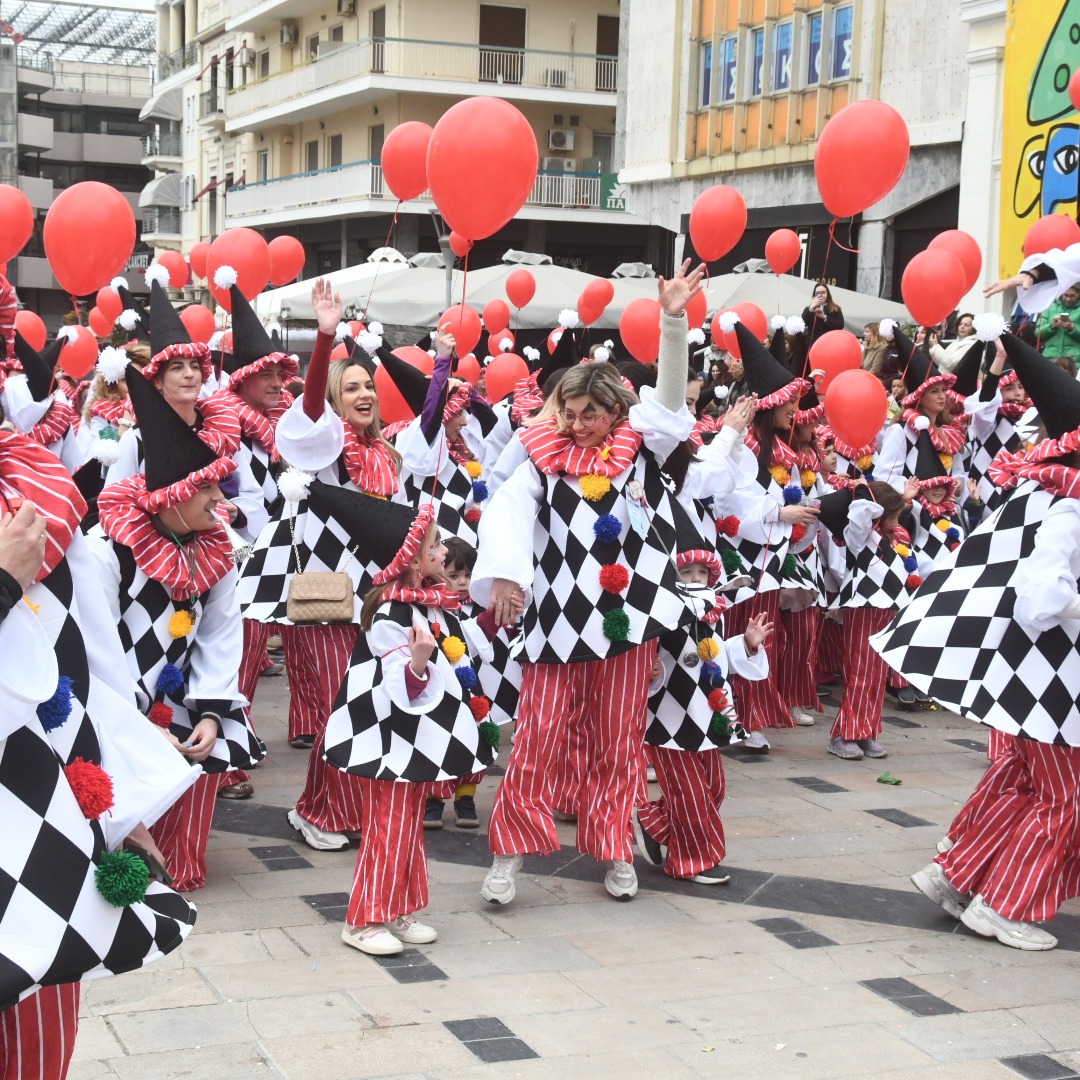
@patrasevents.gr
Naxos: The Mysterious Koudounatoi
The islands know how to celebrate Apokries too! In Naxos, and especially in the mountain villages of Apíranthos and Filoti, the eerie Koudounatoi roam the streets on the last weekend of Apokries.
Dressed in capes and masks, with ropes of clanging bells wrapped around their bodies, these strange young men go house to house asking for eggs and occasionally tapping passers‑by with their soba sticks.
Xanthi: The Artsy Carnival
In Thrace, Xanthi might host the most artsy version of Apokries. Expect exhibitions, concerts, and dance performances, organized in collaborations with more than 40 cultural groups.
On Sunday, the festivities culminate in a costumed parade, the burning of a figure symbolizing winter, and a beautiful fireworks show.
Galaxidi: The Famous Flour Battle
Looking for something unforgettable (and extremely messy)? Head to Galaxidi on Clean Monday for Alevromoutzouromata, the town’s iconic flour‑throwing tradition dating back to the 19th century!
Around noon, grab a bag of colored flour provided by the municipality — and let the battle begin! No mercy here: the hostilities only end when participants finally give up. Each year, no less than 1.5 tons of colored flour are thrown at the crowds! Pro tip: wear clothes you don’t mind sacrificing… and maybe bring goggles.
After the chaos, make peace with your one‑day adversaries over a generous buffet and artistic performances that carry on late into the evening.
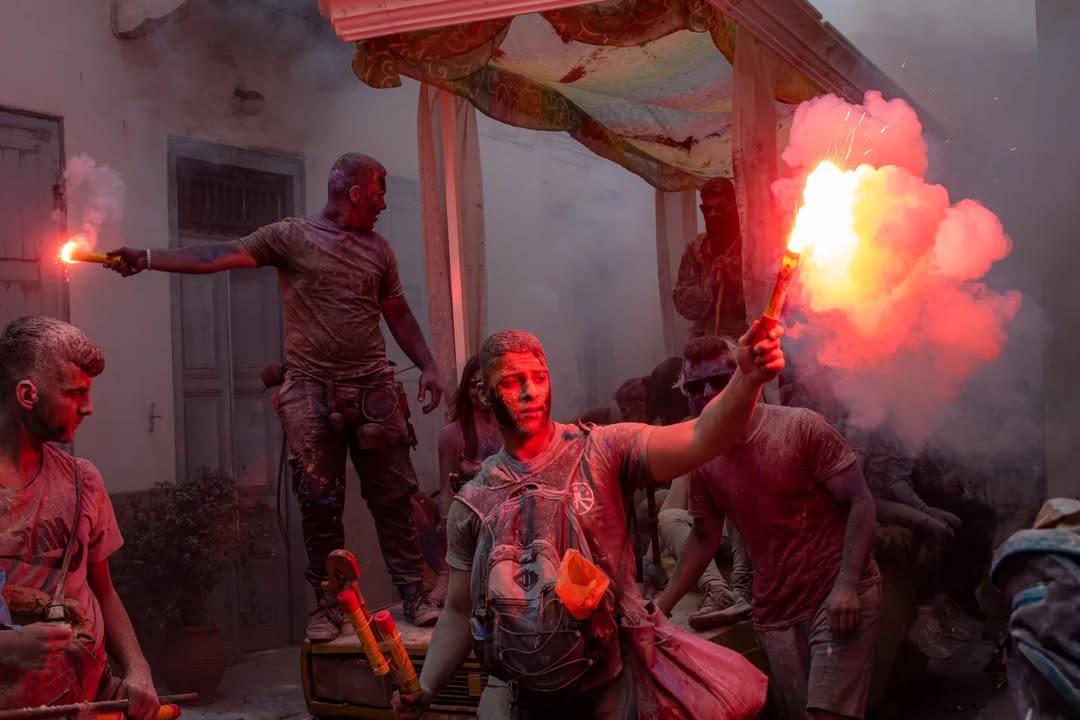
@elaki26
Kozani: Bonfires & Brass Bands
In Kozani, each neighborhood lights its own fanos (a wooden fire) during the twelve days leading up to the final Sunday. People gather around the flames to eat, sing, and dance to the sound of trumpets. Each household also lights a small lamp in its window to ward off the rougatsaria, men dressed in costumes with large bells who go door‑to‑door asking for treats, a tradition meant to chase away evil spirits. On the last Sunday, the main fanos is lit in the central square, and tavernas offer food and drinks freely.
Naoussa: Heroic Traditions & Hidden Identities
In Naoussa, carnival takes on a historical tone. Men dress as yenitsari or klephtes, avec la traditionnelle fustanelle et s’affrontent dans des simulacres de combats au sabre.The tradition commemorates the town’s resistance and the tragic massacre it suffered during the Greek War of Independence. The dances and music that accompany the parades echo the heroism of its inhabitants, the tragedies they endured, and the historical legacy they carry forward.
The highlight is the procession of the Genitsari and Boules: unmarried young men wearing wax masks and silver‑covered breastplates, symbols of the passage from adolescence to adulthood, escort “the Boula,” a young man dressed as a bride. Bagpipes, drums, dances, and ritual games fill the streets until nightfall, when the masks come off and identities are revealed.
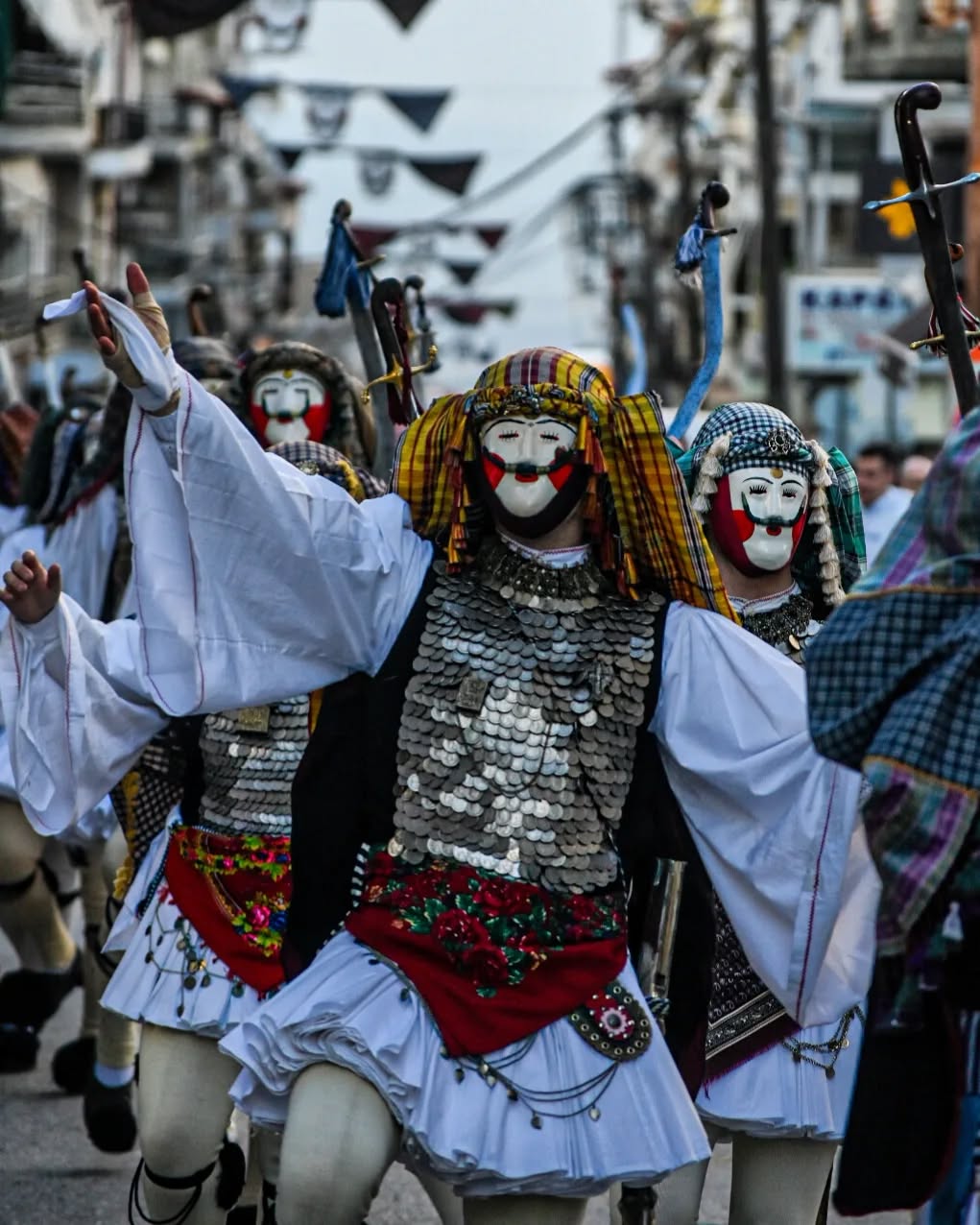
@george.laz1
In Kozani, each neighborhood lights its own fanos (a wooden fire) during the twelve days leading up to the final Sunday. People gather around the flames to eat, sing, and dance to the sound of trumpets. Each household also lights a small lamp in its window to ward off the rougatsaria, men dressed in costumes with large bells who go door‑to‑door asking for treats, a tradition meant to chase away evil spirits. On the last Sunday, the main fanos is lit in the central square, and tavernas offer food and drinks freely.
Naoussa: Heroic Traditions & Hidden Identities
In Naoussa, carnival takes on a historical tone. Men dress as yenitsari or klephtes, avec la traditionnelle fustanelle et s’affrontent dans des simulacres de combats au sabre.The tradition commemorates the town’s resistance and the tragic massacre it suffered during the Greek War of Independence. The dances and music that accompany the parades echo the heroism of its inhabitants, the tragedies they endured, and the historical legacy they carry forward.
The highlight is the procession of the Genitsari and Boules: unmarried young men wearing wax masks and silver‑covered breastplates, symbols of the passage from adolescence to adulthood, escort “the Boula,” a young man dressed as a bride. Bagpipes, drums, dances, and ritual games fill the streets until nightfall, when the masks come off and identities are revealed.
@george.laz1
Tyrnavos: A Carnival for those who dare
Tyrnavos is famous (or infamous) for its Bourani celebration on Clean Monday. Sensitive souls, beware: this celebration is all about earthy humor and unabashed fertility symbolism. This men‑led festival features a spinach‑based soup, plenty of wine, and an abundance of phallic symbols made of wood, bread, or clay to honor fertility. Though frowned upon by the Orthodox Church, this a bit‑on‑the‑saucy‑side tradition is centuries old and rooted in ancient fertility rites marking the arrival of spring.
So there’s no excuse not to dive into the wonderfully festive atmosphere of February in Greece! Dress up as your favorite character, feast on all kinds of traditional dishes, and dance the gaitanaki, the traditional carnival dance!
Tyrnavos is famous (or infamous) for its Bourani celebration on Clean Monday. Sensitive souls, beware: this celebration is all about earthy humor and unabashed fertility symbolism. This men‑led festival features a spinach‑based soup, plenty of wine, and an abundance of phallic symbols made of wood, bread, or clay to honor fertility. Though frowned upon by the Orthodox Church, this a bit‑on‑the‑saucy‑side tradition is centuries old and rooted in ancient fertility rites marking the arrival of spring.
So there’s no excuse not to dive into the wonderfully festive atmosphere of February in Greece! Dress up as your favorite character, feast on all kinds of traditional dishes, and dance the gaitanaki, the traditional carnival dance!
LIFE & CULTURE