

XpatAthens
The Science (& Magic) Of Hot Springs In Greece
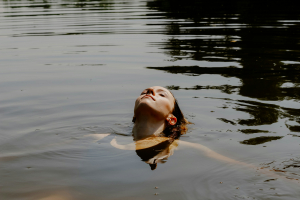
Mud Baths - A Timeless Ritual For Today's Well-Being
@chris_kap.21
Popular Hot Springs In Greece
Loutra Aidhipsoù, Evvoia
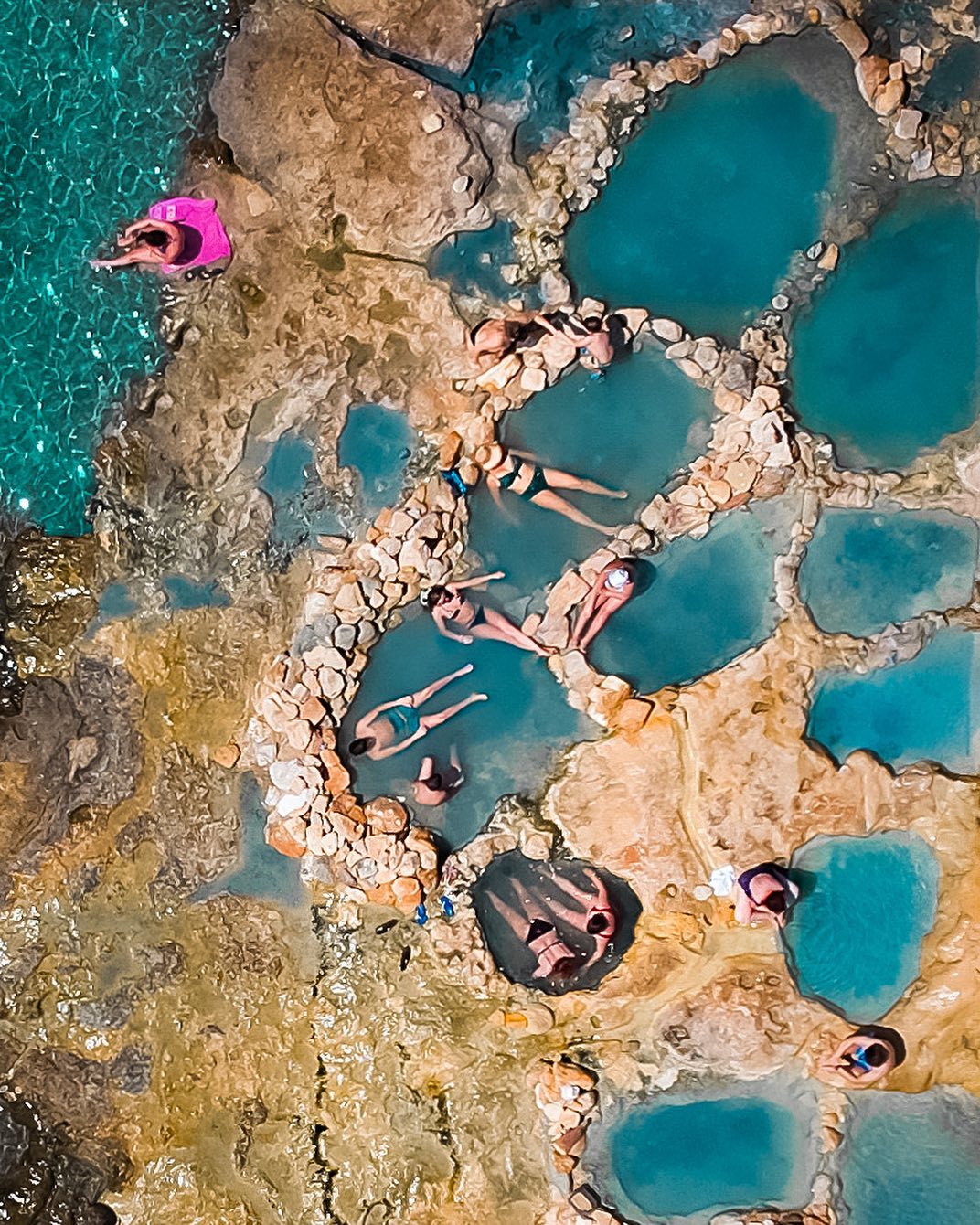
Aedipsos has a charm that’s hard to overstate. Just two and a half hours from Athens, on the easily accessible island of Evia, this historic thermal town is home to around eighty natural springs. Its waters, flowing at temperatures between 28° and 80°C, are naturally enriched with magnesium, calcium and iron, minerals long associated with soothing and restorative effects. What makes Aedipsos even more magical is the way its hot springs spill directly into the sea, creating pockets of semi‑thermal seawater along the shoreline. Slipping into these warm, mineral‑rich shallows feels like discovering a secret the ancient Greeks never quite gave up.
Loutra Killinis, Peloponnisos
Loutra Killinis, on the western edge of the Peloponnese, has been celebrated since antiquity for its remarkably therapeutic waters. Rich in sulphur and naturally warm, the springs here have long drawn visitors seeking relief and rejuvenation. What makes this spot particularly special is its natural mud — a mineral‑packed blend of thermal water and marine sediments that has been used for healing since ancient times. The combination is wonderfully indulgent: warm springs for deep relaxation, and silky, restorative mud that feels like nature’s own skincare ritual. It’s one of those rare places where the landscape itself seems determined to take care of you.
Kamena Vourla, Phthiotis
Kamena Vourla is a quiet seaside escape with a wonderfully unhurried charm, set about 150 kilometres north of Athens. Its hot springs, naturally warmed to between 30° and 40°C, are enriched with trace radioactive elements that many believe can help ease a range of ailments. The result is a gentle, soothing soak that feels both restorative and deeply calming. Beyond the springs themselves, the area offers easy access to cultural landmarks and nearby mountain regions, making it a lovely base for anyone seeking a blend of relaxation, nature and a touch of adventure.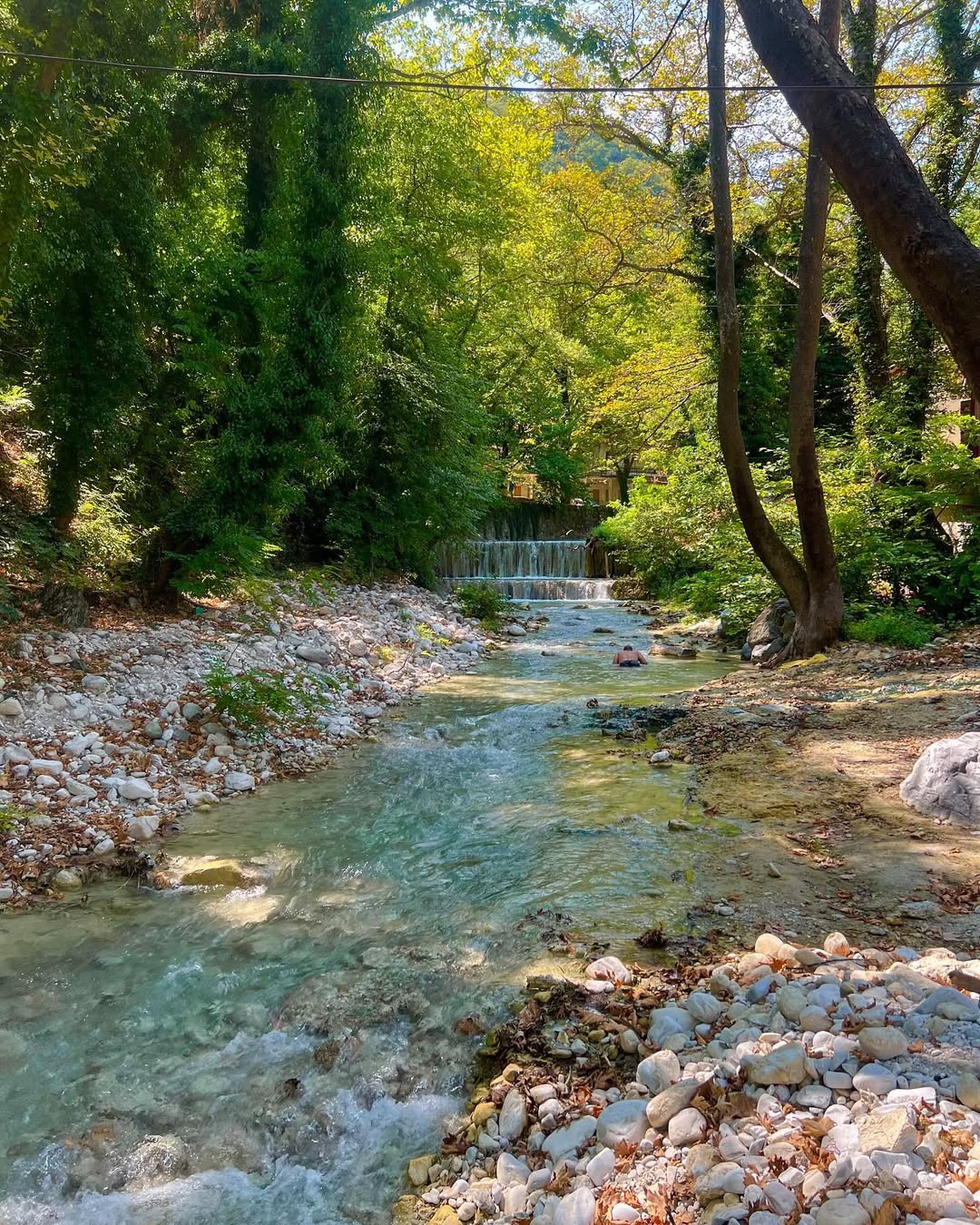
@kiriaki_limperi
Loutra Pozar, Macedonia
Pozar is one of those places where nature feels almost theatrical. At the foot of Mount Voras, a 37°C river milky with calcium carbonate cuts through a marble gorge, feeding eight outdoor pools, retro copper tubs and twin Ottoman‑era hammams. The water, nicknamed pózar (“fire” in old Serbian), has long been prized for easing neuralgia, sciatica and sluggish circulation. Just metres away, snowmelt waterfalls crash into the gorge, offering the kind of invigorating cold plunge that Nordic spas dream of. Set in the historic district of Pella, birthplace of Alexander the Great, the Pozar Thermal Baths combine hot springs, rivers and both natural and artificial waterfalls in a landscape that feels almost mythic. The Thermopotamos River flows through shallow bends and small cascades, its steady 37°C waters recommended for rheumatic, dermatological, respiratory and circulatory conditions ; a warm, mineral‑rich embrace in the heart of the mountains.
Ypati, Phthiotis
In the shadow of Mount Oiti, Ypati’s 33°C spring bubbles up rich in magnesium, calcium and natural carbon dioxide — a mineral cocktail long favoured for easing migraines, soothing the nerves and giving the cardiovascular system a gentle reset. Ancient lore claims that Hercules once paused here to recover between his feats, letting the warm waters melt away the strain of his labours. Spend a little time soaking and you may understand why: there’s a quiet strength to this place that leaves you feeling lighter.
Lagkada, Macedonia
Just outside Thessaloniki, Lagkada offers a wonderfully atmospheric blend of history and natural wellbeing. The site is home to two impressive natural hammams fed by hot springs that have been cherished for centuries. Alongside them, therapeutic mud used since Byzantine times adds another layer of tradition to the experience. It’s one of those rare places where hot springs and healing mud coexist in perfect harmony, creating a setting that feels both deeply rooted in the past and effortlessly soothing in the present.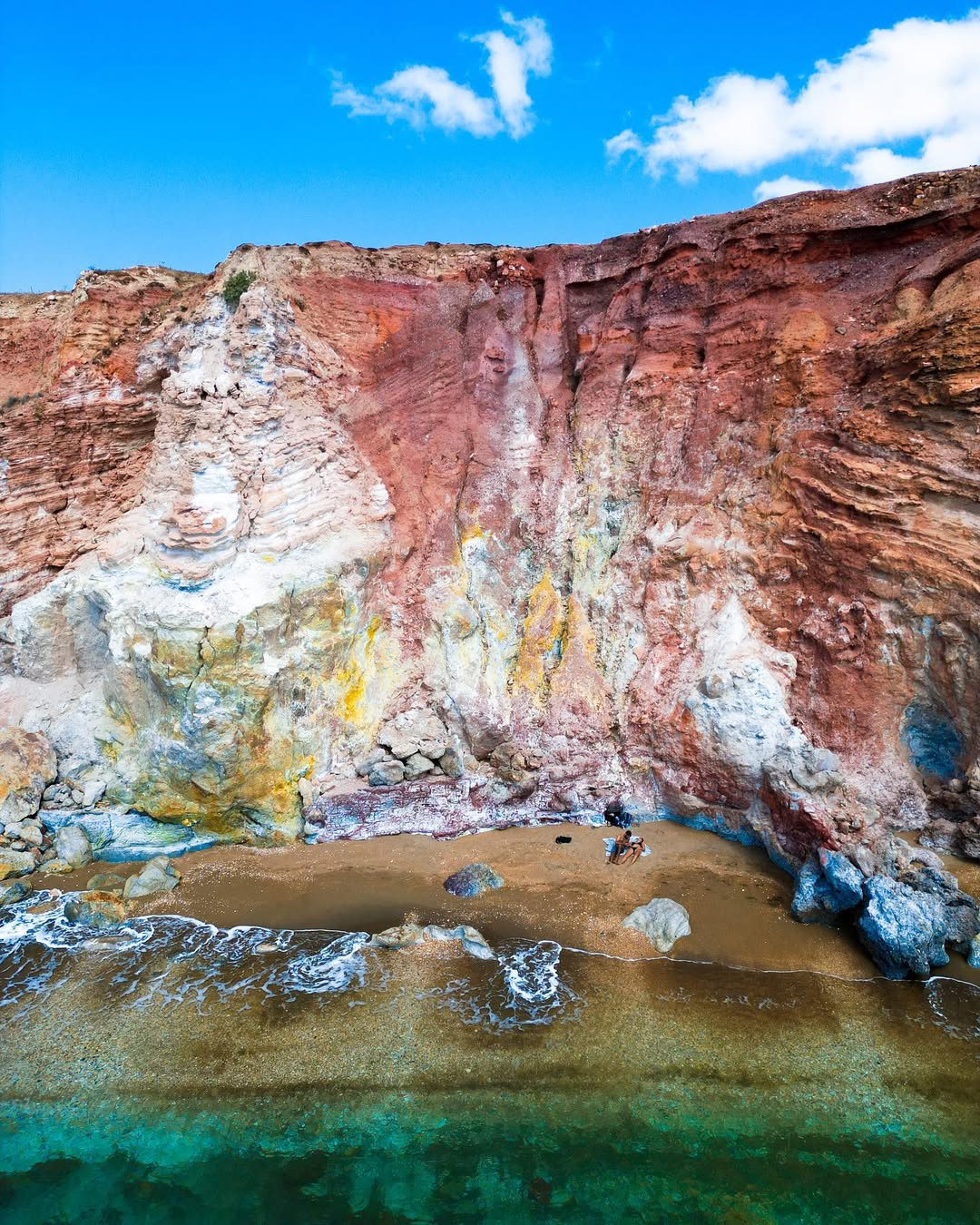
@shachafamit
Milos
Milos wears its volcanic soul proudly, and nowhere is it more evident than around Paleochori and Adamas, where pockets of warm, mineral‑rich mud form naturally along the shoreline. Thanks to the island’s geothermal activity, you’ll find spots where the earth gently steams, the sand is warm underfoot, and silky therapeutic mud appears in small, inviting pools. It’s a wonderfully elemental experience, part beach, part natural spa, with the Aegean’s clear waters just a few steps away for a refreshing dip.
Filiatra, Peloponnisos
Filiatra, tucked away in the Peloponnese, is home to hot springs that feel like a true hidden gem. Surrounded by lush greenery and completely free to enjoy, they offer a wonderfully peaceful escape for anyone craving a slower pace. The warm, mineral‑rich waters are believed to have gentle healing properties, drawing both locals and curious travellers in search of quiet rejuvenation. With tranquil views over the rolling hills, it’s an easy place to linger. And once you’ve had your fill of soaking, the nearby town invites you to wander its streets and experience a slice of traditional Greek life.
Mud Bath of Lydia, Kavala
Just outside Kavala lies the Mud Bath of Lydia, a place where myth and landscape seem to blend effortlessly. Legend has it that Lydia, a goddess famed for her eternal youth and luminous beauty, drew her radiance from the very mud that still lines these shores. Over time, her secret slipped into the world, turning these natural mud baths into a beloved retreat for anyone seeking healing, revitalisation and a whisper of ancient enchantment. And since Lydia herself has tested and approved the place long before any of us, you can head there with full confidence and let nature work its quiet magic!
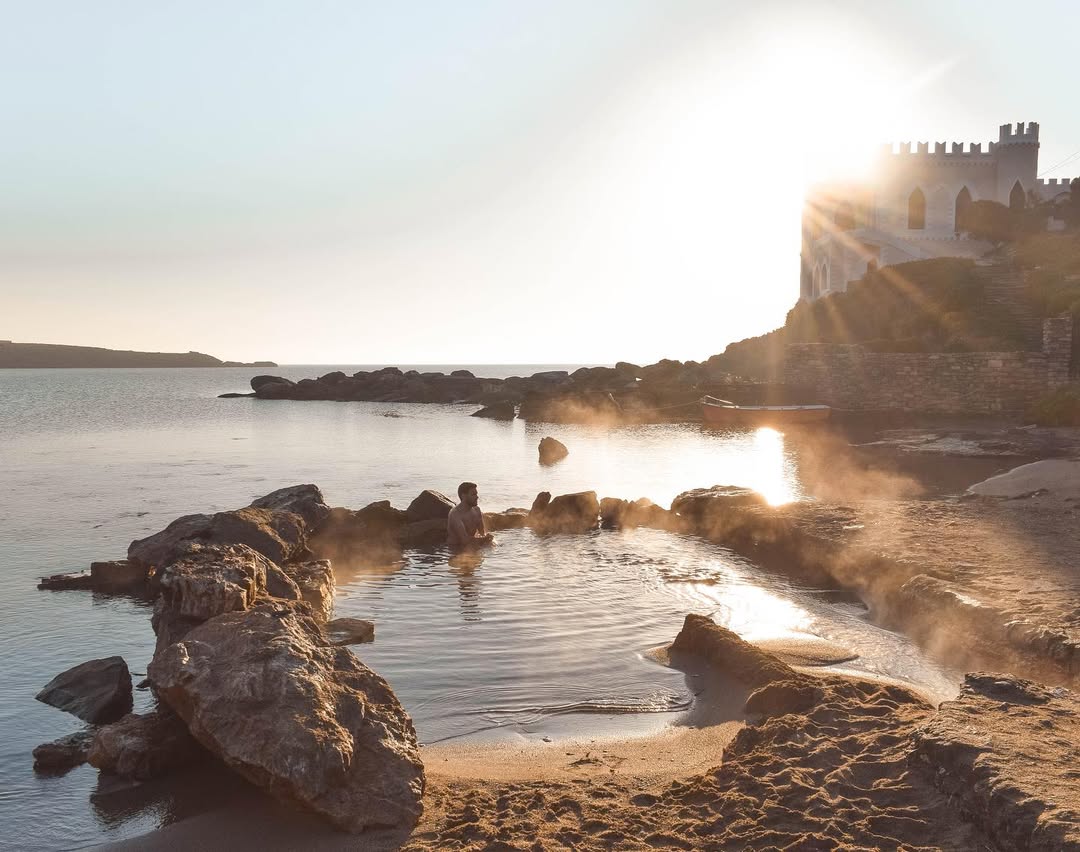
@yabatravellers
Kythnos
Kythnos is one of the Cyclades’ quieter treasures, and its natural hot springs are among the island’s most delightful surprises. In the Loutra area, warm thermal waters flow straight into the sea, creating gentle pockets where you can drift between soothing heat and refreshing Aegean blue. The setting is wonderfully serene : rocky coves, crystal‑clear water and far fewer crowds than on neighbouring islands. It’s the kind of place where you can truly unwind, then wander off to explore charming villages or follow scenic hiking trails that reveal sweeping views across the archipelago.
Exploring Greece’s hot springs and natural mud baths is a wonderfully soothing way to connect with the landscape — and with yourself — as long as you go prepared and tread lightly. Pro tip: check accessibility (some spots involve a short walk or hike), stay hydrated (warm waters can sneakily dehydrate you), and respect nature (leave each place just as magical and rugged as you found it). And once you’ve settled in, the experience becomes something deeper: a mud bath or a soak in a natural hot spring is a genuine moment of reconnection, giving you the space to unwind, care for your body and tune into your sensations. It’s a simple ritual that nurtures mental and emotional wellbeing, quiets external worries and restores a sense of inner balance : a true treasure for both body and mind!
Valen Therapy – Cognitive Behavioral Hypnotherapy

About Valen Therapy
Our Approach
-
Empowering clients to overcome mental and emotional hurdles
-
Helping individuals unlock their full potential
-
Supporting clients in leading a fulfilling, balanced life
Why Choose Valen Therapy
-
Experienced in working with international clients and expats
-
Offers both face-to-face and online sessions
-
Provides a safe and supportive space for personal development
Practice Locations:
-
Geneva and Thonon-les-Bains (Face-to-Face)
-
Online across Central and Western Europe
Website: www.valentherapy.com
Email address: john@valentherapy.com
Phone number: 0041 79 267 5495 & 0033 6 99 34 44 95
House For Rent In Saronida Attica

Sunset Islands is the ideal house for those seeking a relaxing stay with easy access to the sea. You can see more photos here!
The house has the main entrance from the coastal Avenue of Athens Sounio, with its own garden, parking for at least 4 cars and a private pool. It consists of 3 bedrooms, two of them on the upper floor with double beds and separate bathrooms. The third on the ground floor with two single beds and also a separate bathroom. It also has a fourth room that can be used as an office or a facility room. Air conditioning in the two bedrooms on the floor and one in the living room Ceiling fans in two of the three bedrooms. A large living room with 75' smart tv, sofas etc., dining room for 8 people, dishwasher, microwave, kitchen with gas hobs, refrigerator, oven, washing machine and obviously wifi in all areas. An outdoor living room for 8 people is on the upstairs terrace. There is also a gas grill for BBQ and of course a table, chairs etc. for lunch/dinner outside.
Regarding access to beaches, this is possible via an underground passage 50m from the entrance of the house and of course to a multitude of other beaches by car in the surrounding areas (Saronida beach, Mavro Lithari, Pefko etc.) within a radius of 800m to 2-3 kilometers. In Saronida (distance 600m) there are Super Markets, ATM's Pharmacies and many restaurants.
A Tribute To Short Documentaries & Special VR Screening At Danaos Cinema

-
The Flowers Stand Silently, Witnessing by Thodoris Panagopoulos
-
Non-essential Movement by Nikoleta Leousi
-
Pave Paradise by Alkaios Spyrou
-
Albgreko by Ilir Tsuko
-
Yayou Rap by Eva Stefani
SCREENING PROGRAM
ATHENS – DANAOS Cinema (Kifisias 109, Ampelokipi)
Tickets available at the cinema box office and online here.
Thursday, February 12, 2026 / 19:45, DANAOS 1
Q&A with the filmmakers after the screening. Moderated by Giorgos Angelopoulos, Artistic Director of the Drama International Short Film Festival.
A reception in the cinema foyer, hosted by the Open Farm team, will follow.
Sunday, February 15, 2026 / 16:00, DANAOS 2
A brief introduction by the filmmakers will precede the screening.
FILMS IN THE TRIBUTE
THE FLOWERS STAND SILENTLY, WITNESSING – Thodoris Panagopoulos (2024, 17’)
Watch the trailer here
With roots in Greece, Lebanon, and Palestine, director Thodoris Panagopoulos draws inspiration from a precious and rare film archive: two silent 16mm films from the 1930s-40s depicting the beauty of Palestinian wildflowers.
A documentary about the people of Palestinian land, preserving collective memory, and the value of historical material as a form of resistance against cultural erasure.
-
Grand Jury Prize for Best Short Documentary – Sundance Film Festival 2025
-
Best Short Documentary – IDFA 2024
NON-ESSENTIAL MOVEMENT – Nikoleta Leousi (2024, 19’)
Watch the trailer here
1895 was an interesting year. The first motorized bus was built and put into circulation. In March of the same year, the Lumière brothers filmed workers leaving their factory.
In March 2020, the window of vision narrowed. City life almost stopped. Aimless travel was banned and cinemas closed. Today, what does the city miss most? Cinemas, or aimless movement?
-
Award of the Hellenic Film Critics Association (PEKK)
-
Award of the Federation of Greek Film Clubs (National Competition Program) – 47th Drama International Short Film Festival
PAVE PARADISE – Alkaios Spyrou (2024, 15’)
Watch the trailer here
The municipal council announces the redevelopment of Omonia, one of the most central and neglected areas of Athens. As tensions rise, the director follows three long-term residents threatened by the shadow of redevelopment.
-
Documentary Award (National Competition Program) – 47th Drama International Short Film Festival
ELBGREKO – Ilir Tsuko (2024, 28’)
Watch the trailer here
A production of ONASSIS CULTURE.
The children and grandchildren of Albanian immigrants of the 1990s are born and raised in Greece. Ilir Tsuko’s documentary tells their stories, which are neither solely Albanian nor solely Greek—they are both.
In a world of identity conflicts, the director’s camera highlights multiple identities not as burdens of history but as compasses for a better future.
Scientific Supervisor: Dimitris Christopoulos
-
World Premiere – Thessaloniki International Documentary Festival 2025
-
Best Greek Short Documentary (Jury & Federation of Greek Film Clubs) – Chania Film Festival 2025
-
Honorable Mention – Beyond Borders International Documentary Festival Kastellorizo 2025
YAYOU RAP – Eva Stefani (2023)
Every Sunday, granddaughter Antela visits her grandmother, Antela. One spring afternoon, the little girl decides to teach her grandmother to rap. Despite initial difficulties, Grandma Antela ultimately creates her own rap.
PARALLEL EVENT – DANAOS CINEMA
VR SCREENING: THE EXPLODING GIRL
Caroline Poggi, Jonathan Vinel | 2025 | France, Greece | 18’
Produced by: ATLAS V, BYRD
By purchasing a ticket, CineDoc audiences can also watch the award-winning Greek co-produced VR The Exploding Girl. Screening in collaboration with Creative Media School, SAE Athens.
Synopsis: For the past three months, Candice explodes every day—sometimes multiple times a day—with a record of seven explosions. She has now reached 192 explosions. A raw and clear portrait of an entire generation’s rage, Candice’s story uses 3D animation to create a bold new work in the world of virtual reality.
-
Official Selection – Immersive Competition / Cannes Film Festival 2025
-
Official Selection – Immersive Competition / Venice Film Festival 2025
Screening Schedule:
-
Thursday, February 12: 21:00–23:00
-
Sunday, February 15: 17:00–18:30

About CineDoc
Download the CineDoc Documentary Festival 2025-26 catalog here.
Watch the CineDoc Festival 2025-26 trailer here.
CineDoc screens and distributes award-winning Greek and international documentaries. Screenings take place as part of the CineDoc Documentary Festival, in collaboration with DANAOS Cinema, Anesis Summer Cinema, the French Institute, the Greek Film Archive, CineDoc Volos (under the auspices of the Municipality of Volos), with the support of the Region of Thessaly – Magnesia & Northern Sporades, the Municipality of Larissa, Thessaloniki Film Festival (halls “Pavlos Zannas” and “Stavros Tornes”), and the Cultural Space “Simeio” in Rethymno.
The festival runs annually from September to April in the main CineDoc network, presenting new films about once a month. The sponsor of the CineDoc Documentary Festival 2025-2026 is the Hellenic Film Center, Audiovisual Media and Creation (E.K.K.O.ME.D.) – Creative Greece.
CineDoc continuously expands its distribution network through screenings across the Greek islands (Cyclades, Sporades, Ionian, and Dodecanese under CineDoc Island) and the rest of Greece. The festival co-organizes and supports regional documentary screenings with cultural and environmental organizations, film clubs, advisory centers, foundations, cinemas, municipalities, etc. Parallel and regional screenings take place throughout the year.
Follow CineDoc on Facebook and Instagram. For more information: https://www.cinedoc.gr | cinedocanemon@gmail.com
Traveling In Greece: How To Turn Short Trips Into Lasting Memories

Athens: Short Stays, Deep Layers
Athens is ideal for short trips because it offers so much without feeling overwhelming. In just a few days, you can experience history, food, nightlife, and everyday city life, often within walking distance.
For solo travelers, Athens feels open and energetic. It’s easy to wander without a plan, sit in a café longer than expected, or explore neighborhoods where daily life unfolds naturally. You don’t need to see everything for the city to leave a mark.
For couples, Athens becomes a shared rhythm. Morning walks through quiet streets, rooftop views in the evening, spontaneous dinners that stretch late. The city invites conversation and movement rather than strict schedules.
Athens is also a place where photography blends naturally into the experience. A walk through the city with an Athens Photographer doesn’t feel like a formal session; it feels like exploring with someone who knows when the light is right and where the city slows down.
Short stays here work best when you stop trying to “do Athens” and instead let it happen around you.
Santorini: Letting Simplicity Do the Work
Santorini is often visited briefly, and that’s actually part of its appeal. The island is all about atmosphere.
For couples, Santorini is naturally intimate, but the most meaningful moments often happen away from the crowds. Early mornings, quiet walks, and unplanned pauses are where the island shows its softer side.
Solo travelers experience Santorini differently. Without distractions, the island feels calm and reflective. Sitting with a view, watching the light change, or walking through villages before they fill up can feel surprisingly grounding, even on a short stay.
Because the landscape is so visually strong, Santorini doesn’t require much effort to be memorable. A simple Santorini photoshoot, timed well and kept relaxed, can capture the feeling of the island without turning the visit into a performance.
Here, doing less often leads to remembering more.
Mykonos: Energy in Small Doses
Mykonos is often associated with big nights and fast-paced travel, but it’s also well suited to short trips when approached with balance.
For solo travelers, Mykonos can feel liberating. Early mornings are quiet and almost minimal, while afternoons and evenings bring movement and social energy. Even a few days are enough to experience both sides of the island.
For couples, Mykonos works best when you don’t overplan. A relaxed morning, a beach stop, a spontaneous evening the island rewards flexibility. You don’t need a long stay to feel its personality.
Photography in Mykonos often mirrors this contrast. A walk with a Mykonos Photographer feels less like posing and more like moving through the island’s rhythm calm at first, expressive later, always changing.
Short trips here feel full, not rushed.
Why Short Trips Stay With Us
Short trips move fast. That’s exactly why they benefit from intention.
When you know you only have a few days, you pay closer attention. You notice light, conversations, small details. You’re less focused on “seeing everything” and more on experiencing what’s in front of you.
Capturing one part of that experience thoughtfully — a walk, a morning, a shared moment — can anchor the entire trip in memory. It’s not about creating perfect images, but about holding onto how it felt to be there.
This approach resonates with solo travelers who want to remember how they moved through a place, and with couples who want something tangible from time spent together.
Which Greek Island Are You?

1. What’s your ideal holiday vibe?
A. Wandering through ancient ruins and charming old towns
B. Beach‑hopping with a good book and zero plans
C. Dancing until sunrise and making new friends every night
D. Hiking, exploring, and discovering hidden coves
E. Long lunches, boutique shopping, and stylish seaside lounging
2. What’s your go‑to drink on a warm evening?
A. A glass of local wine, preferably with a view of a temple
B. Fresh lemonade or iced herbal tea
C. A colourful cocktail with a tiny umbrella
D. An ice‑cold beer after a long trek
E. A perfectly crafted freddo cappuccino, of course
3. What’s your favourite soundtrack for summer?
A. Traditional Greek music drifting from a taverna
B. Soft acoustic tunes and chill playlists
C. Upbeat dance tracks that get everyone moving
D. Indie music with a touch of adventure
E. Smooth lounge beats for a chic seaside afternoon
4. What’s your ideal meal by the sea?
A. Grilled octopus and a plate of meze
B. A simple Greek salad with tomatoes at their summery best
C. Anything you can eat with friends at a lively beach bar
D. Fresh fish caught that morning
E. A beautifully plated seafood risotto with a glass of rosé
5. What kind of traveller are you?
A. The culture sponge : museums, history, stories
B. The relax‑and‑reset type : slow days, gentle swims
C. The social butterfly : parties, people, energy
D. The explorer : trails, cliffs, secret beaches
E. The aesthete : beauty, elegance, and curated experiences
Your Results: Which Island Matches Your Soul?
Mostly A: You’re Rhodes

A blend of medieval charm, ancient history, and sun‑drenched beaches. You love stories, culture, and places with a strong sense of identity. Rhodes suits you with its grand Old Town, archaeological treasures, and warm, welcoming atmosphere.
Mostly B: You’re Naxos

Laid‑back, authentic, and effortlessly beautiful. You appreciate simplicity done well: long beaches, local food, and a slower pace. Naxos is the island equivalent of a deep breath and a long exhale. For more islands with the same relaxed vibe, check out this article!
Mostly C: You’re Mykonos

Vibrant, glamorous, and full of life. You thrive on energy, colour, and connection. Mykonos matches your sparkle with its iconic nightlife, stylish beach clubs, and cosmopolitan flair.
Mostly D: You’re Crete

Bold, adventurous, and endlessly curious. Crete is vast, diverse, and full of surprises (just like you). From dramatic gorges to remote beaches and ancient palaces, it’s an island for explorers with big appetites for discovery.
Mostly E: You’re Santorini

Elegant, romantic, and visually stunning. You appreciate beauty in all its forms: sunsets, architecture, flavors. Santorini mirrors your refined taste with its cliffside villages, volcanic landscapes, and dreamy atmosphere. For more inspiration, check out some of the most Instagrammable spots on the Greek islands here!
10 Places Where Greece Blurs Myth & Reality

Delphi – The Oracle’s Sacred Sanctuary

@dermaierhofer
No place could open this list more fittingly than Delphi, perhaps the most iconic mythological site in Greece. Set against the slopes of Mount Parnassus, the sanctuary once drew kings and travellers seeking guidance from the Oracle of Apollo. Even now, the ruins hold a quiet intensity, as if the echoes of those ancient prophecies still linger in the air.
Mount Olympus – Home of the Twelve Gods

@denis_du
Mount Olympus follows naturally, the legendary home of the twelve Olympian gods and the highest peak in Greece. Rising sharply above the northern plains, it has long been imagined as the place where Zeus ruled and the gods debated the fate of mortals. Walking its trails today, the mountain still carries a sense of grandeur, as if the old divine presence has never entirely faded from its slopes.
Knossos – Palace of the Minotaur

@tdaniel.henson
Knossos, the legendary palace on Crete long linked to the myth of the Minotaur and the labyrinth, remains one of the most evocative sites in Greek mythology. Once the heart of the Minoan civilisation, its sprawling ruins and vivid frescoes still hint at a world rich in ritual and symbolism. Walking through its corridors today, it’s easy to see why this place inspired one of the most enduring stories of Greek myth.
Ithaca – Homeland of Odysseus

@themisdk
Ithaca carries a special resonance, long celebrated as the homeland of Odysseus and the symbolic destination of his arduous journey. Quiet, green, and rugged, the island still feels shaped by the spirit of return and perseverance that defines his story. Standing on its hills or along its coves, one quickly senses why this small place has held such a powerful place in the imagination for centuries. A visit to the Cave of the Nymphs, traditionally linked to Odysseus’ return, offers a particularly atmospheric glimpse into the island’s mythic past.
Ikaria – Island of the Icarus Legend

@nick.halj
Cape Sounion – The Cliff of Aegeus

@valentina_ronchi_
Mount Parnassus – Realm of Apollo & the Muses

@letsgohiking5280
Mount Parnassus holds a special place in Greek mythology, long regarded as the sacred domain of Apollo, the Muses, and the arts they inspired. Its slopes, covered in forests and threaded with ancient paths, have been associated for centuries with poetry, music, and divine inspiration. Walking here today, the landscape still carries a quiet creative energy, especially around the springs and viewpoints traditionally linked to the Muses’ presence.
Psychro Cave – Birthplace of Zeus

@ninatraveljournal
The Psychro Cave on Crete holds a special place in Greek mythology, often identified as the birthplace of Zeus. According to certain traditions, the infant god was hidden here to escape Cronus, who feared being overthrown by his own children. The cave’s cool chambers and dramatic stalactites create an atmosphere that feels naturally steeped in myth, especially for visitors who make the short hike up from the Lassithi Plateau to explore this storied site.
Necromanteion of Ephyra – Gateway to the Underworld
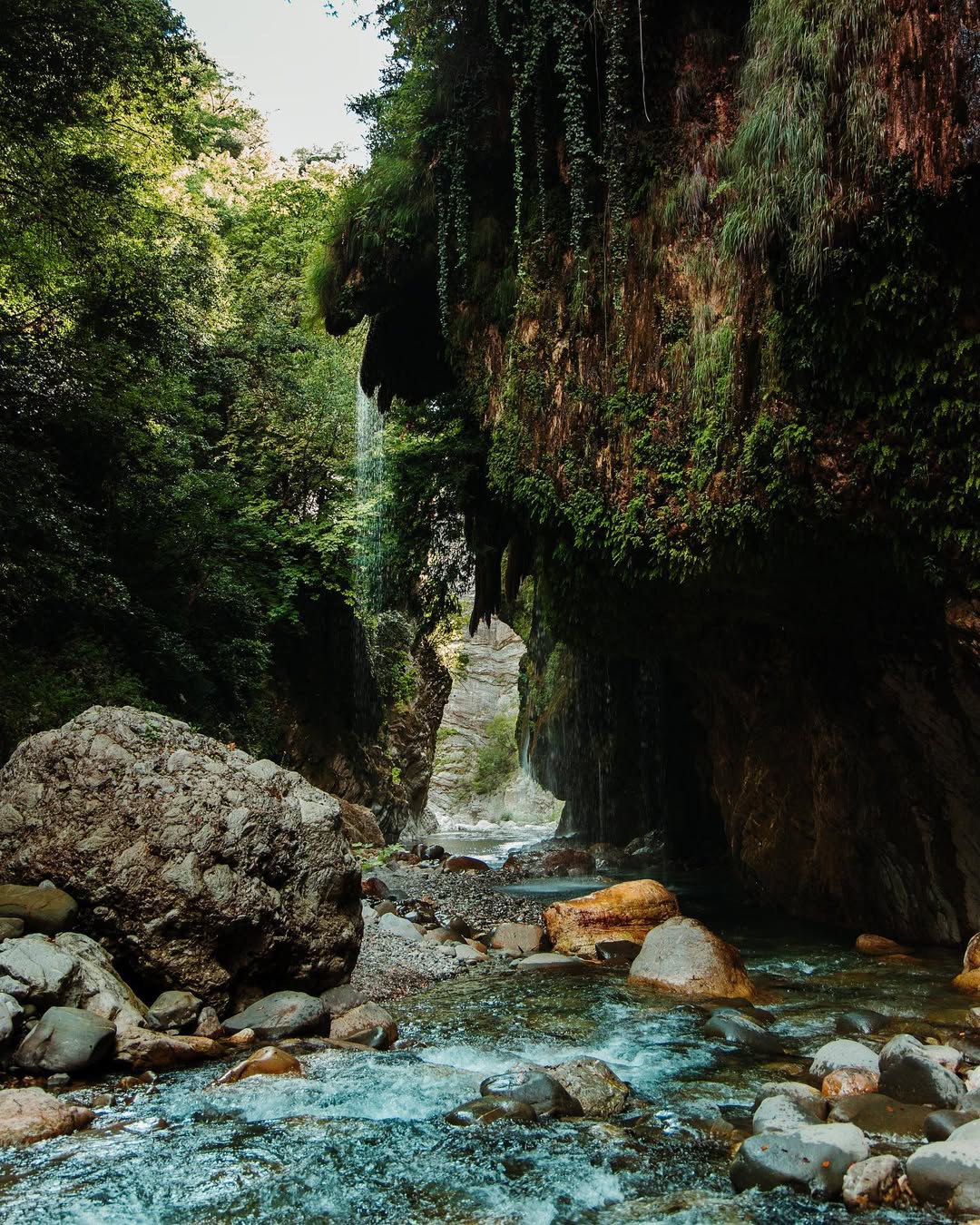
@camerawork.at
The Necromanteion of Ephyra stands as one of the most atmospheric sites in Greek mythology, long regarded as a gateway to the Underworld and dedicated to Hades and Persephone. This ancient sanctuary was believed to be a place where mortals could communicate with the dead, guided through dark corridors and ritual chambers meant to evoke the journey beyond. Exploring the site today, with its subterranean passages and stark stone walls, offers a vivid sense of why this location became so closely tied to the boundary between the living and the world below.
Lake Stymphalia – The Sixth Labour of Heracles

@lenaparis
Lake Stymphalia, set in the mountains of the Peloponnese, is forever tied to the sixth labour of Heracles, where he confronted the man‑eating Stymphalian birds. Surrounded by reeds, wetlands, and quiet hills, the area still carries an air of mystery that suits the tale of those fearsome creatures. A walk around the lake or a visit to the nearby environmental museum offers a vivid way to connect the landscape with one of the hero’s most memorable challenges.
All that remains now is to set off and let these legendary places work their magic on you, just as they have for generations of travellers, writers, painters, and even filmmakers who still draw inspiration from Greek myth today. Whether you feel the strength of Heracles awakening or the cunning of Odysseus whispering in your ear, these landscapes have a way of stirring something unexpected. Somewhere out there, a myth‑soaked corner of Greece is simply waiting for your footsteps to awaken your own inner hero!
IKEA boxspring bed for sale

Price: 200 euros, pick up in storage in Peristeri until Sunday.
Where To Celebrate Apokries This February: A Guide Through Greece’s Carnival Season
Across Greece, the month reveals a series of cherished customs: smoky barbecues, masked parades, flour battles, bonfires, traditional dances, and a whole lot of joyful chaos. Here’s your guide to making the most of it.
A quick calendar of Apokries
- Apokries (February 1–22 2026) : The full carnival period, with each week bringing its own traditions and event
- First Sunday (February 1 2026) : This Sunday officially kicks off Apokries, with ceremonies held mostly in church. It’s preceded by the “Saturday of Souls,” a day when families honor their departed loved ones
- Tsiknopempti (February 12 2026): The real party begins! And even if you somehow forgot about it, the mouthwatering smell of grilled meat will remind you soon enough. In this “smokey Thursday”, cities fill with the irresistible aroma of barbecues firing up on every corner: souvlaki, lamb chops, sausages, kokoretsi… a true carnivore’s dream before meat disappears from the menu for Lent.
- Carnival Sunday (February 15) : Costumes, confetti, dancing — the festive peak.
- Tyrini (February 22) : This final day before Lent, translated as “Cheesy Sunday”, devoted entirely to dairy delights, falls right after the second Psychosavvato.
- Kathara Deftera (February 23) : The first day of Lent comes with its own delicious rules: no meat, no dairy, no fish — but shellfish is absolutely allowed. It’s the perfect excuse to head to the sea for seafood feasts, fresh salads, and sesame‑covered lagana bread. Whether you’re by the waterfront or perched on one of Athens’ city‑center hills, Clean Monday is all about picnics and kites. You’ll see them floating across the sky everywhere — a tradition that dates back to antiquity, symbolizing purity and the soul rising toward the divine.
Athens: Street Parties & Confetti Battles
The capital bursts with free events: dance workshops, outdoor concerts, costume parades, and tastings of traditional treats. The city’s official website posts the full program each year.
Head to Kerameikos for lively costume processions, then climb up to Plaka at night for spontaneous confetti fights and street dancing.
Patras: The Queen of Greek Carnivals
Athens may be the capital of Greece, but the undisputed capital of Apokries is Patras. Every year, it’s more than 300,000 participants and spectators that flood the city for its legendary carnival.
The grand parade on the final Sunday ends with the symbolic burning of the Carnival King, marking the transition from winter to spring. In the days leading up to it, the city hosts bouboulia balls (where women choose their dance partners!) and a massive city‑wide treasure hunt.
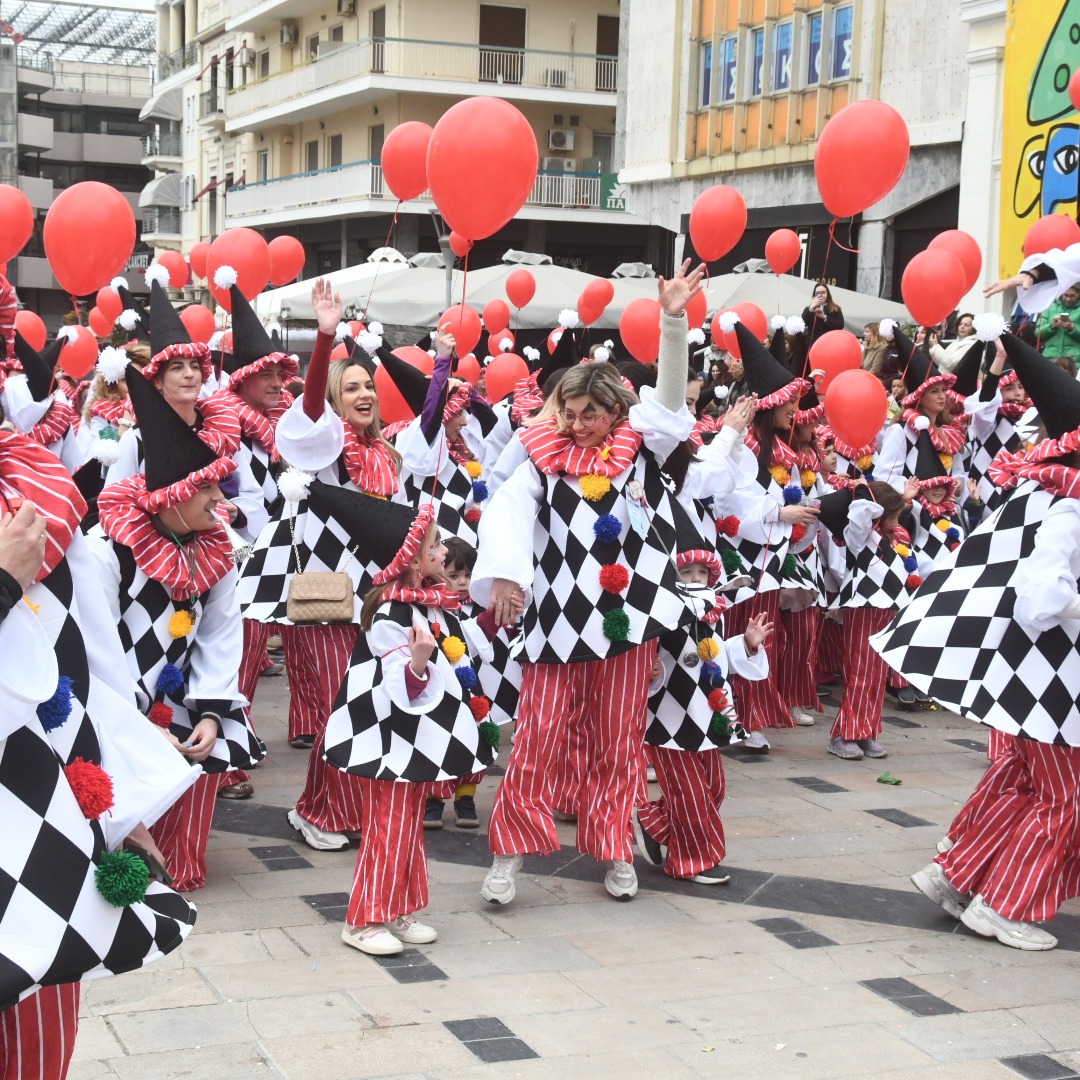
@patrasevents.gr
Naxos: The Mysterious Koudounatoi
The islands know how to celebrate Apokries too! In Naxos, and especially in the mountain villages of Apíranthos and Filoti, the eerie Koudounatoi roam the streets on the last weekend of Apokries.
Dressed in capes and masks, with ropes of clanging bells wrapped around their bodies, these strange young men go house to house asking for eggs and occasionally tapping passers‑by with their soba sticks.
Xanthi: The Artsy Carnival
In Thrace, Xanthi might host the most artsy version of Apokries. Expect exhibitions, concerts, and dance performances, organized in collaborations with more than 40 cultural groups.
On Sunday, the festivities culminate in a costumed parade, the burning of a figure symbolizing winter, and a beautiful fireworks show.
Galaxidi: The Famous Flour Battle
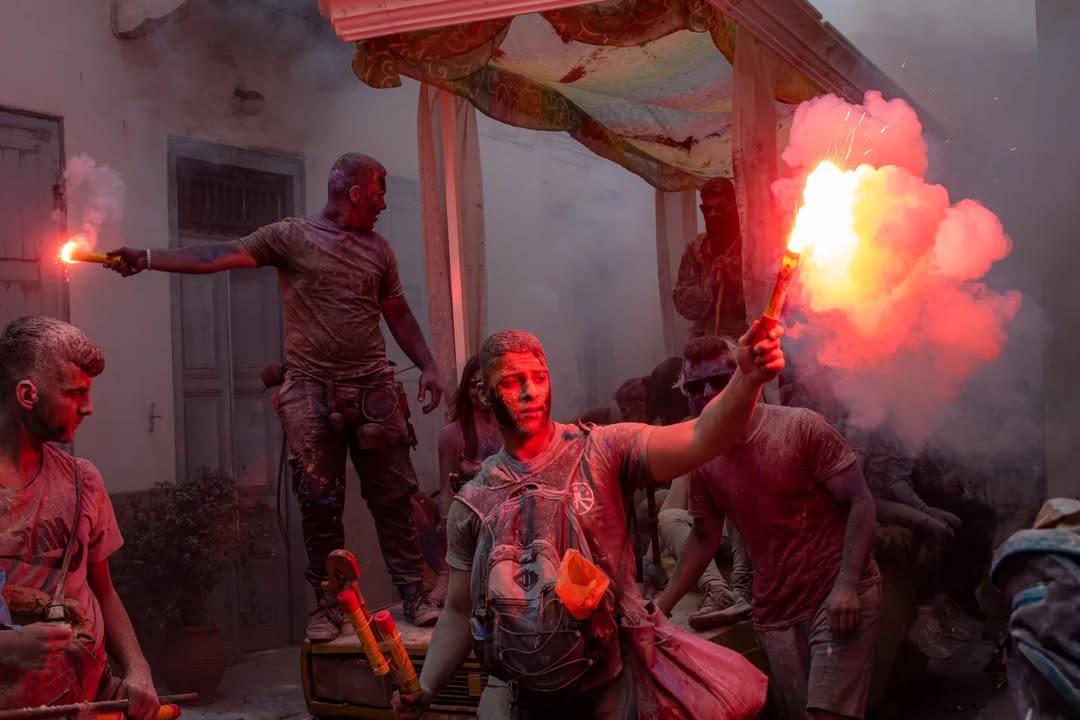
Looking for something unforgettable (and extremely messy)? Head to Galaxidi on Clean Monday for Alevromoutzouromata, the town’s iconic flour‑throwing tradition dating back to the 19th century!
Around noon, grab a bag of colored flour provided by the municipality — and let the battle begin! No mercy here: the hostilities only end when participants finally give up. Each year, no less than 1.5 tons of colored flour are thrown at the crowds! Pro tip: wear clothes you don’t mind sacrificing… and maybe bring goggles.
After the chaos, make peace with your one‑day adversaries over a generous buffet and artistic performances that carry on late into the evening.
@elaki26
In Kozani, each neighborhood lights its own fanos (a wooden fire) during the twelve days leading up to the final Sunday. People gather around the flames to eat, sing, and dance to the sound of trumpets. Each household also lights a small lamp in its window to ward off the rougatsaria, men dressed in costumes with large bells who go door‑to‑door asking for treats, a tradition meant to chase away evil spirits. On the last Sunday, the main fanos is lit in the central square, and tavernas offer food and drinks freely.
Naoussa: Heroic Traditions & Hidden Identities
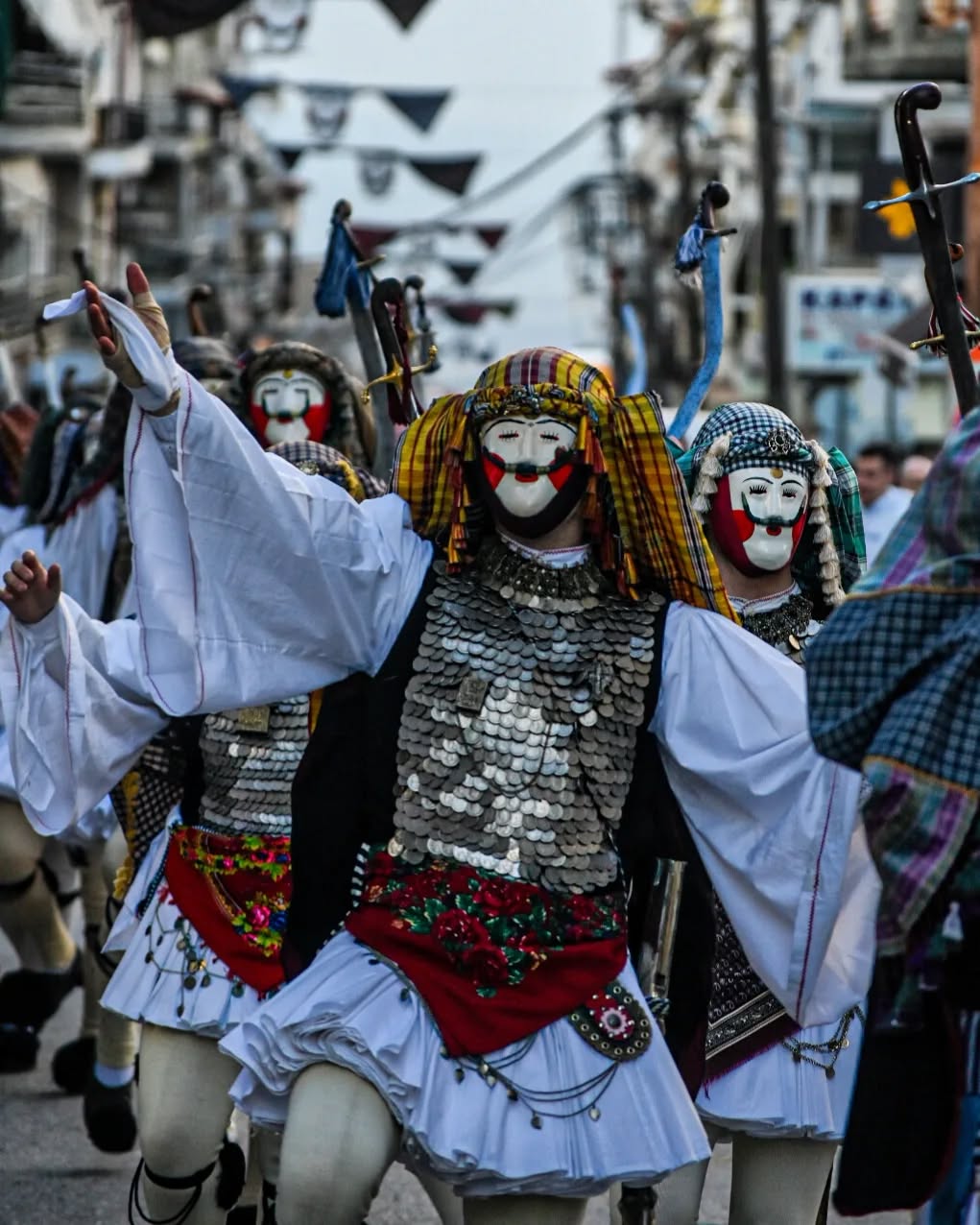
In Naoussa, carnival takes on a historical tone. Men dress as yenitsari or klephtes, avec la traditionnelle fustanelle et s’affrontent dans des simulacres de combats au sabre.The tradition commemorates the town’s resistance and the tragic massacre it suffered during the Greek War of Independence. The dances and music that accompany the parades echo the heroism of its inhabitants, the tragedies they endured, and the historical legacy they carry forward.
The highlight is the procession of the Genitsari and Boules: unmarried young men wearing wax masks and silver‑covered breastplates, symbols of the passage from adolescence to adulthood, escort “the Boula,” a young man dressed as a bride. Bagpipes, drums, dances, and ritual games fill the streets until nightfall, when the masks come off and identities are revealed.
@george.laz1
Tyrnavos is famous (or infamous) for its Bourani celebration on Clean Monday. Sensitive souls, beware: this celebration is all about earthy humor and unabashed fertility symbolism. This men‑led festival features a spinach‑based soup, plenty of wine, and an abundance of phallic symbols made of wood, bread, or clay to honor fertility. Though frowned upon by the Orthodox Church, this a bit‑on‑the‑saucy‑side tradition is centuries old and rooted in ancient fertility rites marking the arrival of spring.
So there’s no excuse not to dive into the wonderfully festive atmosphere of February in Greece! Dress up as your favorite character, feast on all kinds of traditional dishes, and dance the gaitanaki, the traditional carnival dance!
Mamai Restaurant: A Celebration Of Honest Dining In Glyfada
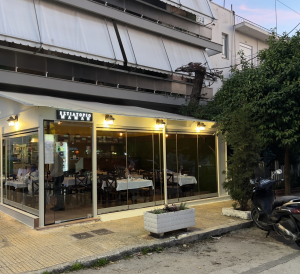
From Toronto Luxury to the Greek Flame
The story of Estiatorio Mamai began far from the Mediterranean. Founder Theodoros Mamais and his partner Yiagos Deligiannis are Greek-Canadian friends who met in Toronto, working at the pinnacle of luxury hospitality; an environment of relentless precision and flawless execution. Yet, while they mastered the art of perfection, they found themselves yearning for purpose.
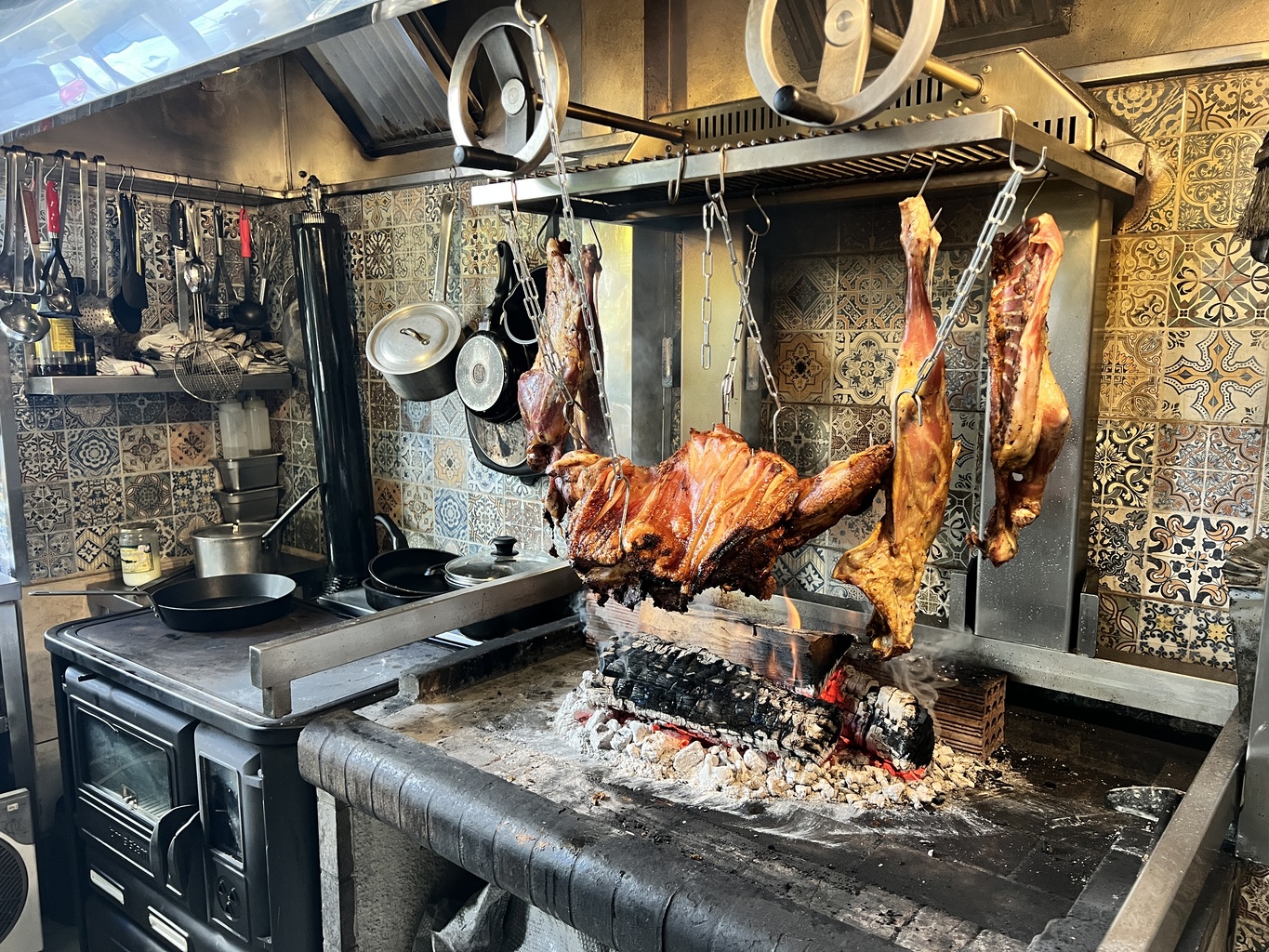
For chef Theodoros, that purpose was found in the most ancient of tools: Fire. He moved away from the star-chasing obsession of fine dining to embrace a more grounded food philosophy. At Mamai, the kitchen operates without electricity. Every dish is a collaboration between the chef and the elements, crafted in a wood-fired oven, over a parilla, or on a traditional stofa.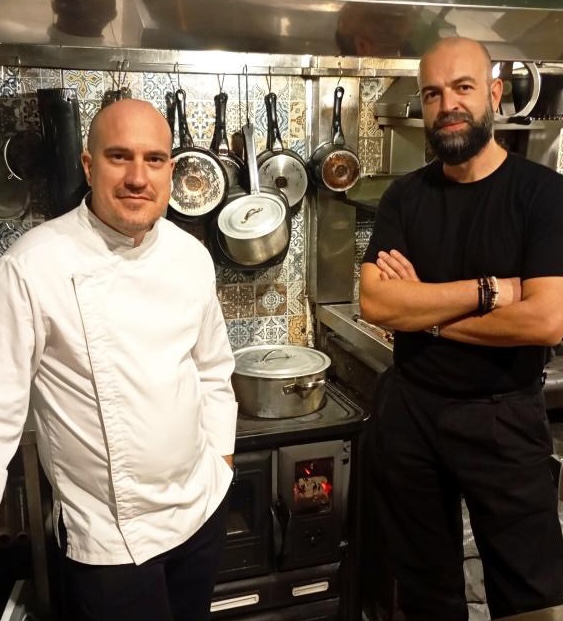
A Menu Guided by the Seasons
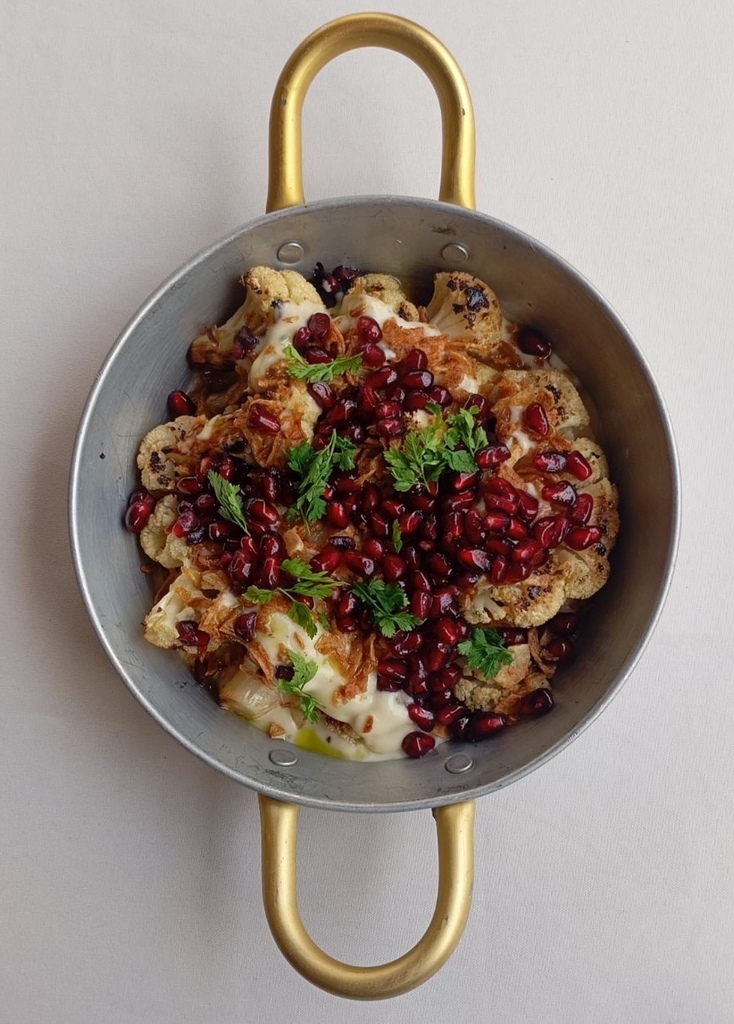
At Estiatorio Mamai, the menu is small, deliberate, and fully seasonal. By maintaining a small, curated menu, Theodoros ensures that every single plate is a masterpiece. 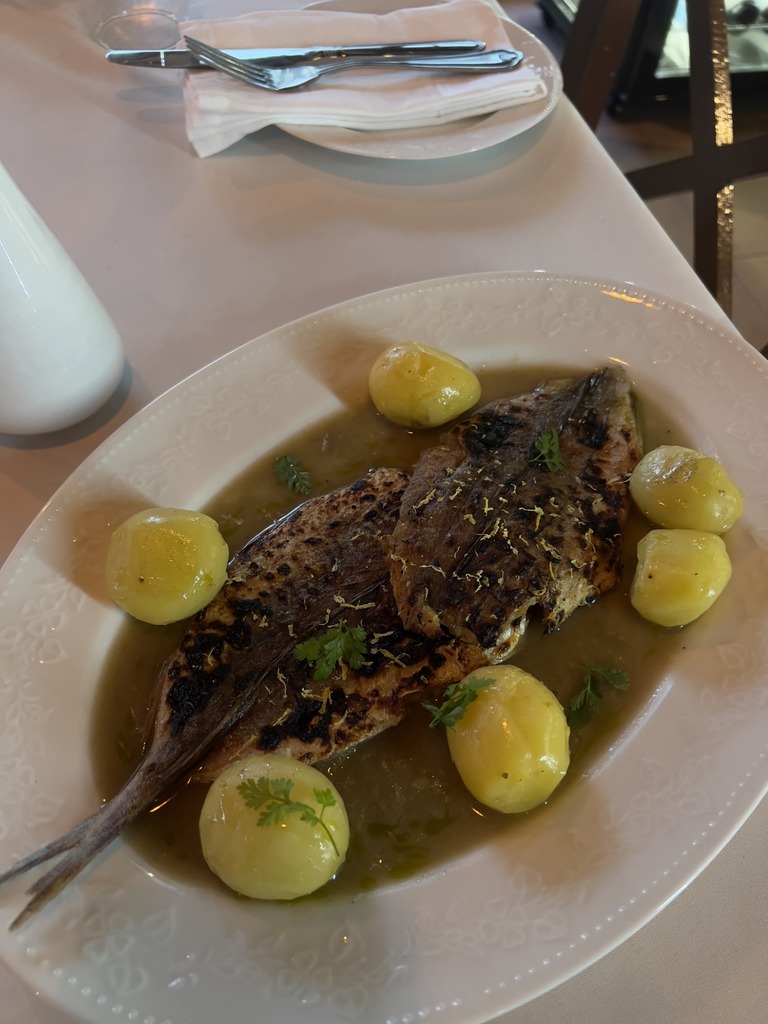
- The Ingredients: We source only organic, high-quality Greek meats and the freshest catch of the day.
- The "Non-Star" Philosophy: Every plate is treated with equal importance, but the Stifado, served in various seasonal interpretations, has quietly become a favorite among regulars.
- The Wine: The cellar is a tribute to Greece’s hidden gems, exclusively featuring small-scale Greek winemakers whose variaties are chosen to complement the smoke and salt of the kitchen.
Hospitality as Presence, Not Performance
If Theodoros is the fire, Yiagos is the steady hand that guides the room. Having managed high- end F&B operations, Yiagos rejects the theatre of modern service. Here you won’t find scripted smiles or stiff formalities.
Instead, Mamai offers genuine hospitality. It is the art of reading a room, knowing exactly when a guest needs a refill and when they need to be left in peace. It is warm, human, and unforced.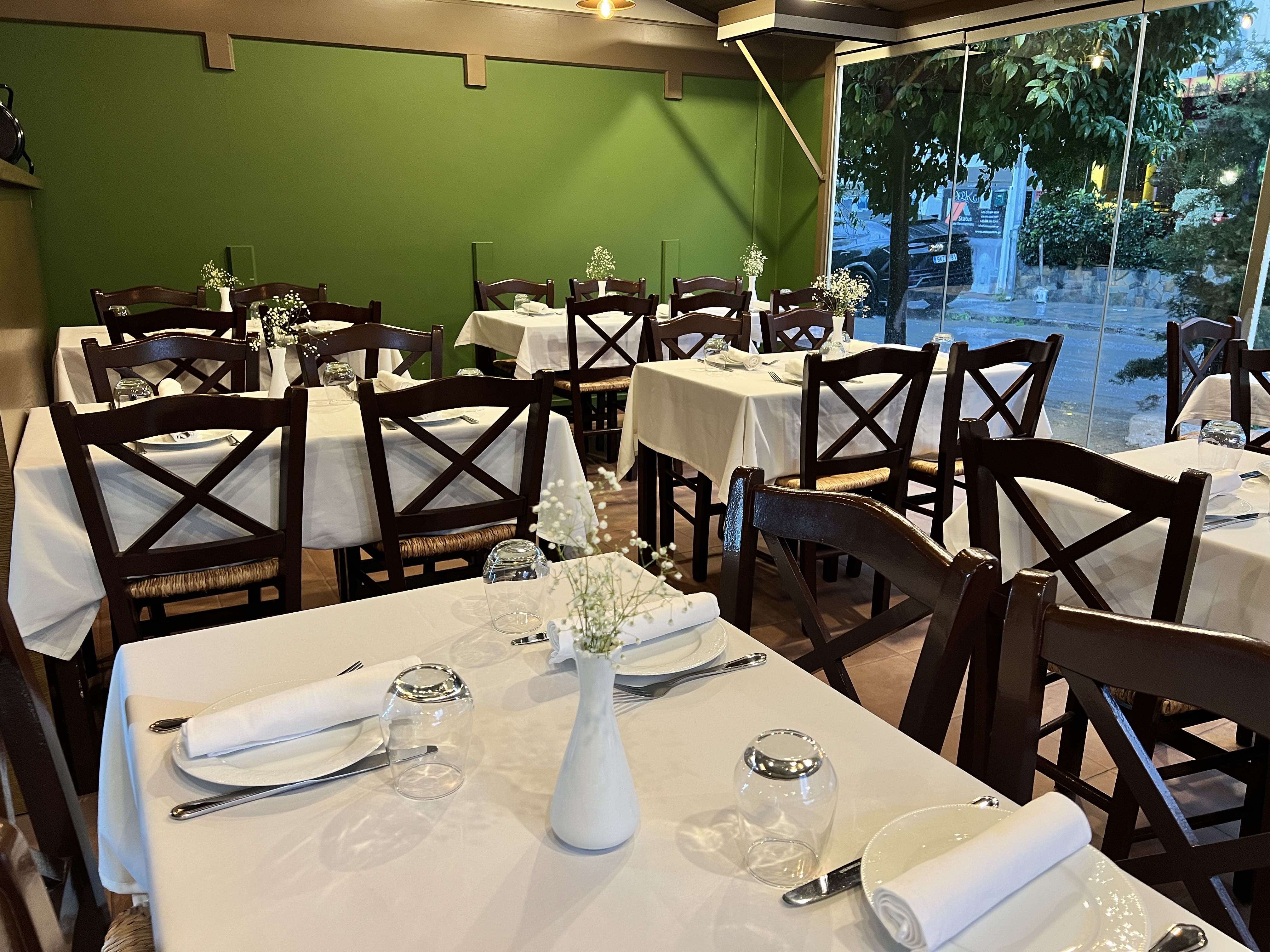
Against the Fireworks
When they opened in 2025, Theodoros and Yiagos were urged to chase the "viral" formula. They deliberately chose otherwise. They traded fireworks for fine comfort Greek food.
Mamai doesn’t promise a spectacle; it promises a memory. It is a restaurant built on conviction, where the ingredients are allowed to speak for themselves and the noise of the outside world is left at the door. In a neighborhood that is always moving, Mamai gives you a reason to sit still.
Mamai restaurant does not promise excitement on demand. It offers something more valuable. A reason to come back.
If good food matters to you —the kind cooked with fire, patience, and soul— follow Mamai Restaurant on Instagram, like them on Facebook, and reserve your table here to experience a dining memory worth returning to.